
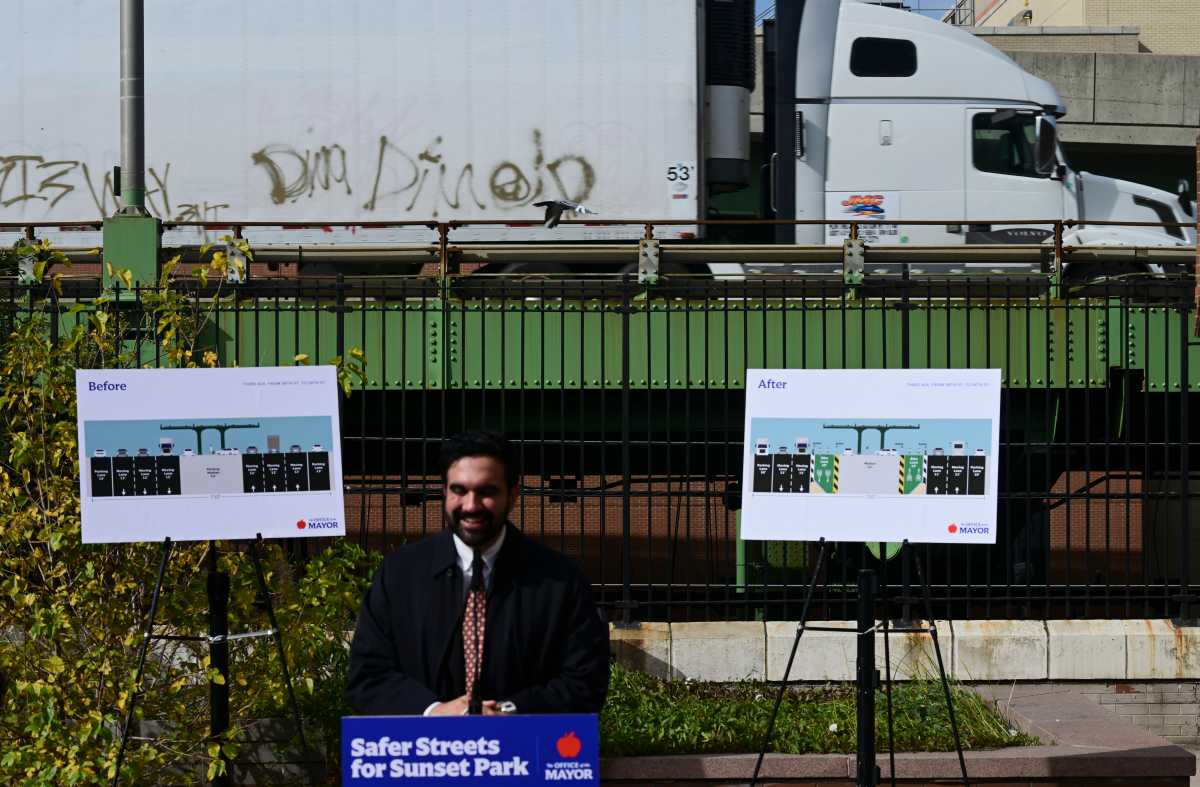
Mayor Zohran Mamdani on Wednesday pledged to complete a long-delayed safety overhaul of Brooklyn’s Third Avenue by the end of 2028, reviving a project that stalled under his predecessor after years of community demands and deaths along the busy corridor.
The 2.1-mile redesign, stretching from 20th to 62nd Streets beneath the Gowanus (Brooklyn-Queens) Expressway in Sunset Park, will bring protected bike lanes, shorter pedestrian crossings and redesigned intersections to one of the borough’s most dangerous roadways.
Work is expected to begin next year after a period of community input.
The announcement comes nearly two months after 28-year-old nurse Jiayi Zheng was killed by a hit-and-run driver while crossing Third Avenue at 55th Street on Aug. 29, prompting renewed demands from Brooklyn lawmakers for the city to move forward with safety improvements.
The city first proposed a redesign in 2023, winning support from Brooklyn Community Board 7, but the project was put on hold in April 2025 under former Mayor Eric Adams. Local elected officials subsequently accused the administration of leaving residents in limbo without a clear timeline for improvements.
According to the city, 17 people have been killed along Third Avenue over the past decade.
“I am tired of learning the names of New Yorkers only after they were killed in preventable crashes,” Mamdani said at a press conference Wednesday at a Sunset Park school near Third Avenue and 60th Street.
The mayor acknowledged the years of frustration among residents who had repeatedly pressed City Hall to make the avenue safer.
“Today, the change that so many Sunset Park residents have long called for finally arrives,” he said.
A new design for a dangerous corridor
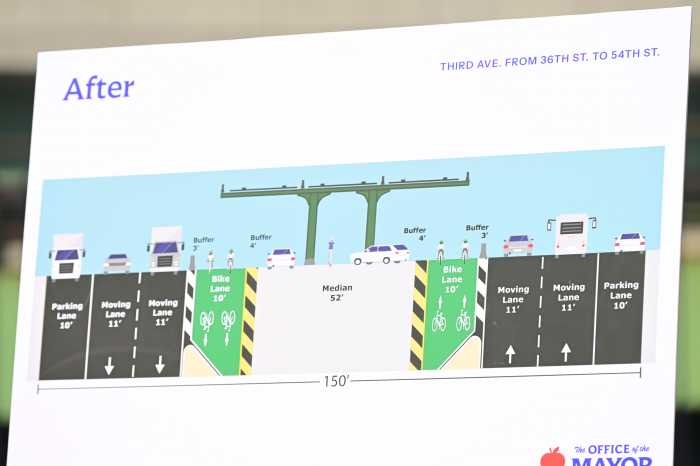 A rendering shows NYC DOT’s proposed redesign of Third Avenue in Sunset Park, including protected bike lanes along the center median and pedestrian safety improvements. Photo by Lloyd Mitchell
Under the plan, DOT will install barrier-protected bike lanes running in both directions alongside Third Avenue’s center median, along with pedestrian islands, sidewalk extensions and redesigned intersections intended to slow traffic and make crossings safer.
The avenue is currently 150 feet wide, with six moving traffic lanes, two parking lanes and a 52-foot-wide median along much of the corridor. The proposed changes would reduce the distance pedestrians must cross through moving traffic by up to half, according to DOT.
The city will tackle the project in two phases, beginning in 2027 with the stretch between 62nd and 43rd streets, including the intersection where Zheng was killed. The remaining section, from 43rd to 20th streets, is scheduled for 2028.
“We will begin work next year, and we expect to complete the redesigns by the end of 2028,” Mamdani said.
DOT Commissioner Mike Flynn said the first phase will address some of the corridor’s most dangerous intersections, including Third Avenue and 60th Street which has recorded 72 injuries, including five severe injuries, and one death over the past five years.
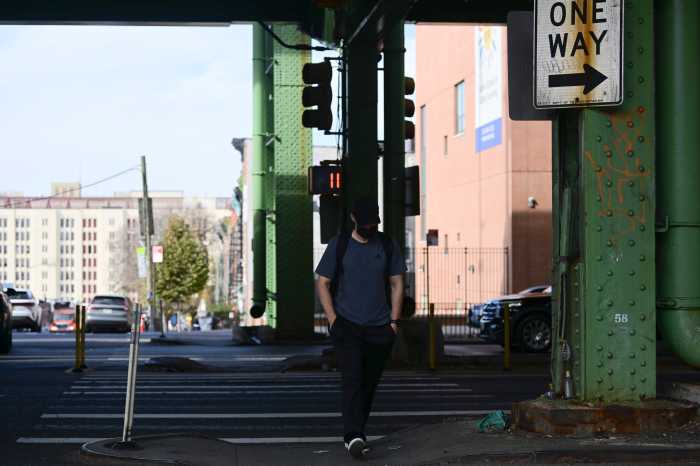 A pedestrian crosses Third Avenue at 60th Street in Sunset Park, Brooklyn, where the city plans to begin a long-delayed street safety redesignPhoto by Lloyd Mitchell
The redesign also represents a departure from the city’s earlier proposal, which placed protected bike lanes along the curb. The new plan moves them to the median to reduce conflicts with delivery trucks and vehicles accessing businesses along the avenue.
Flynn said the changes reflect years of community feedback and that DOT will continue refining the proposal with residents before work begins.
The project also includes a two-way, parking-protected bike lane on 60th Street between Second and Fourth Avenues, linking the protected lanes on Fourth Avenue with the Brooklyn Waterfront Greenway.
DOT plans to reorganize parking along Third Avenue’s center median, including the introduction of metered spaces.
The city is also considering future extensions south to 65th Street and farther north toward Carroll Street in Gowanus, though neither is included in the current construction schedule.
‘Optimistic’ first step
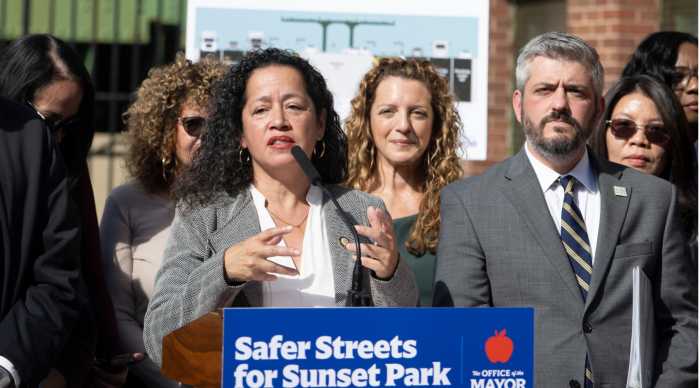 City Council Member Alexa Avilés speaks at a press conference in Sunset Park on Oct. 28, 2026, welcoming Mayor Zohran Mamdani’s plan to overhaul Third Avenue after years of community calls for safety improvements.Photo by Lloyd Mitchell
Following Zheng’s death in August, state Sen. Andrew Gounardes, Assembly Member Marcela Mitaynes and Council Member Alexa Avilés called on DOT to revive the project and develop a comprehensive plan covering Third Avenue from 65th Street to Prospect Avenue.
The lawmakers had previously criticized the city’s original proposal for failing to adequately address the stretch between 54th and 62nd streets, where residents had repeatedly raised concerns about dangerous crossings and speeding vehicles.
That section is now among the first scheduled for improvements.
Avilés, who represents Sunset Park, welcomed the decision to start work at the southern end of the corridor, saying earlier proposals had failed to tackle some of its most dangerous blocks.
She also praised the decision to move the bike lanes toward the center median, saying it would reduce the redesign’s impact on businesses along the industrial corridor.
Former Community Board 7 Chair Julio Peña, who attended Wednesday’s announcement, welcomed the same change, which he said he had advocated during earlier planning discussions. But he questioned whether the redesign could address the broader problem of oversized trucks traveling through nearby residential streets.
“I don’t know if the plan can address the truck issues. That, I think, is a much broader conversation,” Peña told amNewYork.
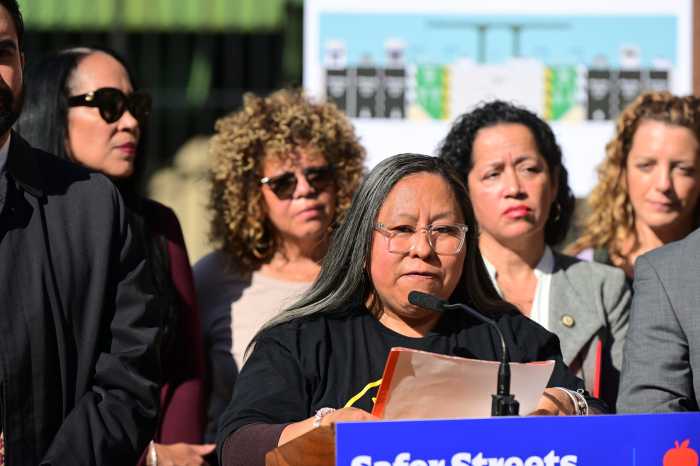 Fabiola Mendieta-Cuapio, executive co-chair of Families for Safe Streets New York, who lost her son Brian in a traffic crash 20 years ago, welcomed the city’s long-awaited Third Avenue safety redesign.Photo by Lloyd Mitchell
Peña also raised concerns about vehicles making left turns across the proposed bike lanes and said he wanted to see physical barriers, such as bollards, rather than painted markings alone to separate cyclists from traffic.
For Fabiola Mendieta-Cuapio, executive co-chair of Families for Safe Streets New York, the announcement came nearly 20 years after she lost her son Brian in a traffic crash.
Speaking at Wednesday’s event, she recalled the years of organizing by Sunset Park parents, healthcare workers and residents who have pushed for safer crossings.
“Our children deserve to grow up knowing they can walk to school safely,” she said.