
Year after year, a bill to establish an Office of the Waterfront keeps quietly dying in the City Council. Introduced multiple times, the bill last received a hearing in 2019, where I testified in support of common-sense placement of waterfront permitting.
This election’s Ballot Proposal 4 does just that, by migrating certain waterfront construction permits from the Department of Small Business Services (SBS) to the Department of Buildings (DOB).
Yes, that’s right, as it sits now, waterfront permitting currently rests with an agency whose primary work centers on connecting residents to careers, assisting small businesses, and strengthening commercial neighborhoods across the boroughs.
When I started working to make regular public river swimming in New York Harbor a reality through + POOL, a nonprofit dedicated to free and safe access to city waters, I had little understanding of how city systems and permitting worked. Coming from the outside, you quickly realize how nonsensical some systems can seem.
Moving waterfront permitting responsibilities to an agency designed to regulate construction and building safety makes sense. If passed, the measure would transfer the responsibilities to DOB by 2030. This could include shifting the dedicated civic servants within SBS who run the waterfront office — now experts on waterfront permitting — to DOB; and consolidating the current crossovers between agencies.
But we need something greater. As we lean into future waterfront development, we must prioritize the needs of the water itself alongside construction safety and expansion.
When I testified in support of an Office of the Waterfront, I envisioned an entity that would thoughtfully support innovation, track effects of development on water health, and ensure waters are safely accessible. I described waterfront permitting as the Wild West of NYC real estate. Its history helps explain why.
In 1870, the city created the Department of Docks to control city-owned waterfront property and regulate privately owned waterfront property.
As maritime use evolved, the agency changed names and responsibilities: Department of Docks and Ferries (1898–1919); Department of Docks (1919–1942); Department of Marine and Aviation (1942–1969); Department of Ports and Terminals (1968–1985); Department of Ports, International Trade and Commerce (1985–1986); and Department of Ports and Trade (1986–1991), all with a primary responsibility of permits for docks, bulkheads and pier structures.
In 1991, waterfront permitting moved to the Department of Business Services, the predecessor of today’s SBS.
Our permitting system was built for the working port of 1870. Today, while the city Economic Development Corp. is undergoing a massive effort to return to maritime freight through Blue Highways, NYC’s waterfront has expanded to include housing, parks, commerce, music venues, restaurants, ferries, and very soon, more and more public swimming. These uses demand a different way of thinking about our waterfront.
Some places are granting waterbodies legal personhood. New Zealand recognized the Whanganui River as a legal person in 2017; Colombia’s courts recognized rights for the Atrato River; and Spain granted legal personhood to the Mar Menor lagoon. New York could explore similar protections for the East and Hudson Rivers, creating a framework to represent their ecological interests in development decisions.
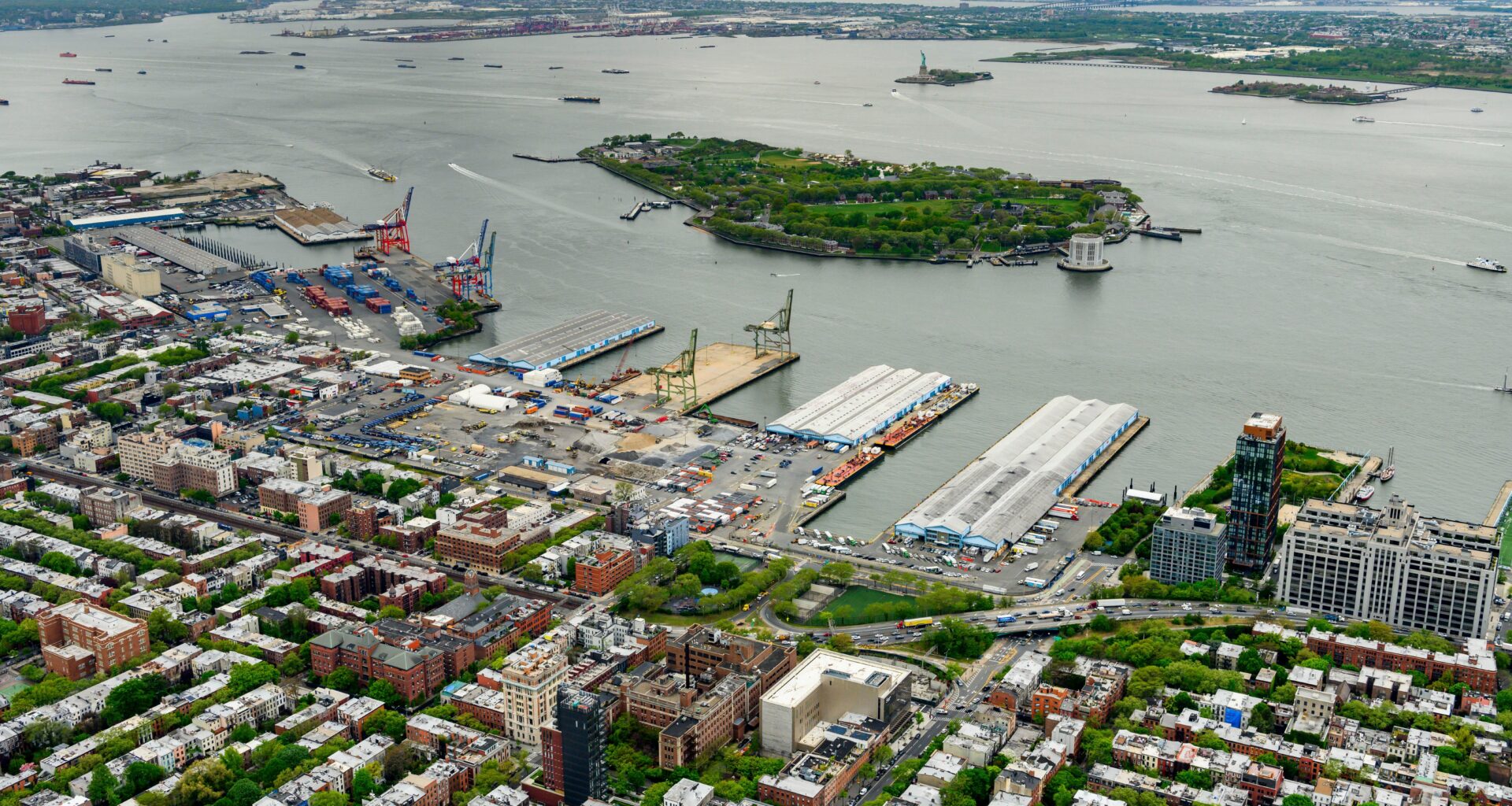
Prop 4 will help resolve today’s fragmented process. But when bold ideas like Seaport City, Brooklyn Marine Terminal, or a reconstructed Rikers Island are considered, who is responsible for looking out for the water? Who ensures it is treated not simply as a boundary to build along, a resource to use, or an obstacle to engineer around, but as a living ecosystem? Will DOB fulfill this role?
Meyer is the director of Friends of + POOL.