
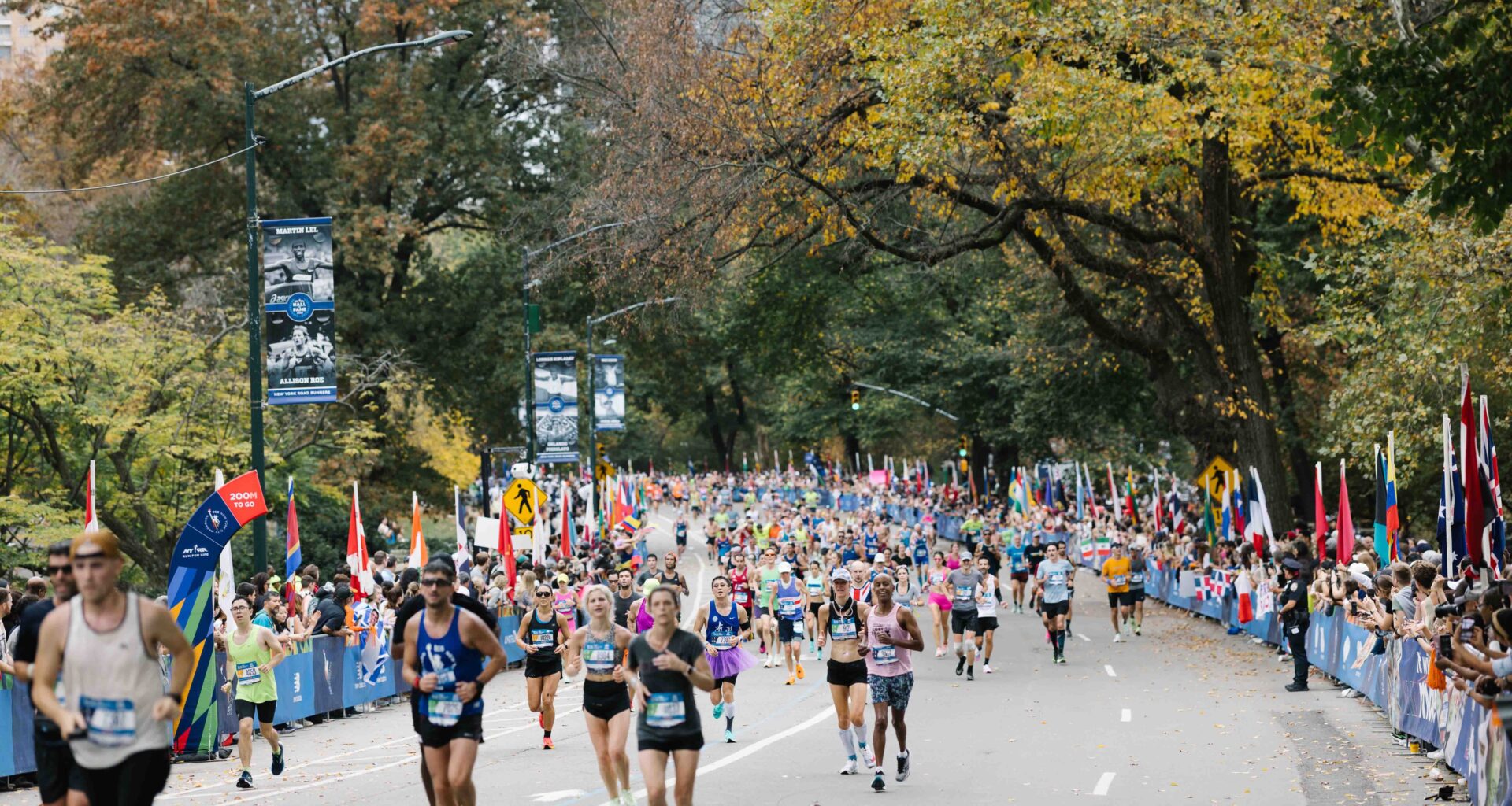
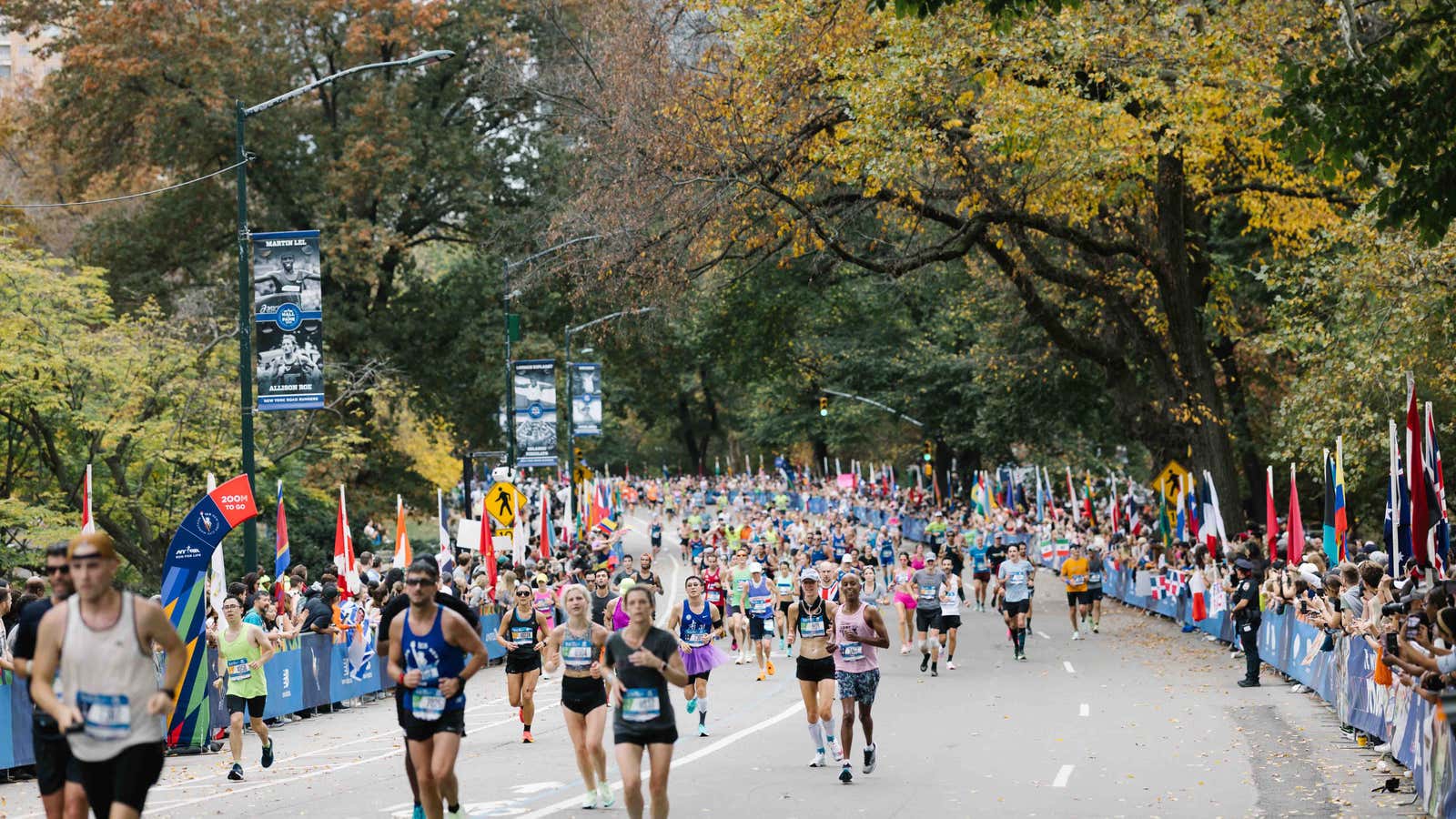
Runners near the finish line for the TCS New York City Marathon in New York, NY. The course goes through all five boroughs of New York City, starting in Staten Island and ending in Central Park.
(Da Ping Luo for NYRR)
Nearly 50,000 runners will tackle 26.2 miles across New York City’s five boroughs Sunday, but the biggest challenge might not be the hills or the distance. It could be the temperature.
This year’s TCS New York City Marathon is shaping up to be a beautiful day for spectators, but potentially a little warm for runners chasing personal records.
“Temperatures will start in the low 50s and climb toward 60 by late morning or early afternoon,” according to senior meteorologist Jonathan Belles.

Weather in your inbox
By signing up you agree to the Terms & Privacy Policy. Unsubscribe at any time.
Staten Island, where runners line up for the early start, will be about 2 degrees cooler, Belles notes.
The perfect running temperature
Research shows the ideal temperature for a fast marathon is generally around 42–50 degrees. Even temperatures in the upper 50s and low 60s can sometimes make a difference because the body generates plenty of heat while running 26.2 miles.
(MORE: The best running weather, according to experts)
Get More of Our News on Google
Set The Weather Company as a ‘Preferred Source’ to get quicker access to the news you value.

Some performance analyses suggest a 3:30 marathoner could lose about two seconds per mile for every degree above 59 degrees.
For runners chasing goal times, that could be make or break.
Luckily, Sunday’s forecast stays far below the temperatures where heat becomes a much bigger performance concern, meaning runners that are participating for the vibes will be all set.
The wind factor
“Winds will be light and variable while passing clouds likely won’t affect runners,” explains Belles.
That’s good news for runners crossing the Verrazzano-Narrows Bridge at the start of the race and the Queensboro Bridge around mile 15, two of the course’s most exposed stretches.
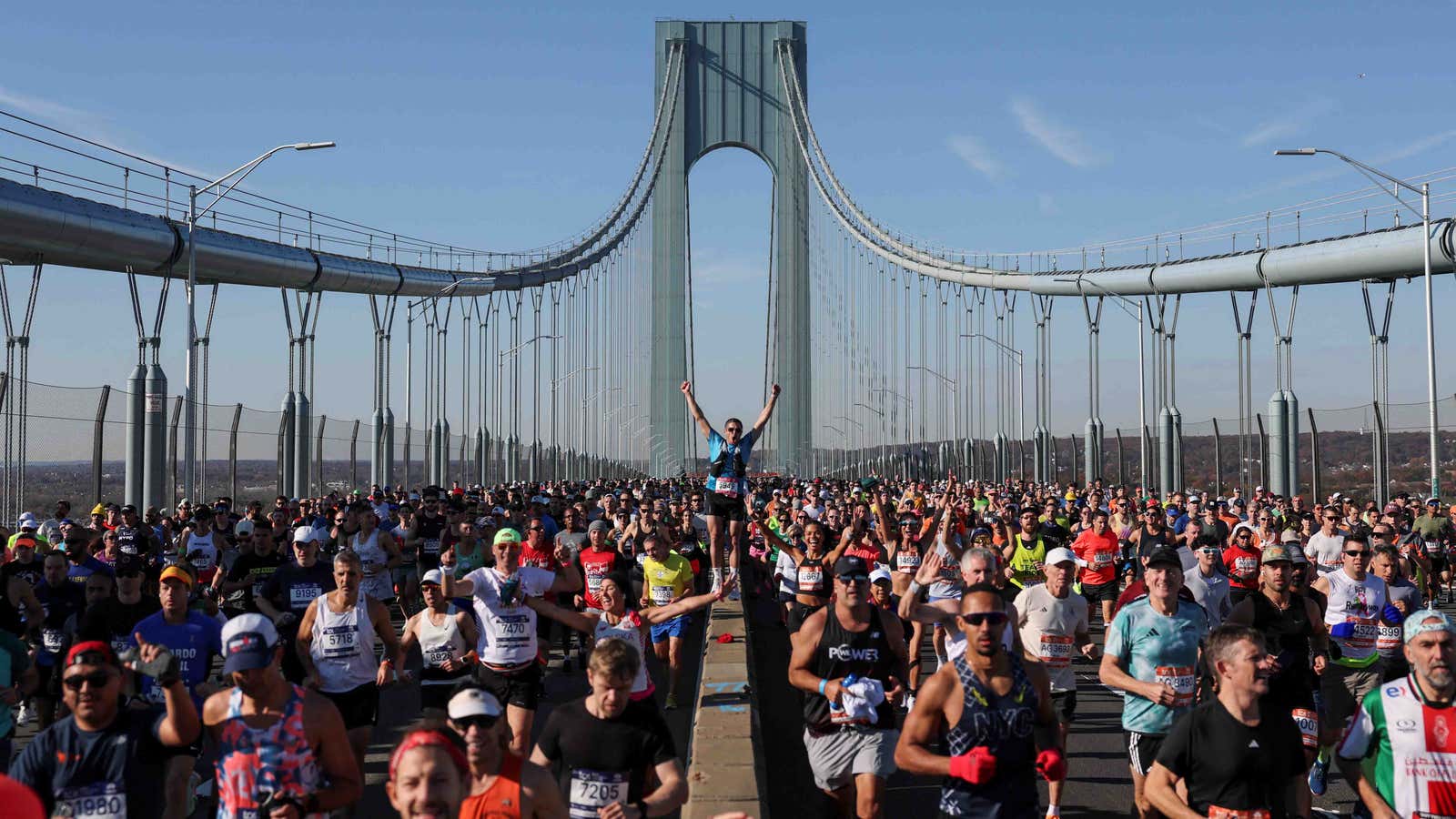
Runners cross the Verrazano Bridge as they compete in the New York Marathon.
(ANGELA WEISS/AFP via Getty Images)
The uphill climb is already demanding, and a strong crosswind could make it even tougher. Right now, however, significant wind resistance isn’t expected.
(MORE: Best friends complete journey to run 50 marathons in 50 states)
The same goes for First Avenue and the final miles along Fifth Avenue. These long, exposed stretches can become exhausting if runners face a headwind, but Sunday’s light winds should keep that factor relatively minor.
And those passing clouds Belles mentioned may also help cut down on direct sunshine.
What should runners wear?
Focus on apparel that is lightweight and breathable.
Early starters may appreciate an inexpensive layer they can discard before the race gets underway, especially while waiting in the chilly Staten Island starting area.
As temperatures climb, runners will be grateful to have dressed for the warmer part of the day.
(MORE: The best outdoor gear for fall and winter)
One last reminder
Clocks fall back Sunday at 2 a.m., the morning of the race.
Runners setting their alarms and spectators coordinating their trip should plan for the time change.
Check out all of our tips for how to handle the shift here.