
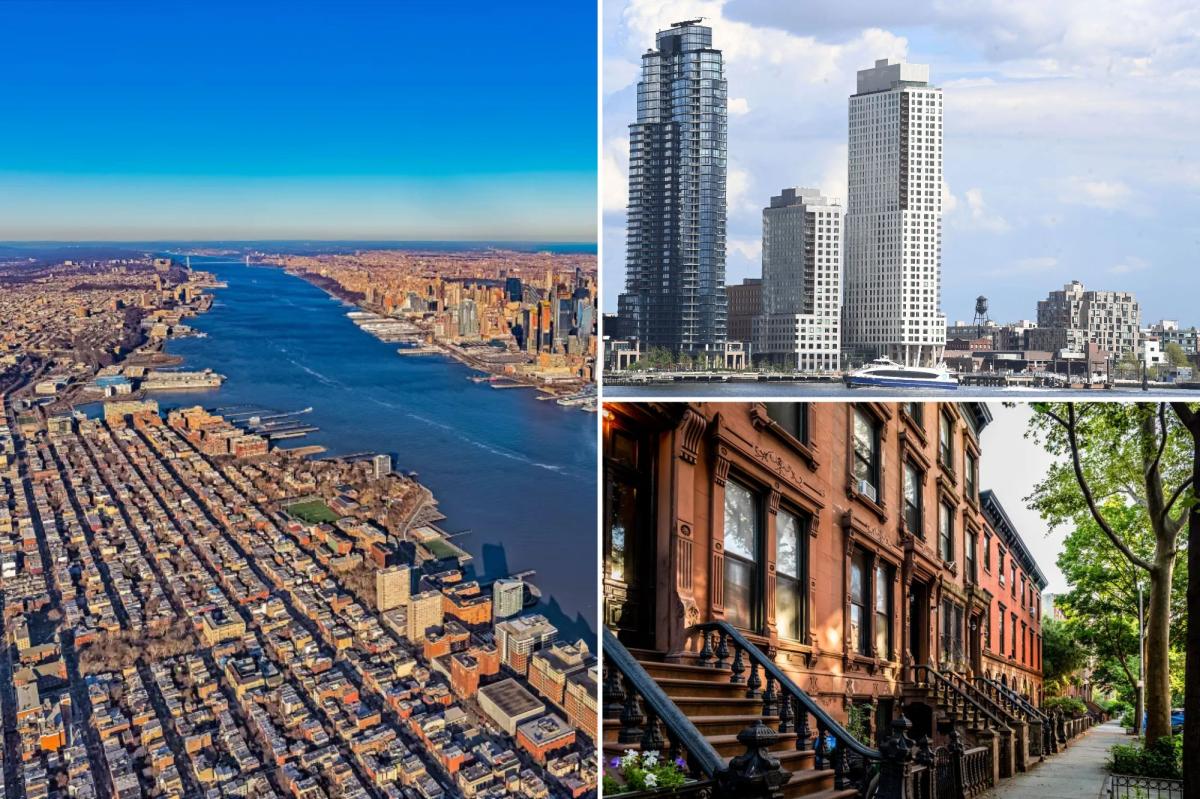
New Yorkers hoping to escape the city’s cutthroat rental market by crossing the Hudson River may be in for a rude awakening.
North Jersey has emerged as a tougher place to land an apartment than either Brooklyn or Queens, according to a new RentCafe rental competitiveness report, as renters across the region battle for a limited pool of available homes.
The Garden State swath ranked 18th among the nation’s most competitive large rental markets, ahead of Queens at No. 22 and Brooklyn at No. 26, according to the report published in October.
North Jersey now ranks as a tougher rental market than Brooklyn and Queens. Dario Bajurin – stock.adobe.com
But North Jersey’s edge isn’t solely necessarily driven by more apartment hunters — it’s that existing tenants simply aren’t leaving.
“North Jersey’s competitiveness is being driven less by a surge in apartment seekers than by how few existing renters are moving,” Doug Ressler, manager of business intelligence at Yardi Matrix, told The Post.
“That combination limits the number of apartments returning to the market, so even though the area has cooled modestly from last year, renters are still competing for a relatively small pool of available units,” he added.
Crossing the Hudson may not mean escaping fierce rental competition. NurPhoto via Getty Images
In North Jersey, an average of 10 prospective tenants compete for every available apartment, while nearly 95% of rental units are already occupied. Roughly 71% of existing tenants renewed their leases, leaving fewer openings for newcomers.
Queens, meanwhile, has become an increasingly difficult place to find a rental, climbing 10 spots nationally to No. 22.
The borough now has an average of 11 renters vying for each vacant apartment, with occupancy reaching 95.2%. Available units are snapped up in an average of just 37 days, faster than in both North Jersey and Brooklyn.
The average vacancy period in Queens fell from roughly 44 days in summer 2025 to just 37 days this year, helping lift the borough’s competitiveness score by 2.6 points despite a slight decline in lease renewals.
Queens climbed 10 spots nationally to No. 22, with 11 renters competing for each available apartment. Jin – stock.adobe.com
The findings come as New York City’s median asking rent hit a record $3,785 in the third quarter, up 4.5% from a year earlier, with Manhattan, Brooklyn and Queens all posting annual increases.
Brooklyn, by contrast, has seen some relief in the competition for available apartments.
Once the seventh-most competitive large rental market in the country, the borough has slipped to 26th place, with an average of 10 renters competing for each available unit.
Brooklyn moved in the opposite direction. Apartments took about three days longer to fill than a year earlier, occupancy declined from roughly 95.9% to 94.6%, and prospective renters per vacancy fell from about 13 to 10.
New construction appears to be helping ease the pressure. Newly built apartments account for 1.13% of Brooklyn’s rental inventory, compared with 0.91% in Queens and 0.84% in North Jersey.
Brooklyn’s rental competition has eased as apartments take longer to fill. auseklis – stock.adobe.com
Brooklyn’s occupancy rate also stands at 94.6%, slightly below its neighboring borough, while apartments take an average of 39 days to fill.
Still, the borough’s declining competitiveness ranking doesn’t necessarily mean apartments are getting cheaper. Brooklyn recorded its busiest September leasing activity since 2020, even as its median rent remained 5% higher than a year earlier and available listings fell 25%.
The numbers suggest that renters looking beyond New York City’s five boroughs won’t necessarily find an easier market.
High occupancy and lease renewals are keeping North Jersey’s rental market tight. Getty Images
More than 70% of North Jersey renters renewed their leases, limiting available apartments. Corbis via Getty Images
North Jersey’s rental competitiveness score of 78 out of 100 narrowly exceeds Queens’ 77.3 and Brooklyn’s 76.4, underscoring how tight the market remains throughout the region.
Still, renters may find more space or better value across the Hudson, even if the apartment hunt itself isn’t necessarily easier.
“Crossing the Hudson River may still provide a cost or space advantage, but it no longer guarantees an easier search,” Ressler said.