
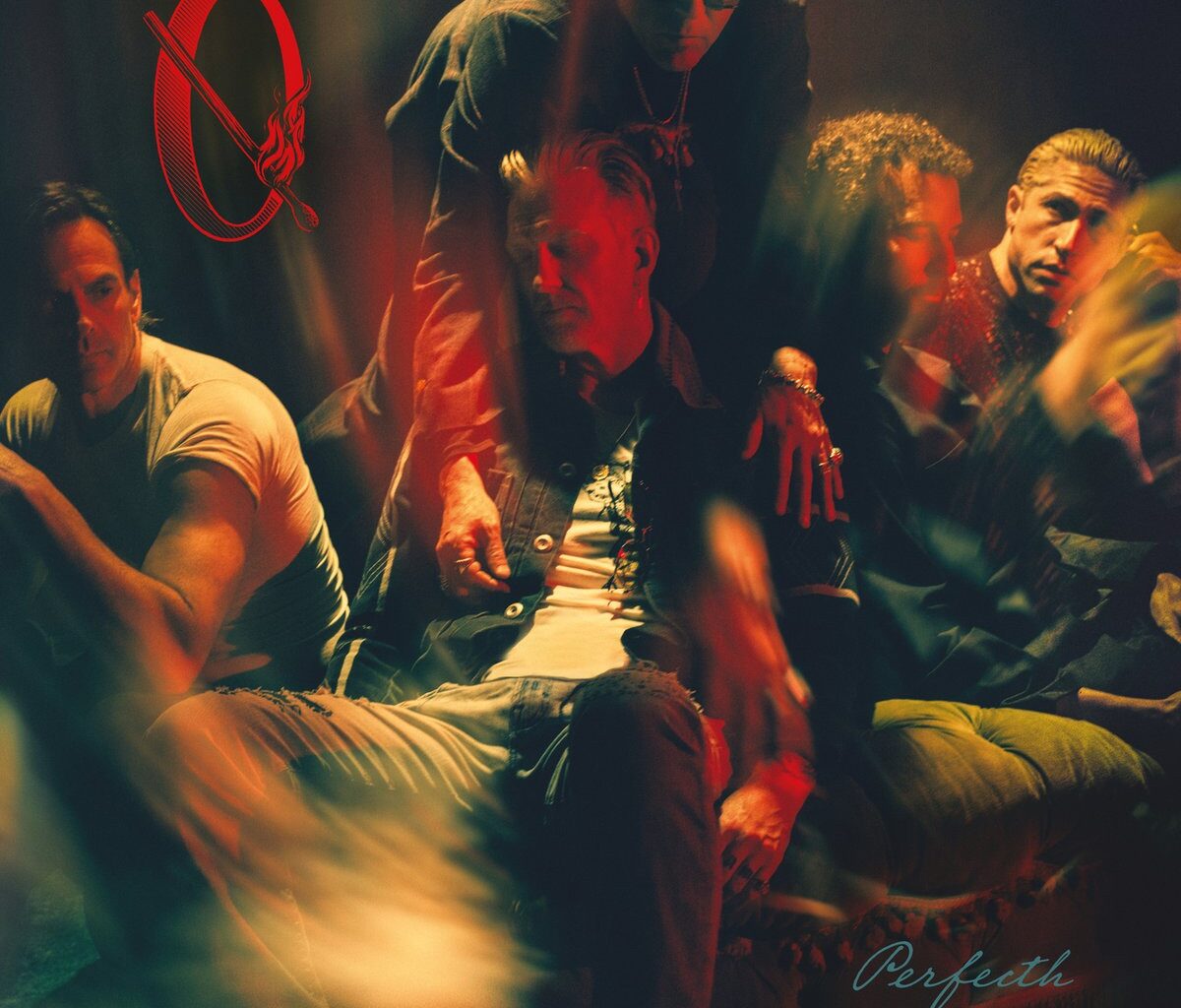
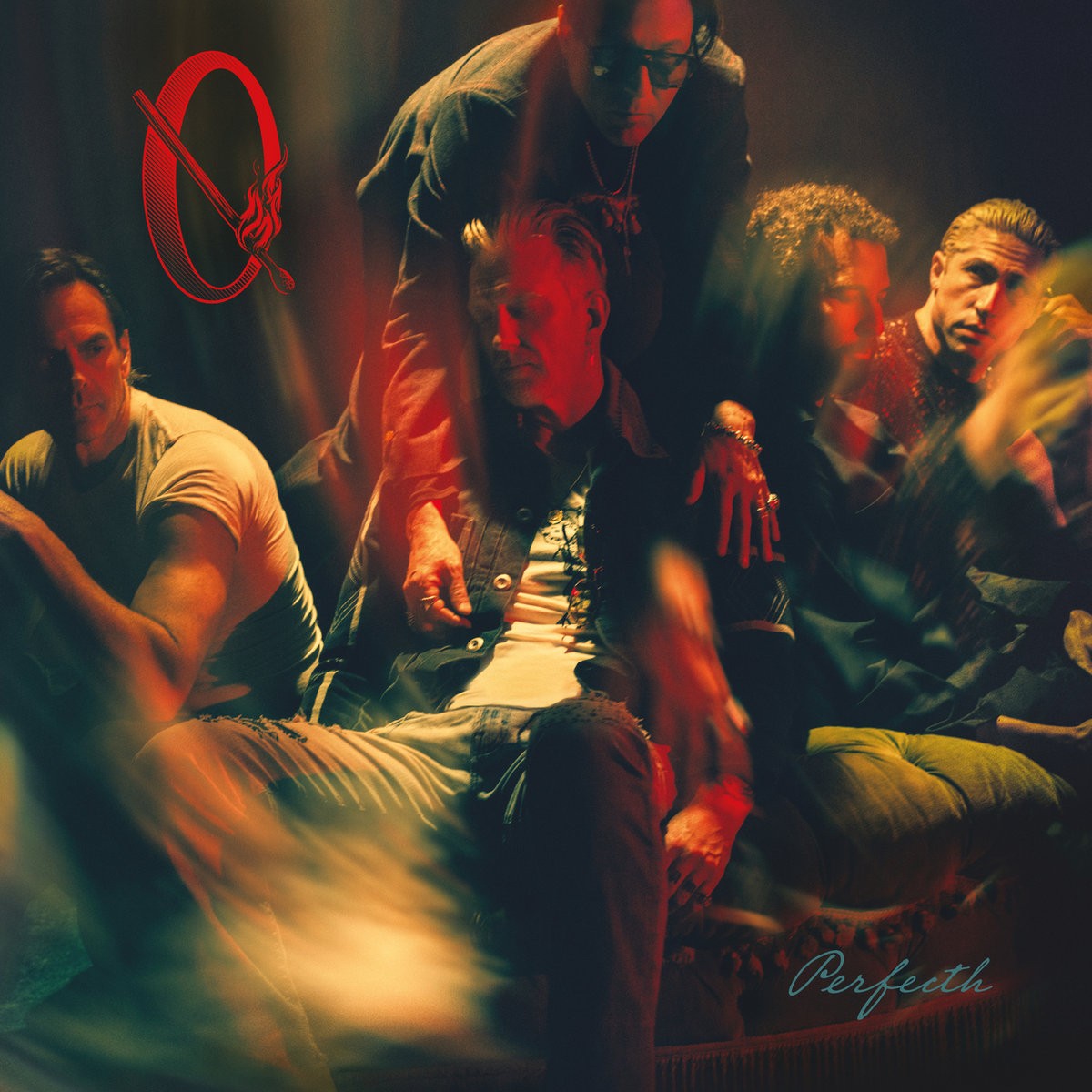
 The Japanese concept of kintsugi has found its way into a variety of songwriting in the past decade or so. The concept involves repairing broken pottery with lacquer that has been mixed with silver or gold, highlighting the beauty in repair and showing the history of the object in terms of breaking and healing. Death Cab for Cutie and The Rural Alberta Advantage both wrote albums that were grounded in this concept, and Lana Del Rey included a song using the concept on her last album. Perfecth, the ninth album from Palm Desert rockers Queens of the Stone Age, uses the concept as a practical guide to finding their path forward from the upheaval of their lives and the world.
When, on Parquet Courts’ “Instant Disassembly,” Andrew Savage sings “Turn on the white noise murmur of the AM band/ And the last classic rock band’s last solid record creeps in,” it’s hard not to think of …Like Clockwork, the 2013 album from Queens of the Stone Age. Certainly there is a direct line to “classic rock” that can be drawn backward through the band’s discography through grunge and alt rock back into ’70s hard rock, first Motorhead and AC/DC and then hurtling back into Black Sabbath and Led Zeppelin. …Like Clockwork was the last unimpeachable Queens record, and the last that encompassed the sound that had carried them through the end of the ’90s and into the 21st century, The two follow-ups, 2017’s Villains and 2023’s In Times New Roman…, were valiant efforts at figuring out where to go beyond the same old riffs and lines.
The former skewed toward a pounding dancefloor sound, a shiny set of fist-pumping and foot-stomping anthems that enlisted Mark “Uptown Funk” Ronson to produce. The latter went hard in the other direction, trying to find its way by diving back into the old bluesy doom of the interstitial moment between Kyuss and Queens. Both were a fine example of a band trying to do somewhat different things, but neither held a candle to the sound of Queens in their prime. Perfecth doesn’t try to do this, and in this sense it is a much more successful effort than either of its predecessors. It’s looser than any previous Queens record, less focused on tightly wound riffs and more willing to indulge in slow moments and acoustic guitars.
The album’s first single, “Insignificant Other,” spends nearly six minutes outlining exactly what this means. It’s easily recognizable as a Queens song, in part because Josh Homme’s vocals are an obvious flag. The way it’s constructed speaks to other things, though. It’s Queens, but with a definite ’70s rock swing, like they were haunted in the studio by the unquiet spirit of the Guess Who. The guitar lines have a fluidity that sets them apart from the rest of the band’s work, even while they still live within the Josh Homme Scale. There’s some quiet, subtle piano, even. The song before it, “It’s Only Love,” which opens the record, deals in low-key melancholy with a feel that implies that steady semi-robotic desert vibe that Queens has always had but with a more organic, sloppier playing style. The groaning strings in the bridge fade through the end and lead into “Insignificant Other” in a carefully constructed way that speaks to a sense of intentionality that carries through the album as a whole.
There are a lot more quiet moments on the record than on any previous Queens release. “From the Cliff” and “Easy Street” are both folk-adjacent songs built around acoustic guitars. The former rambles like an old Zeppelin number, featuring some more of that subtle, gentle piano and Homme crooning for all he’s worth. The latter is a big open-hearted piece whose antecedents are things like “Ob-La-Di, Ob-La-Da” and “Diamonds on the Soles of Her Shoes.” They’re the biggest indication on Perfecth that Queens are taking a big turn toward trying new things.
Elsewhere these new ideas are melted into the band’s usual sound to fill in the spaces; the real kintsugi moments on the album are songs like “Mono” and “Phantom Limb,” which are Queens songs that have been broken apart and remade. “Mono” has the big drums that have always driven Queens songs but plays around them with less urgency; there’s also a moment where the production flutters between mono and stereo to simulate the kind of anxiety spiral-inducing heartbreak that Homme sings about on the song. “Phantom Limb” repurposes the acoustic guitar for a lumbering stomp that is a sort of half-time version of the usual Queens beat, with a stretched-out chorus that is a major step past the usual tight melodies Homme trades in. They both speak to what the band is trying to accomplish here: Queens of the Stone Age, but older, wiser and more willing to face their problems rather than simply rocketing past them.
There are still a couple of hard-edged moments on the album, even among the experimentation and gold-dusted lacquer. “Where the Goth Girls At?” is the most typical Queens song here, full of the usual contention between loud drums and loud guitars and, with the somewhat lightweight tongue-in-cheek lyrics, it feels oddly out of step with the rest of the album. “Sunday,” originally co-written with Iggy Pop for his 2016 Post Pop Depression album, has the foot-moving shuffle of something from Villains and the hot, slashing guitar of In Times New Roman… but Pop’s touch on the writing makes Homme’s voice into something remarkably like later-period David Bowie (circa, say, Reality) rediscovering something from the Lodger/Scary Monsters era. It’s also an aberration on a much quieter record, but the sense of experimental fun (and the breathy Kate Bush-esque backing vocals) make it a more welcome one.
The poetic ideal of kintsugi is one that artists have flocked to as an inspiration, but Perfecth is one of the few works of those to actually embrace the concept as a guiding principle for the music. Queens of the Stone Age broke their sound apart and then spent a great deal of time putting it back together while using pieces of other influences that have never previously been considered on a Queens album to weld them all. The end result is about as perfect as the name – fascinating in places, a bit of a slog in others – but the band is trying something new, and they make that happen in a much more successful fashion than most aging rockers ever manage.
Perfecth by Queens of the Stone Age
Summary
Perfecth, the ninth album from Palm Springs desert rockers Queens of the Stone Age, uses the concept of kintsugi as a practical guide to finding their path forward from the upheaval of their lives and the world.