
The “blue tsunami” that struck the United States on Election Day saw not only a clear rejection by voters of the second Trump presidency, but also plenty of history in New York.
For starters, Gov. Kathy Hochul, the first female governor in New York history, not only won her second full term in office in a landslide; she was elected this time alongside former City Council Speaker Adrienne Adams of Queens, who will become the state’s first Black female lieutenant governor.
When they take their oaths of office in January, Hochul and Adams will be the first-ever female pair at the top of the executive branch in New York. Their election together is a tremendous achievement for New York, a state that led the way in women’s suffrage in the mid-1800s and championed the effort that finally gave all women in America the right to vote in 1920 through the 19th Amendment’s ratification.
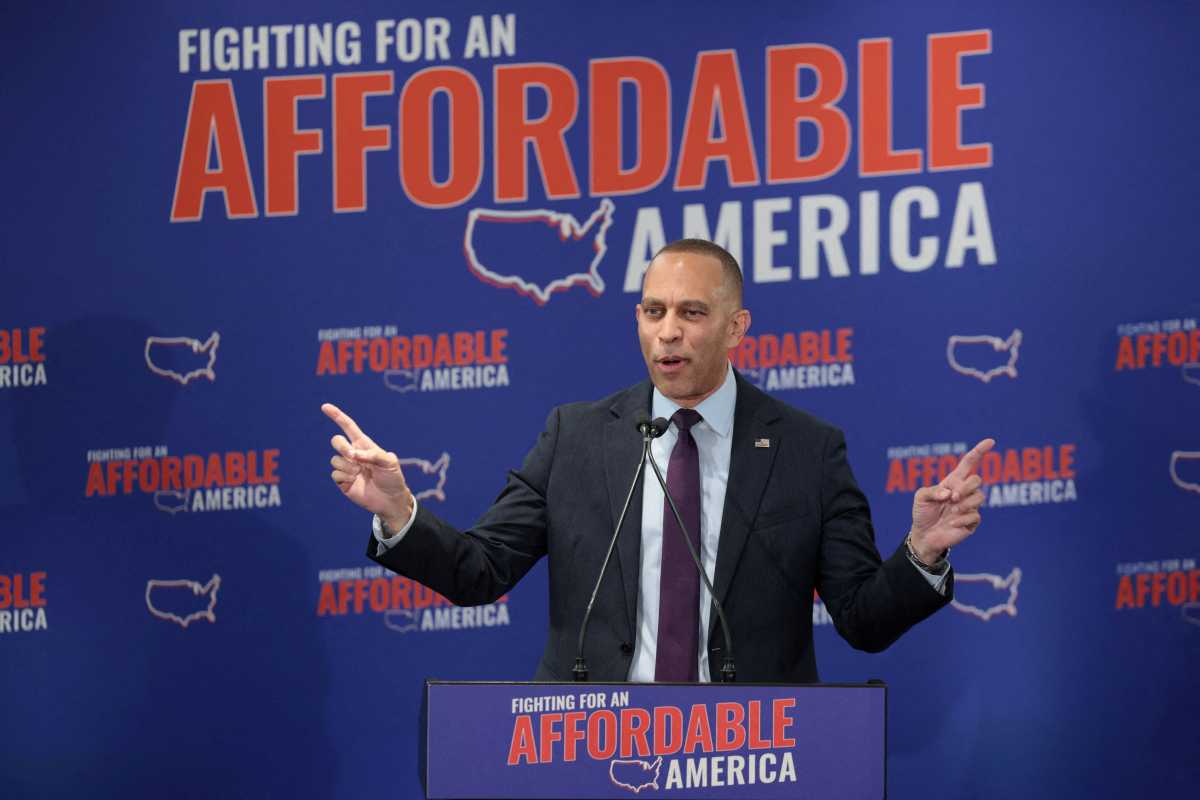
And then there’s U.S. Rep. Hakeem Jeffries of Brooklyn, the House minority leader, who is poised now to become the first-ever Black Speaker of the House when the new Congress convenes in January. He grew up in Crown Heights and was a product of the city’s public school system, having graduated from Midwood High School.
After spending many years as a lawyer, Jeffries first entered politics as a member of the state Assembly. Since his election to Congress in November 2012, he has risen to prominence in the Democratic caucus as both an outspoken critic of the Trump administration and a champion of the party’s economic and civil rights agendas.
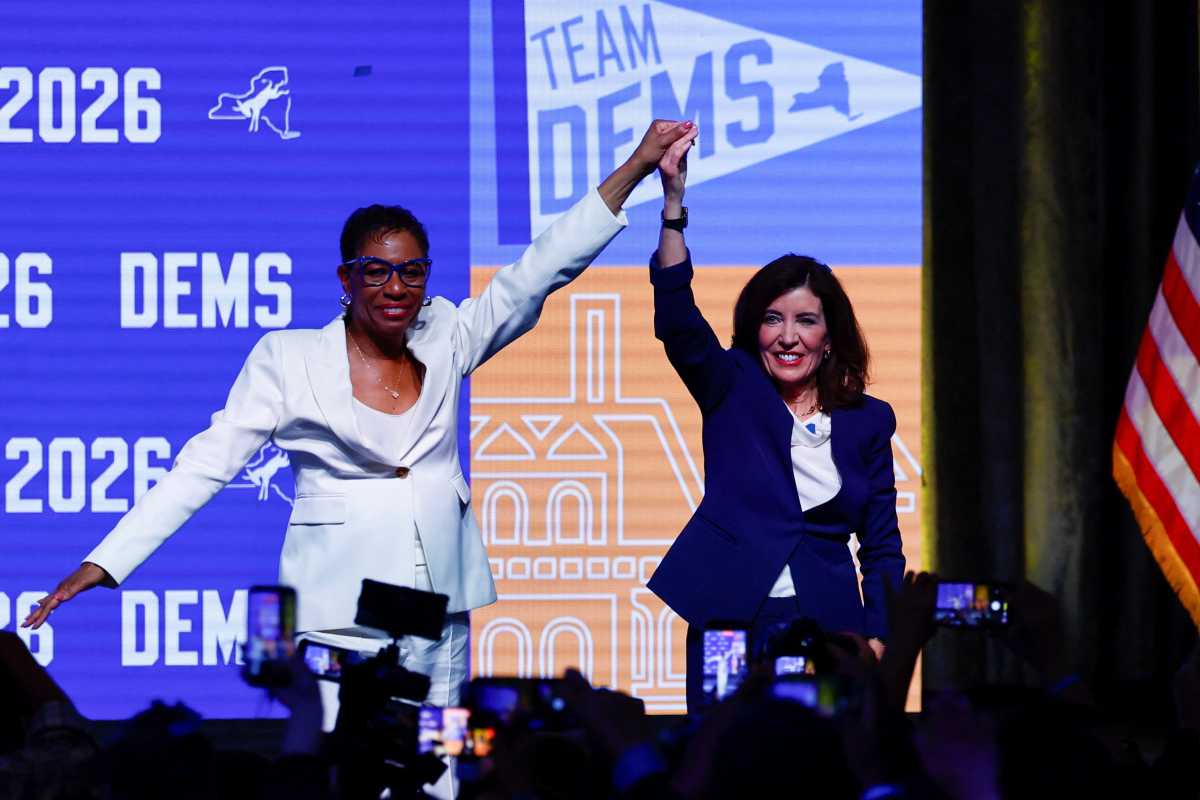 Gov. Kathy Hochul, the first female governor in New York history, not only won her second full term in office in a landslide; she was elected this time alongside former City Council Speaker Adrienne Adams of Queens, who will become the state’s first Black female lieutenant governor.REUTERS/Jeenah Moon
Presuming his caucus will elect him as speaker, Jeffries will be asked to help emphasize Congress’ constitutional power as a check on presidential authority while also advancing what he called “transformational change” for the American people to ease their economic pain — restoring expired Affordable Care Act tax credits, reversing Medicaid cuts, stopping tariff increases that Trump launched in 2025, and seeking an end to the U.S. war in Iran that spiked fuel costs.
And he’ll have to advance this agenda along with the Democratic Senate, likely to be led by a fellow Brooklyn resident, U.S. Sen. Chuck Schumer. They will both need to channel their New York spirit and savvy to answer the voters’ clear call for change in this election.
Indeed, New Yorkers and Americans spoke loudly with their votes. They are fed up with high costs. They are disturbed by ICE operations. They are angered by the chaos coming out of the Trump White House.
And they believe in our system of government, the rule of law, and that we, the people, send representatives and senators to Washington not just to speak for all of us — but also to improve, not harm, our lives.
To do that means that Jeffries, Schumer, and the Democratic Congress will need to negotiate budgets and laws with the Trump administration — something which some voters may not like to hear. It will not be easy, but it is necessary for a democratic government like ours to function.
Change can be achieved, and the voters’ needs can be addressed, as long as the Democratic Congress and its leaders walk that fine line between accountability and negotiation.
It is up to Jeffries and Schumer now to show the American people that it can make our government work better while simultaneously holding to account those who have done it harm.