
 Photographs by Yvonne Vávra.
by Yvonne Vávra
Ask anyone who’s lived on the Upper West Side long enough, and they’ll tell you: this neighborhood used to move after dark. Crowds from all over the city came uptown to dance away nights that didn’t quit. But now? I like to think it’s not entirely my fault if my idea of a good night might be scrolling through a Reddit thread—especially when, like the other day, it’s a juicy one about what Upper West Siders love to complain about.
Someone had asked for the three biggest issues Upper West Siders face, and I was in for a shock. Apparently, I belong to one of the most disliked groups in the neighborhood. Maybe I’ve been fooled by all those smiles on the street, but the number of dog-related comments didn’t lie: we dog owners and our zigzagging sidewalk antics are the scourge of the Upper West Side. As I read through the many complaints, I lowered my head and pinned back my ears in shame. Big puppy eyes, ok?
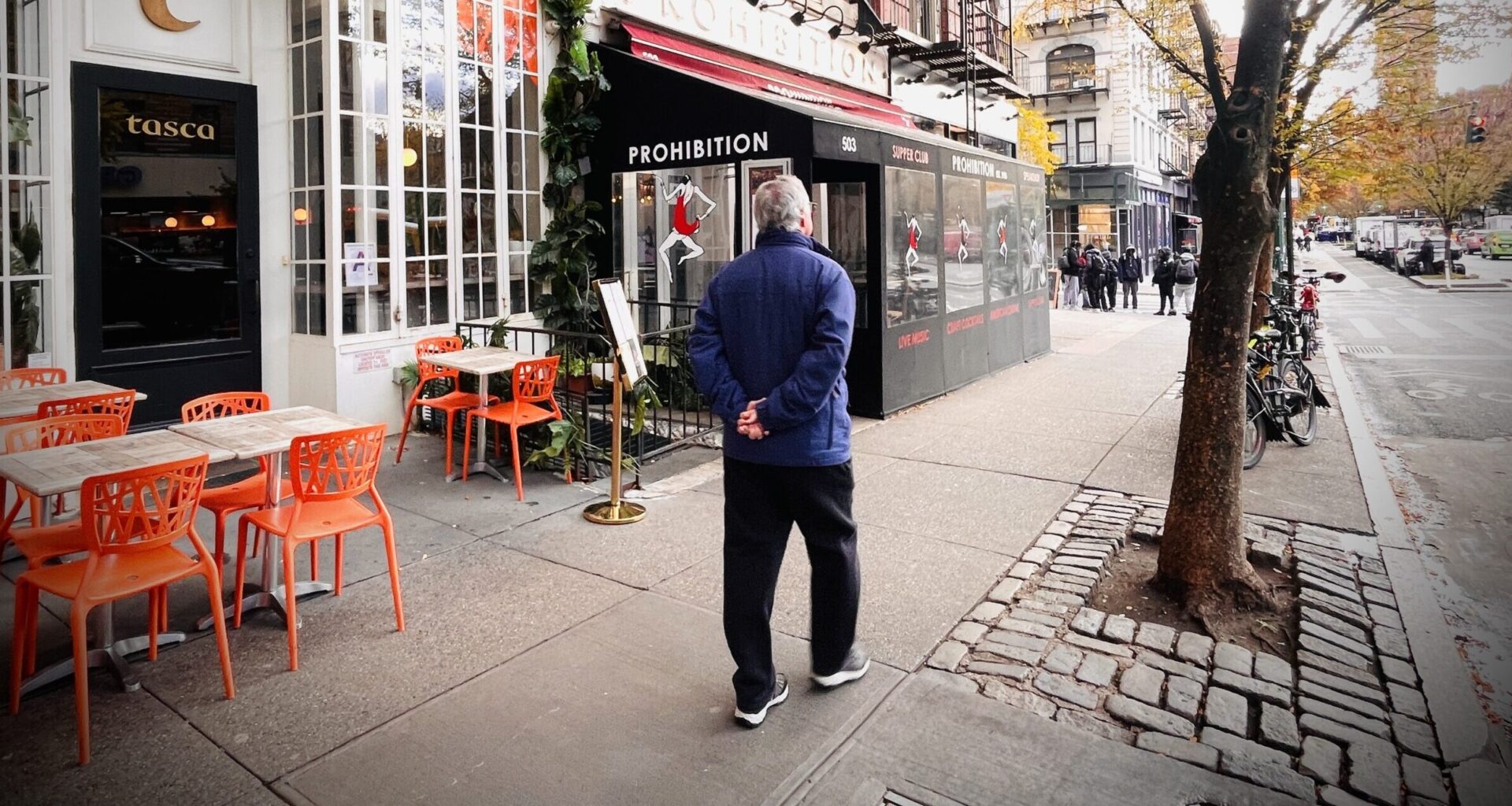
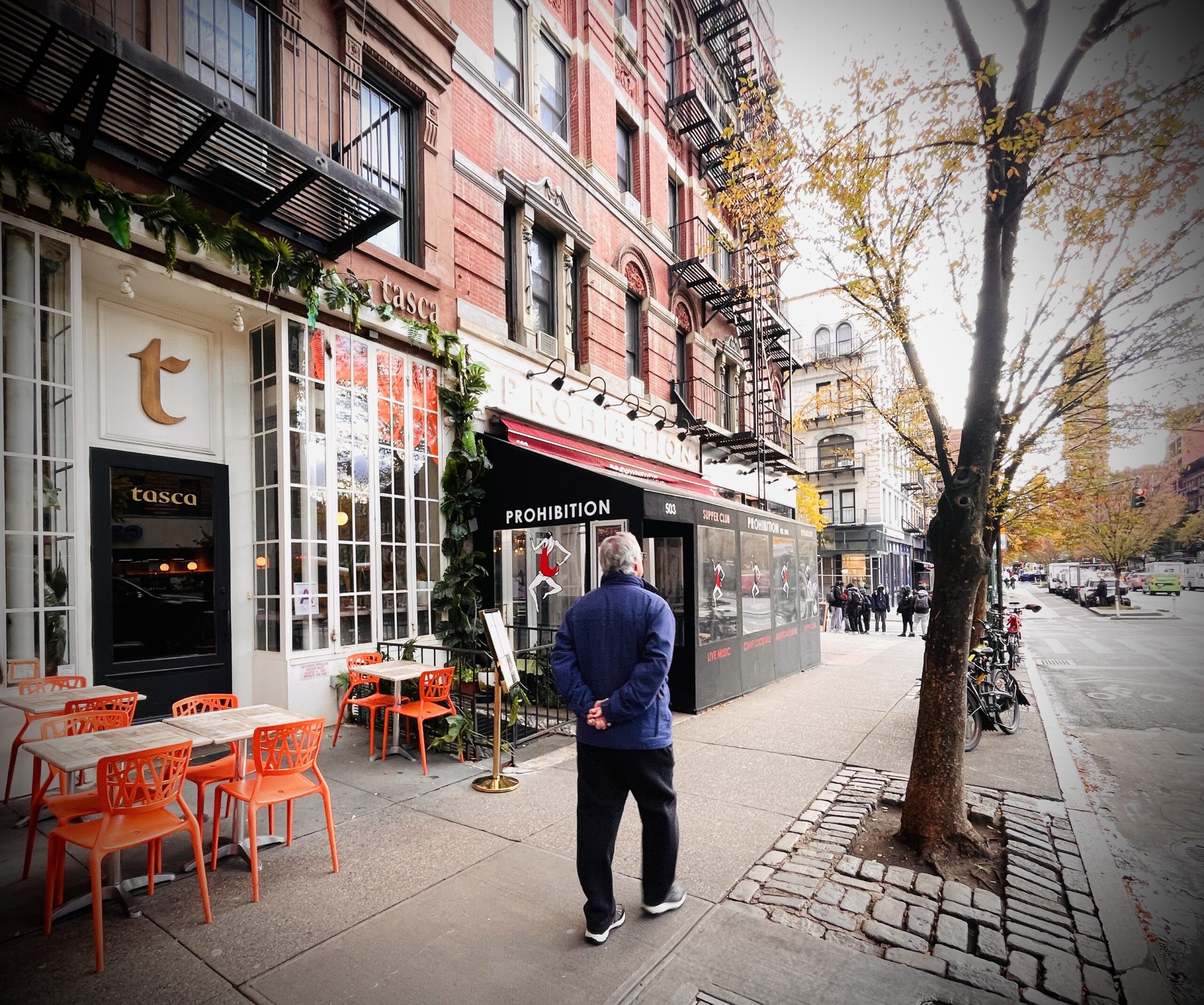
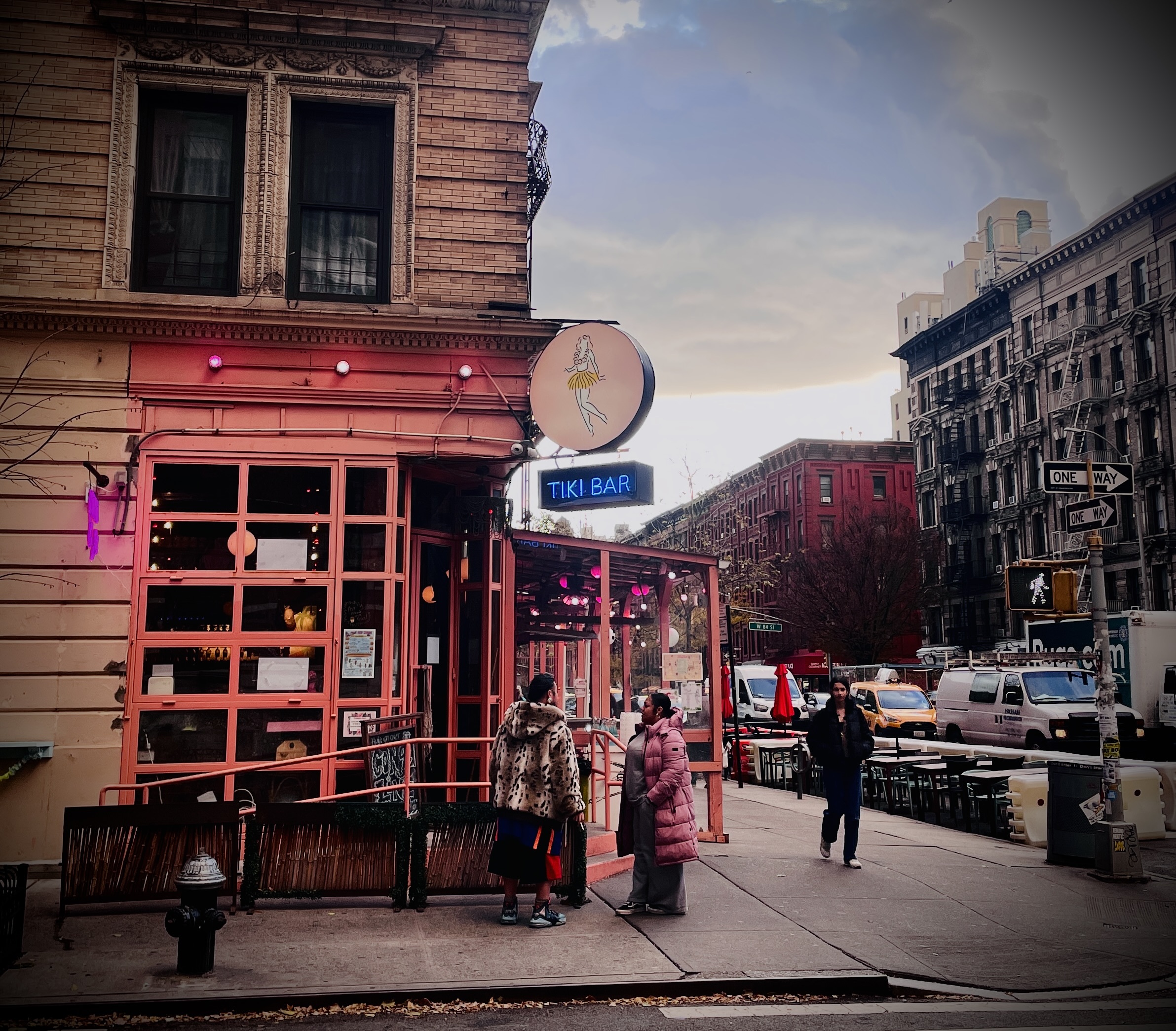
Other grievances included high rents, blaring sirens, not enough good donuts, and—interestingly—the Planetarium Post Office on 83rd Street, which, according to one commenter, is “some tier of purgatory.” Intriguing as that is, it was another comment that stuck with me most: no good nightlife. Sure, we have bars, and yes, some play music that makes you want to bob your head a little. There’s definitely some shaking and grooving at Prohibition on 84th and Columbus. But where are the phenomenal nightspots where you can walk in, let your hair down, and cut loose until the morning light?
Once upon a time, the Upper West Side had plenty of those.
A century ago, the area around Columbus Circle was where New Yorkers in the 1910s and 20s went for a good late-night time. Notable theaters—including the Majestic, one of the city’s most famous—were surrounded by glitzy nightclubs and restaurants. At Healy’s, on 66th and Broadway, after-theater crowds would dine and dance between ice-skating shows on the indoor rink. Others partied at Child’s Restaurant, which opened in 1911 on the site that is now the Time Warner Center. Among them were F. Scott Fitzgerald, Jimmy Durante, Eddie Cantor, Charlie Chaplin, and more—though it’s not clear if any of them took part in the epic fights the place was infamous for. The Bowery Boys podcast recounts rowdy parties, with women in evening gowns pulling each other’s hair and men shouting and hurling cakes across the room.
Sophie Tucker was a regular at Child’s—and the star performer at Reisenweber’s, which opened at 58th and 8th in 1910. It quickly became one of the trendiest clubs in the city, and was actually the first to lure crowds with the promise of dedicated space for dancing. Through the 1910s and 20s, New Yorkers packed all four floors: they feasted in twelve different dining rooms, enjoyed Sophie Tucker’s cabaret nights, and danced into the morning hours—until the club closed in 1922 after repeated police raids during Prohibition. Today, Reisenweber’s corner is home to drugstore and banking errands. The party is over.
Among the dance clubs Rag readers might remember from their own nights out, some became legends of the ’70s, ’80s, and ’90s—one even pulling off the nearly impossible feat of turning Monday nights into an event. China Club, which opened in the summer of 1985 in the basement of the Beacon Theater, was the kind of place “where regular guys feel like celebrities and celebrities feel like regular guys,” as New York Magazine wrote. And when we talk celebrities, we mean Bowie, Iggy Pop, Madonna, Steve Winwood, Elton John, Prince, Springsteen—the works. In 1997, China Club moved to Hell’s Kitchen, where it finally closed in 2010.
Upper West Siders danced through the decades at Hurrah on 62nd and Broadway, at the legendary Continental Baths and Plato’s Retreat in the Ansonia basement, at the Crane Club at 79th and Amsterdam, and many more spots. Trax, a nightclub at 246 Columbus between 71st and 72nd Streets, became a hotspot where the music industry came to play—everyone from superstars to executives, journalists to groupies. The New York Times described it in 1978 as providing “comfortable hangouts for a subculture full of genuine friendships and professional relationships, and a spot for others to gawk at them and allow them to feel important.” Trax lasted a decade in that space, followed by the Baja, and finally Columbus 72, which closed in 2014. Today, the venue still sees plenty of moves and sweat—but now it’s on the blue mats of Renzo Gracie’s Jiu-Jitsu school.
Columbus 72 actually held the last cabaret license on the Upper West Side—the permit a venue needed to legally allow dancing. So when it closed, the party really was over for good. Or as the Rag put it at the time: “That means that the only place you can dance now is in your bedroom with your cat.”
But hold on! New York City repealed the old Cabaret Law in 2017, so technically, nothing’s stopping us from dancing again. It’s time someone opened the next great Upper West Side nightclub and we traded the slippers for dancing shoes. My dog—not the cat—could use the night off.
Yvonne Vávra is a magazine writer and author of the German book 111 Gründe New York zu lieben (111 Reasons to Love New York). Born a Berliner but an aspiring Upper West Sider since the 1990s (thanks, Nora Ephron), she came to New York in 2010 and seven years later made her Upper West Side dreams come true. She’s been obsessively walking the neighborhood ever since.
Subscribe to West Side Rag’s FREE email newsletter here. And you can Support the Rag here.