
Home » America Travel News » Connecticut Joins Texas, Washington, New York City, Los Angeles, and Boston as America’s Worst Traffic Nightmares Strangling Commuters – Can You Survive the Road Madness?
Published on
November 17, 2025

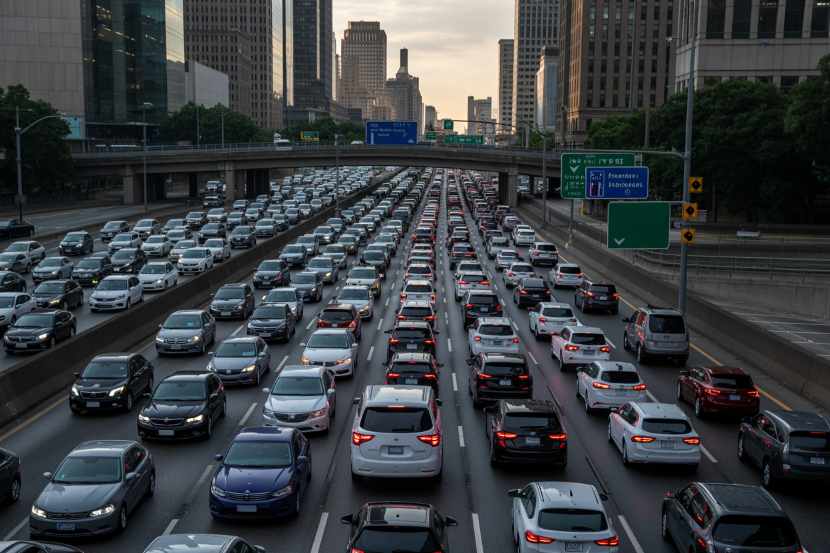
Connecticut has now joined the ranks of Texas, Washington, New York City, Los Angeles, and Boston as one of America’s worst traffic nightmares. Commuters across these states are facing a daily battle with gridlocked roads, endless delays, and rising frustration. The road madness is strangling residents, forcing them to spend countless hours stuck in traffic. Connecticut, once considered a quieter state, is now experiencing the same intense congestion that has long plagued larger cities. This new development highlights how even smaller states are not immune to the growing traffic crisis sweeping the nation. With major highways like I-95 becoming increasingly overcrowded, the impact is felt by everyone, from local drivers to long-distance travellers. As road conditions worsen, the question remains: Can you survive the madness? Stay tuned as we explore the causes and potential solutions to Connecticut’s rising traffic woes.
Connecticut: The Hidden Traffic Nightmare
When you think of traffic jams, Connecticut might not be the first state that comes to mind. However, one of the busiest stretches of road in the entire US lies here. According to the 2024 Global Traffic Scorecard by INRIX, the southbound corridor on Interstate 95 (I-95) from Westport through Norwalk, Darien, Stamford, and into Greenwich is the most congested in the nation. This stretch of road is crucial for the flow of traffic in the region, as it connects New York City with other states in the Northeast.
The report reveals that drivers lose an astonishing 150 hours annually due to traffic delays in this corridor. That’s more than six days spent sitting in traffic every single year! This congestion is mainly due to the heavy volume of commuters traveling in and out of New York City, as well as trucks moving goods across state lines.
Why It Matters
This data serves as a reminder that even small states like Connecticut can face severe congestion. The impact of such delays can be felt by thousands of workers, commuters, and businesses relying on efficient transport. Despite Connecticut being a relatively small state, this one corridor affects traffic flow across a much broader area, including parts of New York and New Jersey.
The Limitation
It’s important to note that this issue is not state-wide. The congestion is specific to this particular I-95 corridor, so other parts of the state might not face the same intensity of traffic problems. However, the sheer scale of delays in this corridor speaks volumes about the growing infrastructure crisis in the region.
Texas: A State Wrestling with Overcrowded Roads
Texas, one of the largest and fastest-growing states in the US, is home to some of the most heavily trafficked roads in the country. Major cities like Houston, Dallas, and Austin are notorious for their sprawling traffic jams, especially during peak hours. The Texas Department of Transportation (TxDOT) keeps track of these high-traffic areas and regularly reports on the most congested road segments.
But it’s not just urban areas that suffer. The state is also dealing with truck congestion, as noted in the “Top 100 Truck Bottlenecks – 2025” report. Texas ranks highly on this list, showing the extent of its traffic problems. Trucks moving goods across the state are often stuck in long queues, leading to delays for everyone.
Why It Matters
Texas’ booming population and economic growth are driving up the number of vehicles on the roads. Major highways like Interstate 35 and I-45 often grind to a halt, as they are the main routes for both personal vehicles and heavy trucks. The state’s growing urban centres mean that these congestion issues will only worsen unless something is done to address infrastructure needs.
While TxDOT provides crucial data on the most congested segments, the lack of a state-wide measure showing the total “congestion hours lost per driver” leaves some gaps in the overall picture. Nevertheless, it’s clear that Texas is struggling to keep up with the demand for better, more efficient transportation.
The Limitation
The congestion data provided by TxDOT doesn’t offer a clear, state-wide figure for how much time is lost to traffic. Without this, it’s difficult to fully grasp the scope of the issue across the entire state.
Washington: A State Facing Major Congestion Challenges
When you think of traffic in the Pacific Northwest, Seattle probably comes to mind. The I-5 corridor through Seattle and Everett is one of the most congested in the region, with a staggering 78% of lane miles experiencing congestion during peak hours. According to data, the average driver in the Seattle-Everett area loses about 55 hours annually to traffic delays. That’s over two full days spent sitting in traffic each year!
While Seattle’s traffic issues are well-documented, the problem is not confined to just this area. Washington State has some of the highest rates of routinely congested lane miles in the country, and many drivers face long delays on a daily basis.
Why It Matters
The impact of these delays goes beyond just frustration. The economic toll is huge, with commuters wasting valuable work hours and businesses suffering from delayed shipments. Furthermore, as Seattle continues to grow and attract more residents, these congestion problems are expected to worsen unless major infrastructure improvements are made.
Washington is also struggling with infrastructure issues across the state, making it one of the worst places to drive in the US, according to a WalletHub study for 2025. Other states, like Hawaii and Colorado, also ranked poorly for their traffic conditions.
The Limitation
While Washington’s traffic data is focused on specific metro areas, it’s important to recognise that congestion affects much of the state, particularly along the I-5 corridor. The challenges faced by drivers in Seattle may soon be mirrored in other growing urban centres across the state.
Additional States Facing Severe Traffic and Infrastructure Problems
According to WalletHub’s 2025 study, several other states also struggle with traffic and infrastructure problems. Hawaii, ranked the worst, suffers from limited road capacity and rising congestion. Colorado also appears in the “worst states to drive in” list due to its growing population and frequent traffic bottlenecks.
On the other hand, states like Kansas, Oklahoma, and Iowa are performing better in terms of road conditions and traffic flow. These states have lower levels of congestion and tend to have fewer issues with crumbling infrastructure. However, the contrast between these states and those facing severe traffic problems highlights the disparity in infrastructure quality across the country.
The Limitation
While the study provides a snapshot of traffic issues, it is not always clear what specific measures are being taken to address these problems. For example, in Hawaii, limited space and high vehicle demand make infrastructure improvements difficult, while in Texas, it remains unclear whether the state can keep up with its fast-growing urban population.
New York City: America’s Traffic Nightmare
New York City (NYC) is known for its fast-paced lifestyle, towering skyscrapers, and bustling streets. However, the traffic situation in the city is a nightmare for anyone who drives. According to the 2024 Global Traffic Scorecard by INRIX, NYC tops the list for the worst traffic congestion in the United States. Drivers in the New York metropolitan area lose an average of 102 hours every year to traffic delays.
These 102 hours add up to more than two working weeks lost on the road. That’s time you could have spent working, relaxing, or spending time with your family. The total cost for this time lost is staggering, amounting to about US$1,826 per driver annually. The congested corridors in Manhattan, the Bronx, and Brooklyn are often at a standstill, especially during peak hours.
Why does New York have such terrible traffic? The city is home to millions of residents and has a massive influx of commuters from neighbouring states. The streets are not designed for the volume of traffic they carry. With the high number of vehicles, deliveries, and taxis, the city’s roadways are constantly congested.
The Solution: Congestion Pricing
New York has taken a bold step to tackle this problem. In January 2025, the city introduced congestion pricing, a scheme that charges drivers a toll to enter parts of Manhattan during peak hours. Early data suggests that this initiative is already reducing the number of vehicles entering the most congested areas, which could help reduce delays and improve air quality.
However, this is just one step in solving the city’s traffic problems. Even with congestion pricing, New York’s roadways remain heavily used, and the wider region still suffers from gridlock. Major investment in public transportation, better road management, and long-term urban planning will be key to reducing congestion in the future.
Los Angeles: Stuck in Traffic for Days
Los Angeles (LA) is another city infamous for its traffic jams. Known for its sprawling urban layout and heavy reliance on cars, LA is home to some of the most congested highways in the United States. The 2024 INRIX Global Traffic Scorecard estimates that drivers in LA lose an average of 88 hours each year stuck in traffic.
That’s about three and a half days of your life spent not moving. If you consider the time lost by all the drivers in LA, the economic cost is enormous. In 2015, a report from TRIP (a national transportation research group) estimated that traffic delays in LA cost drivers about US$1,774 per year due to wasted time and fuel.
Why is LA so congested? The city has a vast network of highways, but it also has a huge population, and most people depend on their cars to get around. While public transportation is available, many people prefer to drive, making the roads even more crowded. Highways like the I-405 and I-10 often have more than 300,000 vehicles passing through each day. This leads to major traffic jams, especially during rush hour.
The Solution: Public Transit and Carpool Lanes
In an effort to reduce traffic, LA has implemented a range of solutions, including expanding carpool lanes and investing in public transportation. The Metro system is growing, and more bus and subway routes are being added to encourage people to leave their cars at home.
However, despite these efforts, LA’s car culture and sprawling city layout make it difficult to solve the problem. It will take years of investment in public transportation and infrastructure to reduce the congestion significantly. Until then, traffic jams in LA will remain a daily struggle.
Boston: A Smaller City with Big Traffic Problems
Boston, while much smaller than New York and LA, faces its own severe traffic issues. The city’s road network, built long before the era of cars, is outdated and not designed for today’s traffic volumes. The 2024 INRIX report shows that drivers in Boston lose an average of 79 hours per year due to congestion, which may seem lower than New York and LA but is still a significant amount of time.
Boston’s unique layout, with narrow streets and many intersections, contributes to its traffic troubles. The city is also a major hub for commuters from the surrounding suburbs. During rush hour, streets like the I-93 southbound to the Charles River experience some of the worst congestion in the region. A study found that this stretch of road alone adds 109 extra hours of driving time to the average driver’s year.
The economic impact of traffic congestion in Boston is substantial as well. Drivers lose around US$1,414 every year in wasted time and fuel. Businesses are affected by delayed shipments, and commuters face long, stressful drives every day.
The Solution: Congestion Pricing and Improved Transit
Boston is considering following New York’s example and introducing congestion pricing in certain areas of the city. This could help reduce the number of vehicles on the most congested streets and encourage people to use public transportation instead.
In addition to pricing, there are ongoing efforts to improve the city’s transit system. Expanding subway lines, improving bus routes, and modernising the road network could help alleviate some of the congestion. However, like New York and LA, solving Boston’s traffic woes will require a combination of new policies, infrastructure upgrades, and changes in how people commute.
Key Takeaways: The Battle Against Traffic
The traffic problems in New York, Los Angeles, and Boston are some of the worst in the country. Drivers in these cities lose an incredible amount of time each year, and the economic costs are enormous. While New York has introduced congestion pricing, LA is expanding its public transportation network, and Boston is considering similar measures, the battle against traffic congestion is far from over.
What these cities have in common is that they all face unique challenges due to their population density, infrastructure, and transportation habits. The solutions being implemented are a good start, but it will take time to see significant improvements. Until then, drivers in these cities will continue to lose valuable hours stuck in traffic.
For anyone living in or visiting these cities, it’s clear that the future of transportation will depend on a combination of smarter policies, better public transport, and long-term planning. Only then will cities like New York, Los Angeles, and Boston be able to reduce the impact of their terrible traffic and give residents back some of the time they’ve lost on the road.
Why We Must Address America’s Traffic Crisis
The issues faced by states like Connecticut, Texas, and Washington are a wake-up call. With rising populations and growing urbanisation, traffic congestion is becoming a serious problem that affects everyone. From wasted time to economic losses, the impact is significant.
The key to solving these issues lies in smart urban planning, investment in infrastructure, and efficient public transportation systems. It’s not just about fixing the roads – it’s about planning for the future. As more people continue to move into urban centres, the need for sustainable solutions becomes more urgent. If left unchecked, these traffic nightmares will only get worse, leading to even longer delays, higher costs, and more frustrated drivers across the country.
It’s time for the US to rethink its transportation strategies and invest in the infrastructure that will make our roads safer, faster, and more efficient for everyone.
