
“I was so astonished and lost my voice when I read the blog,” says Takasuka.
While other examples of offspring turning against their mothers have been documented in the animal kingdom, this report represents a new pattern of matricide in nature, one in which the original “family” does not gain anything by killing their mother, says Takasuka. In this case, it’s only the parasitic ant, which is neither the children nor the mother, that receives “all benefits from matricide,” he says.
How the drama unfolded
Queens of some ant species are known to invade and take over colonies by directly killing the host queen, or by turning workers against her in some ways. However, exactly why the workers betray their own queen mother was unknown.

Limited-Edition Classic Collection
Inspired by Earth’s highest peak and deepest point, get limited-edition holiday gifts and a National Geographic subscription.
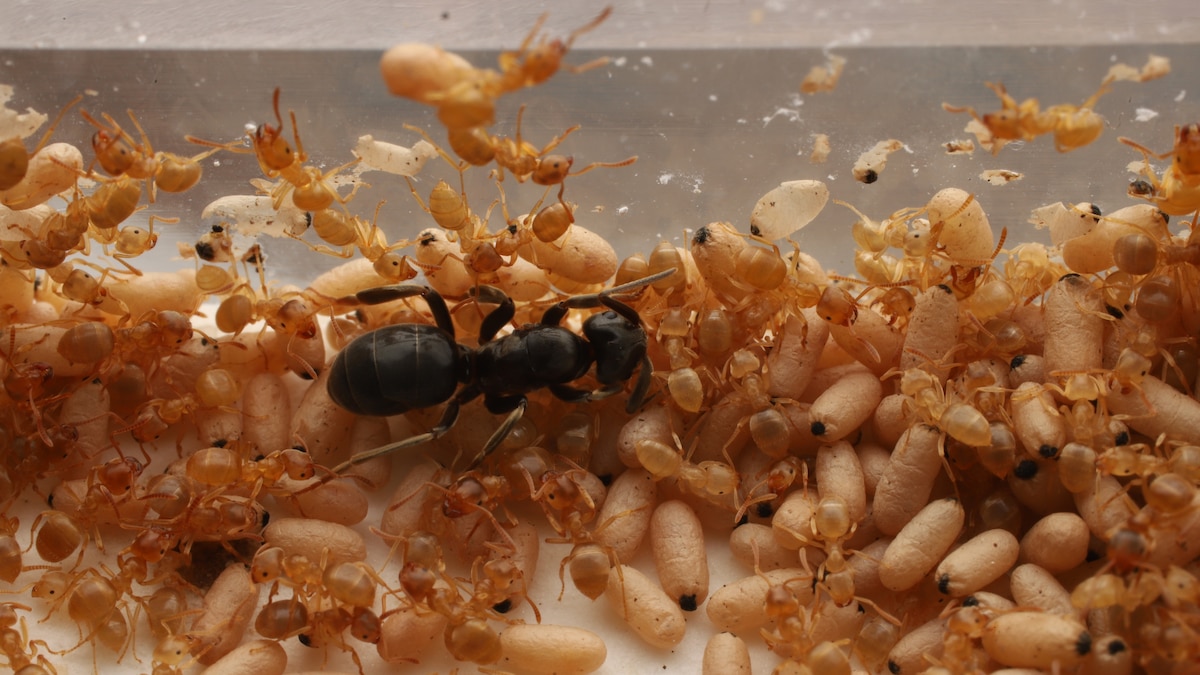
To find that out, Shimada collected a queen ant of Lasius orientalis, an ant species also known as “bad-smell ant’’ known to parasitize other ant species, from a field with his son and left it overnight in a small container with individuals of another ant species, Lasius flavus.
This simulates what usually happens in the wild when, before entering the nest, the intruder queen would usually acquire the odor of the colony to go unnoticed once inside it. Some species, for example, do it by rubbing their body against that of workers.