
THE BLUEPRINT:
Long Island officials unite to challenge a proposed corporate tax hike in New York State.
The plan could raise the corporate rate from 7.25% to 11.5%, matching New Jersey.
Leaders warn it could drive businesses and jobs out of New York.
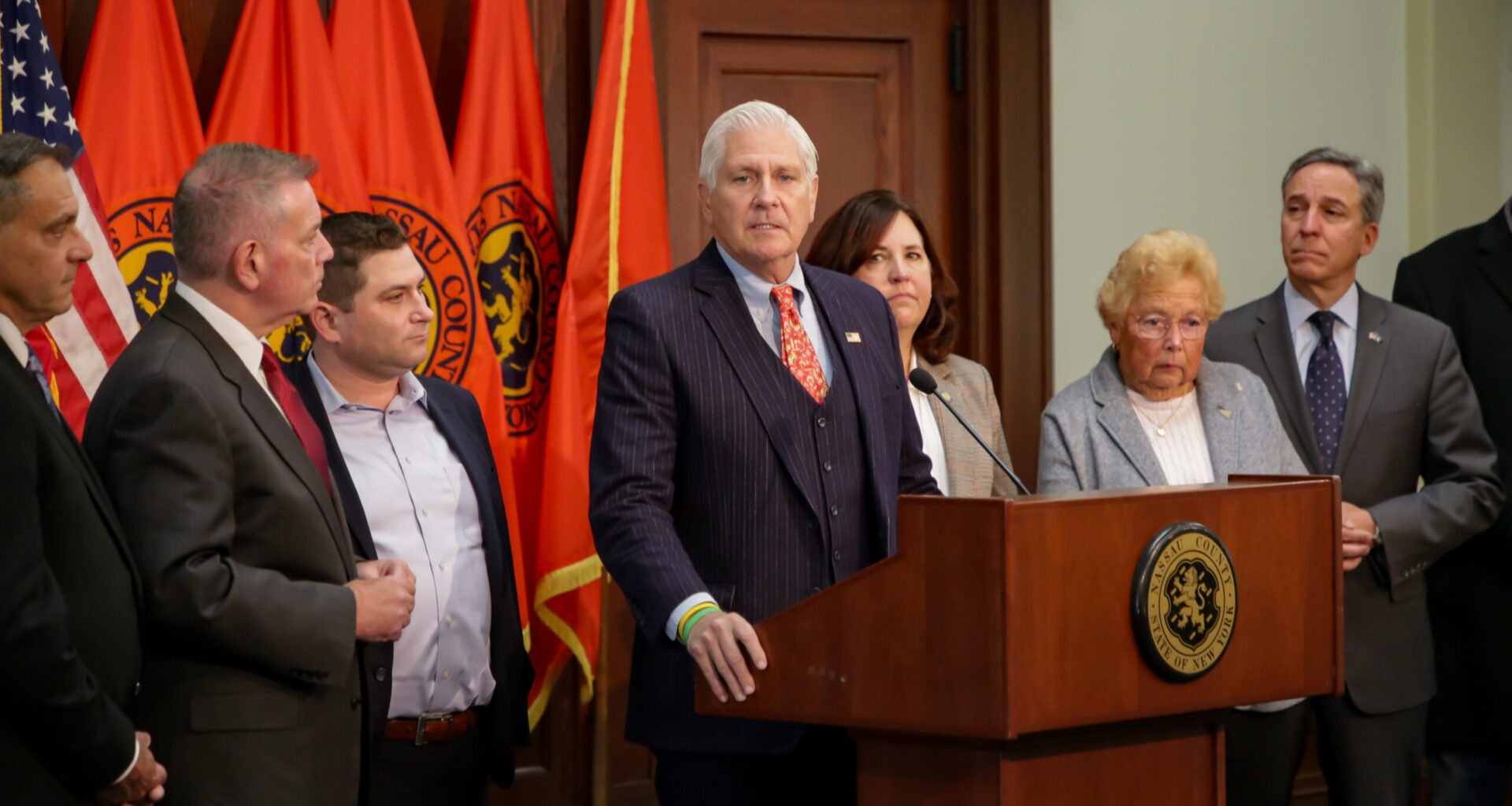
Long Island leaders have formed a business and political coalition to fight a proposed corporate tax increase in New York State that would raise the rate from 7.25 percent to 11.5 percent. The hike would harm the metropolitan region and beyond, local business leaders and elected officials said Monday.
“This is bad for Nassau County, this is bad for Long Island, this is bad for the metropolitan region, and this is bad for New York State,” Bruce Blakeman, the Nassau County executive, told reporters at a news conference in Mineola on Monday. “We are going to fight very hard against it.
“This tax increase on corporations will be passed along to consumers, and many businesses will say they’ve had enough in New York State,” Blakeman said. “They’ll leave, and they’ll take their jobs with them.”
The coalition was formed just days after Zohran Mamdani, the New York City-mayor elect met with Kathy Hochul, the New York State governor, according to Politico. Mamdani ran on a platform to ease cost-of-living strains in the city and included no-cost daycare centers, publicly owned supermarkets and free city-bus service.
To do that, the mayor-elect suggested raising income taxes on the top 1 percent of New Yorkers, as well as raising the corporate tax rate to 11.5 percent, which would put New York on par with New Jersey, according to published reports. The corporate tax hike, officials say, is under consideration by Hochul.
The suggested corporate tax increase comes at a time when other states are ranked higher in terms of business competitiveness. North Carolina, Texas, Florida, Virgina and Ohio were ranked as some of the top states in the nation for business, according to a July report from CNBC. That study put New York at 23, and New Jersey at 30.
At the current rate, a $5 million-revenue business pays $362,500 in New York and $805,000 in New York City, Nassau officials said. Under the proposal, corporations would pay $575,000 outside New York City and more than $1 million in the city – an increase that Nassau officials warn would drive businesses out of New York.
“The business community here has been stressed, has been punched in the gut numerous times, and here’s another” proposed tax hike, said Matt Cohen, president and CEO of Long Island Association, the region’s largest business group.
“We have an affordability crisis in this country, but nowhere is it more acute than here on Long Island,” Cohen said. “And when you’re driving out businesses, when you’re driving out jobs, that’ going to make it worse, not better.”
Cohen said this path makes for a “less-friendly business environment,” adding that it wasn’t a Republican or a Democratic issue.
“When you’re talking about increasing taxes, that’s the opposite of smart economic development, planning, smart business growth, and we need to band together because we all share the same objective,” Cohen said. “We want a strong economy. We want to create jobs, we want a more affordable place to live, but we can’t do that if we keep sending a message to the business community that they’re not welcome here.”
Kyle Strober, executive director of the Association for a Better Long Island, said that the “proposed tax increase is potentially devastating to our region’s economy.
“Long Island, whose economy is closely aligned with New York City, is already confronting multiple challenges,” he said. “Recent demographic trends reveal that such a tax increase extension will only serve to drive away additional businesses and high-income earners, who pay the majority of the state’s tax revenue. When this occurs, the tax burden will be shifted to Long Island’s hard working middle class. This tax proposal will mock any effort to make New York more affordable for our middle class, a long-stated goal of Albany leadership.”
Corporations that leave the region because of rate hike would also hurt local small businesses – the coffee shops, diners and others that serve these organizations, Blakeman said.
Blakeman said that lowering the corporate tax rate to 5 percent “would make us much more competitive throughout the United States.”