
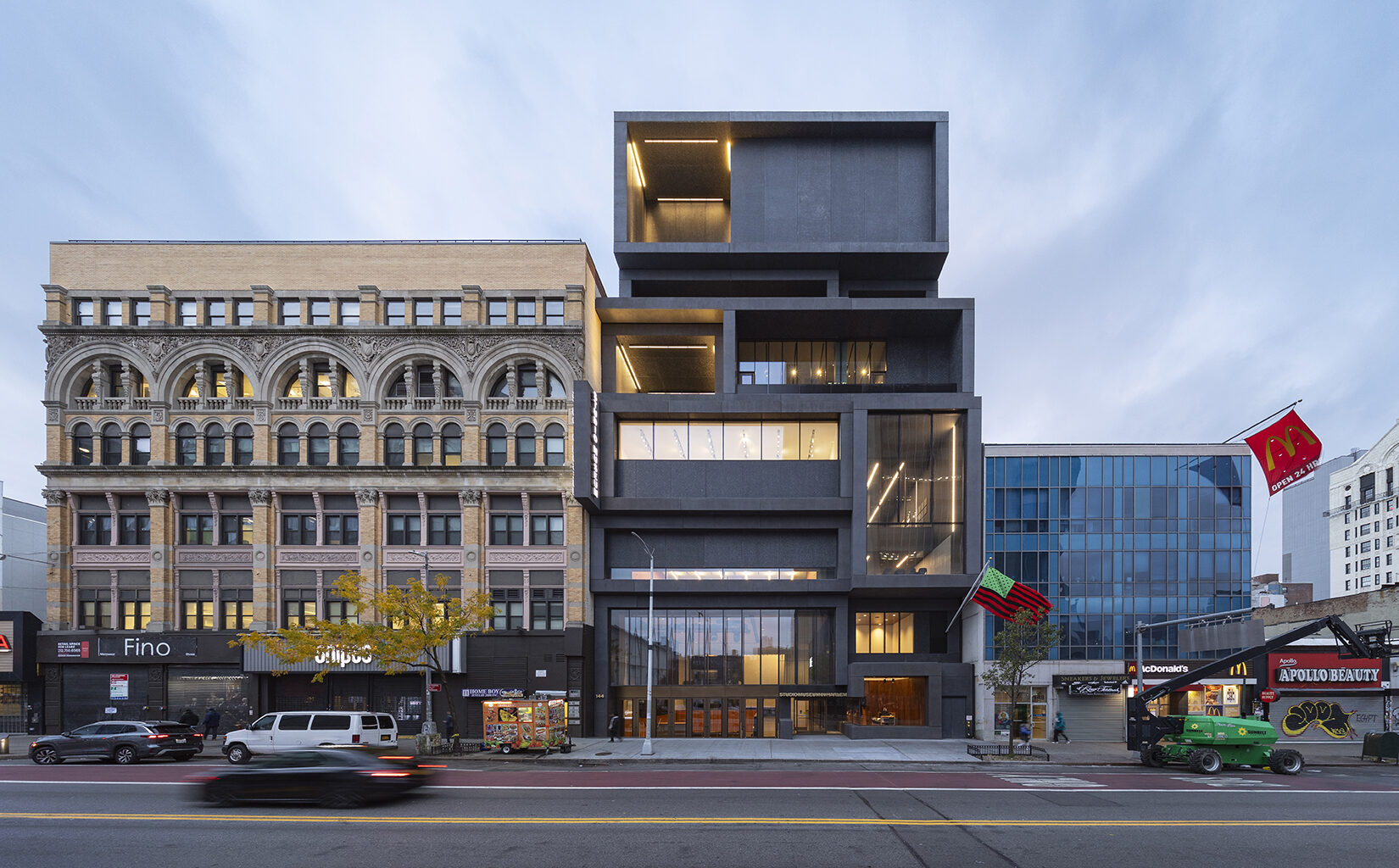
New York City is celebrating socialism in more ways than one. Along with the mayoral victory of Democratic Socialist Zohran Mamdani comes a trio of buildings — two new structures and the reopening of an OG — that owe their origins to brutalism, the civic-minded architectural style named for Le Corbusier’s use of raw béton brut and commissioned most often by publicly funded institutions.
Decades later that resolutely unadorned pragmatism looks strikingly fresh and edgy at the Studio Museum in Harlem, where its first purpose-built home, designed by Adjaye Associates, opened to the public last weekend. Echoing the masonry-framed windows, apertures and doorways of this urban context, it’s a seven-storey structural patchwork in matte charcoal grey and shiny glass, of stacked volumes of single and double heights that The New York Times architecture critic Michael Kimmelman calls ‘an architectural essay on varieties of blackness in precast concrete and polished aggregate.’
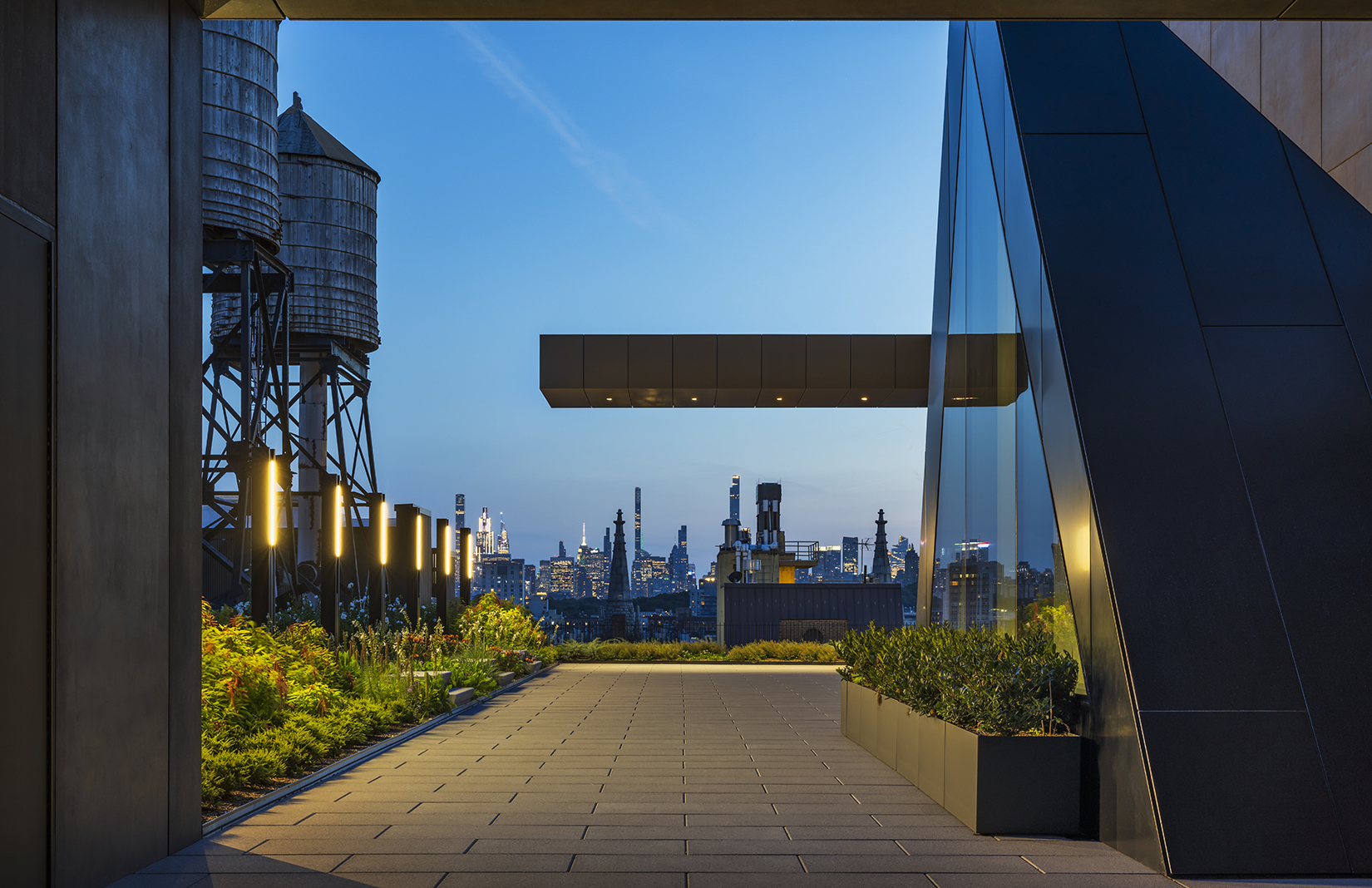
The Studio Museum terrace. Photography: Albert Vecerka/Esto.
Inside, a monumental yet welcoming polished-wood staircase pays homage to Harlem’s ubiquitous brownstone stoops as it leads down into a generous public square-style lobby evocative of the soaring interiors of Black churches. Hewing to the social ethics of brutalism’s origins, galleries connect seamlessly to custom-built classrooms, artist-residency studios, community spaces and a library, fostering dialogue between learning and creating while actively integrating the $160 million building into the neighbourhood. Raymond J McGuire, chairman of the museum’s board of trustees, calls the new structure ‘a lighthouse… where young people can see themselves reflected and artists of African descent can continue to shape our history.’
Though too often slapped onto any large-scale building clad in exposed industrial materials, ‘brutalist’ equally applies to the 5,575sqm annex opening early next year at the New Museum downtown. The laminated glass and corrugated metal mesh structure was designed by OMA to complement and contrast the contemporary museum’s adjoining off-centre ‘stack’ of anodized aluminium mesh boxes created by Tokyo-based SANAA. The angular steel-framed appendage — recalling the prism-like wedges of Ernő Rubik’s Transformable Snake puzzle — will double gallery space across three levels, bringing new venues for artist residencies and public programming, as well as workspaces and production facilities for the museum’s creative incubator.
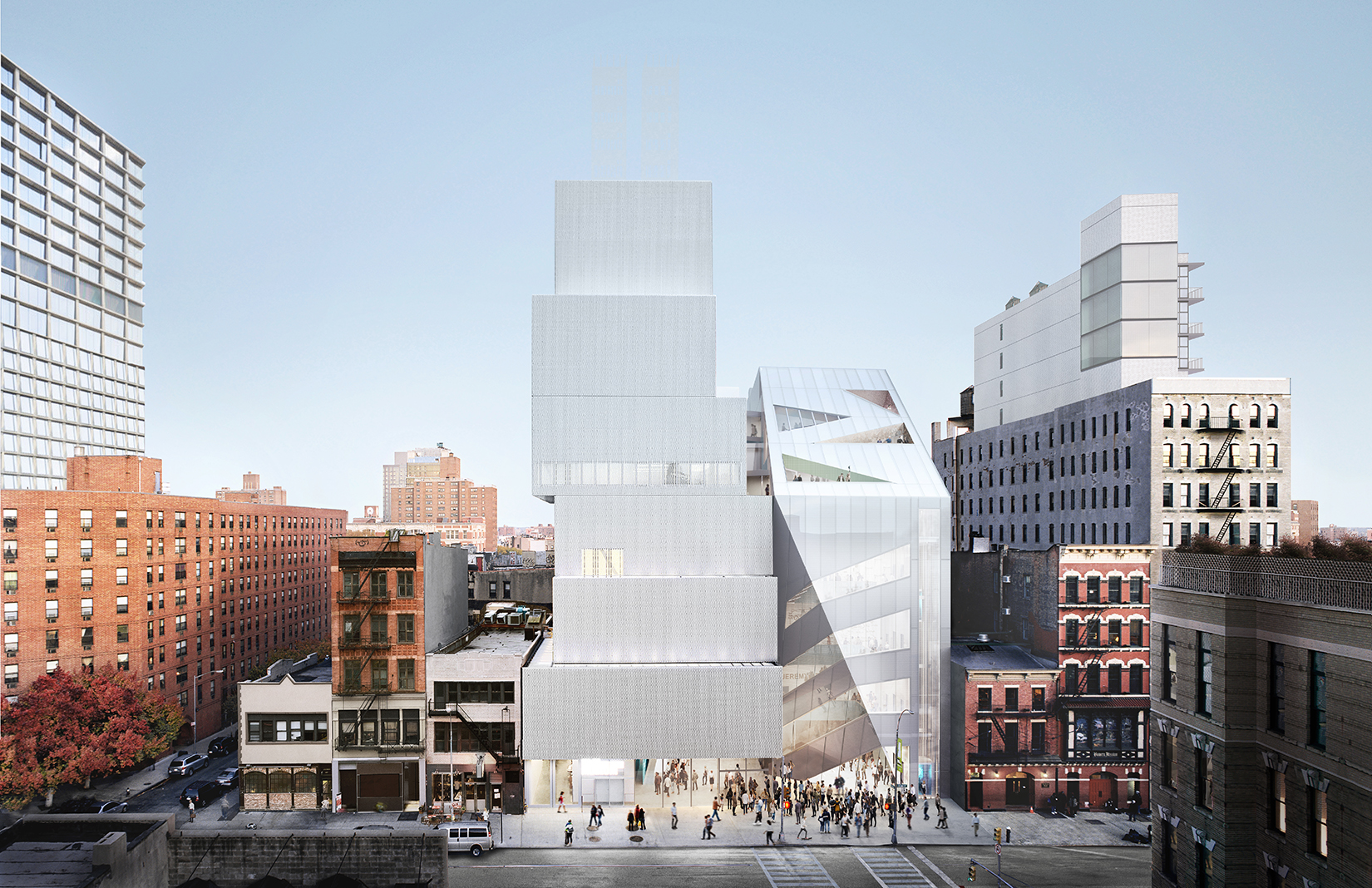
The New Museum and its new annex. Rendering courtesy of the New Museum.
Outside, a new open-air plaza will host public-art installations while on the roof, knife-edged triangular cutouts will house broad terraces — conferring, for the relatively low price of admission, some seriously prime Manhattan views.
Encouraging human engagement, both staunchly 21st-century museums unquestionably owe a design debt to Marcel Breuer’s former Whitney Museum of American Art, completed in 1966 on the Upper East Side. Initially perceived as aggressive and bestial, the whale-grey granite behemoth with its stepped façade cantilevering over Madison Avenue grew on New Yorkers, who came to take pride in its radical statement and embrace the Bauhaus architect’s playful trapezoidal windows. Earlier this month, Herzog & de Meuron completed a comprehensive refresh to the monolith now known as the Breuer Building, restoring the original bluestone floors, distinctive ceiling lights and legendary sculptural staircase (rare protected interiors) for a new tenant: Sotheby’s. Among the more significant changes, they restored the gallery layouts to Breuer’s original designs, for displaying the auction house’s art and luxury goods.
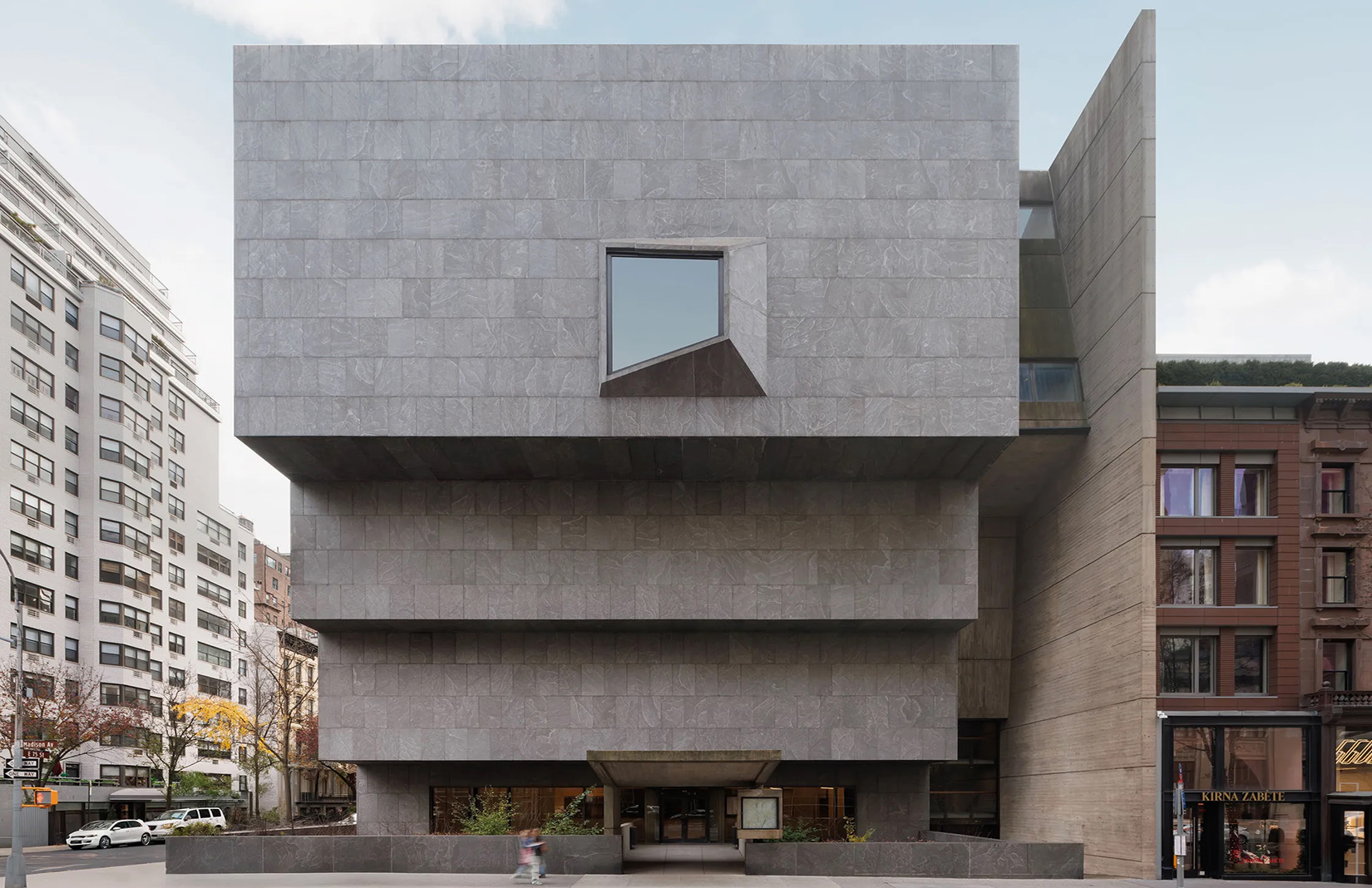
Sotheby’s at the Breuer Building. Photography: Stefan Ruiz.
For anyone wondering how this decidedly elitist private enterprise would approach its custodianship of a post-war treasure, Jacques Herzog called the Sotheby’s mandate ‘quasi-invisible’. Their mission, he said, was to reopen the Breuer ‘for New Yorkers and visitors as an exceptional space to experience art’. The galleries will host exhibitions like the Leonard A Lauder and Cindy and Jay Pritzker Collections — expressly designed, in keeping with brutalism’s core tenets, to encourage the public to view masterworks that would otherwise be reserved for the one percent.
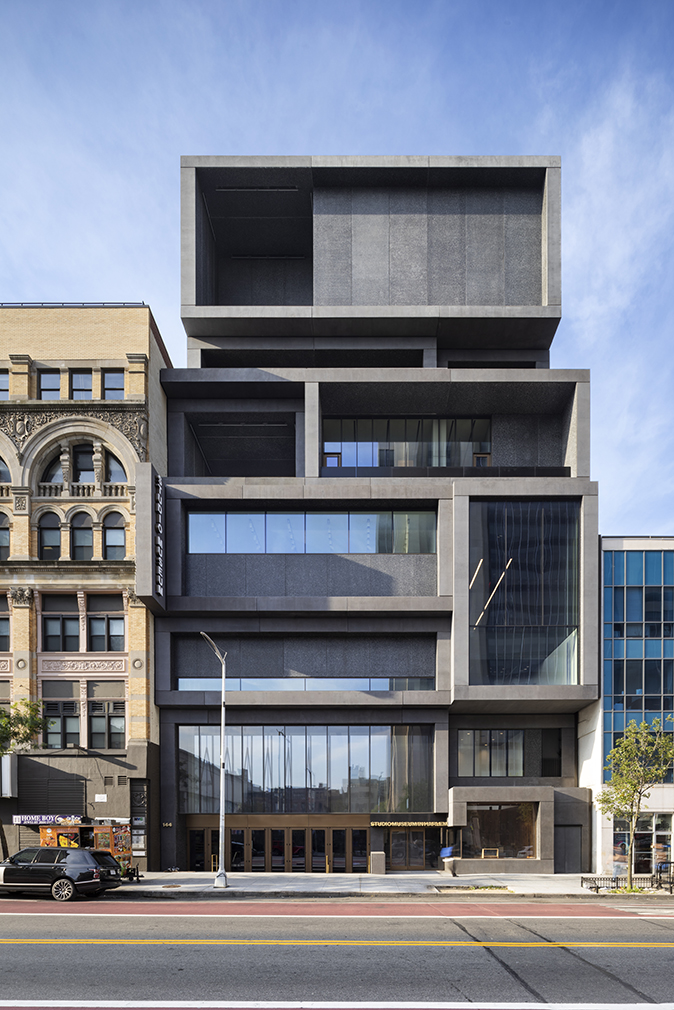
The Studio Museum in Harlem. Photography: Albert Vecerka/Esto.
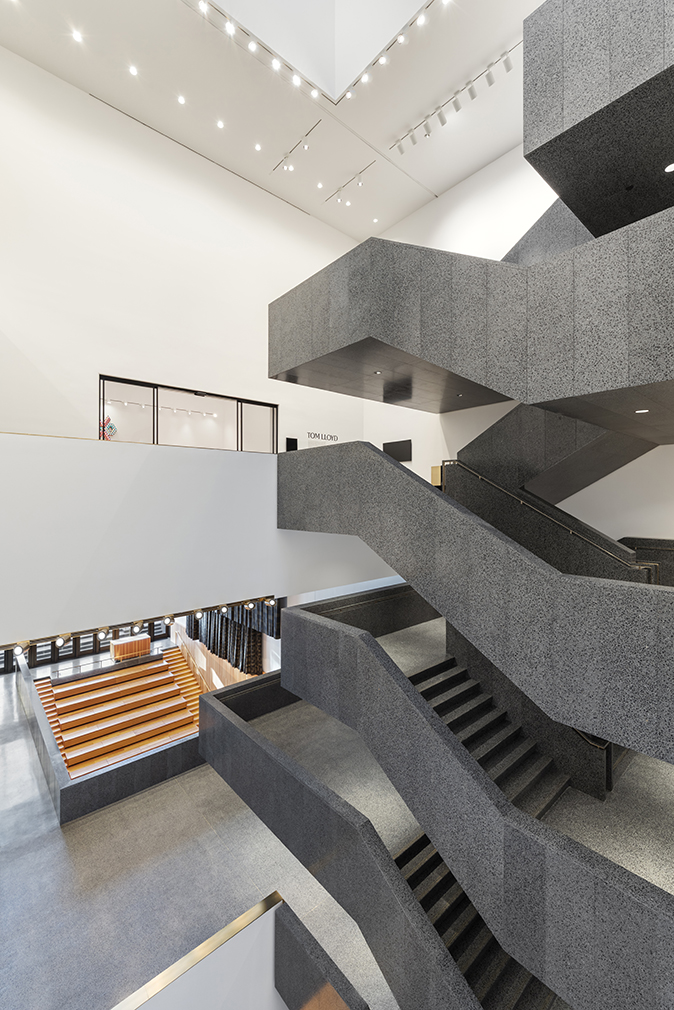
The Studio Museum interior. Photography: Albert Vecerka/Esto.
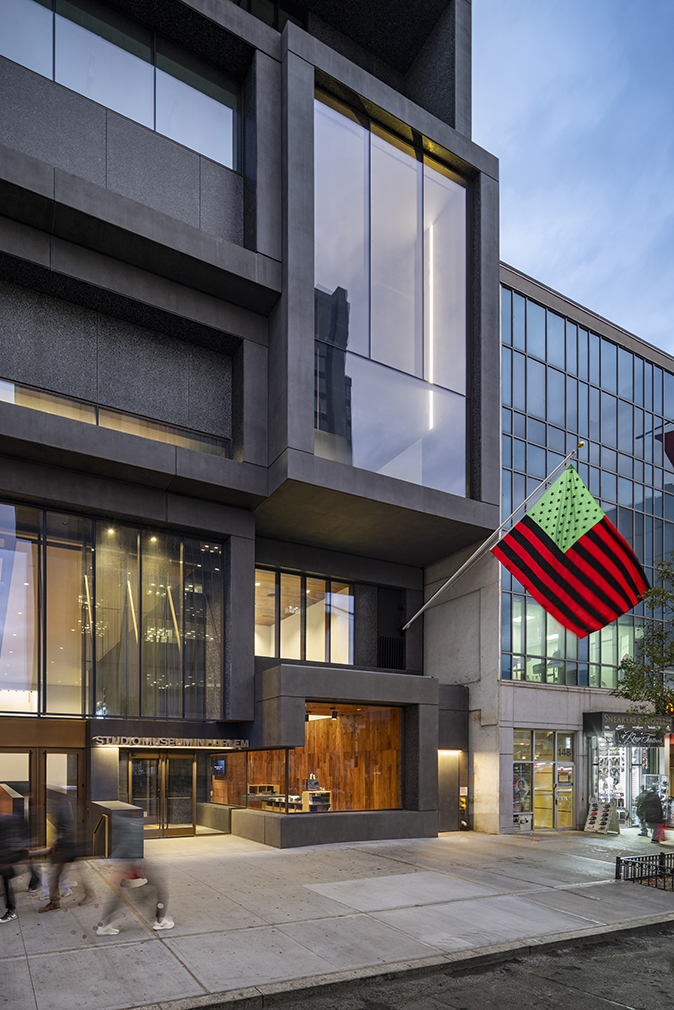
The Studio Museum. Photography: Albert Vecerka/Esto.
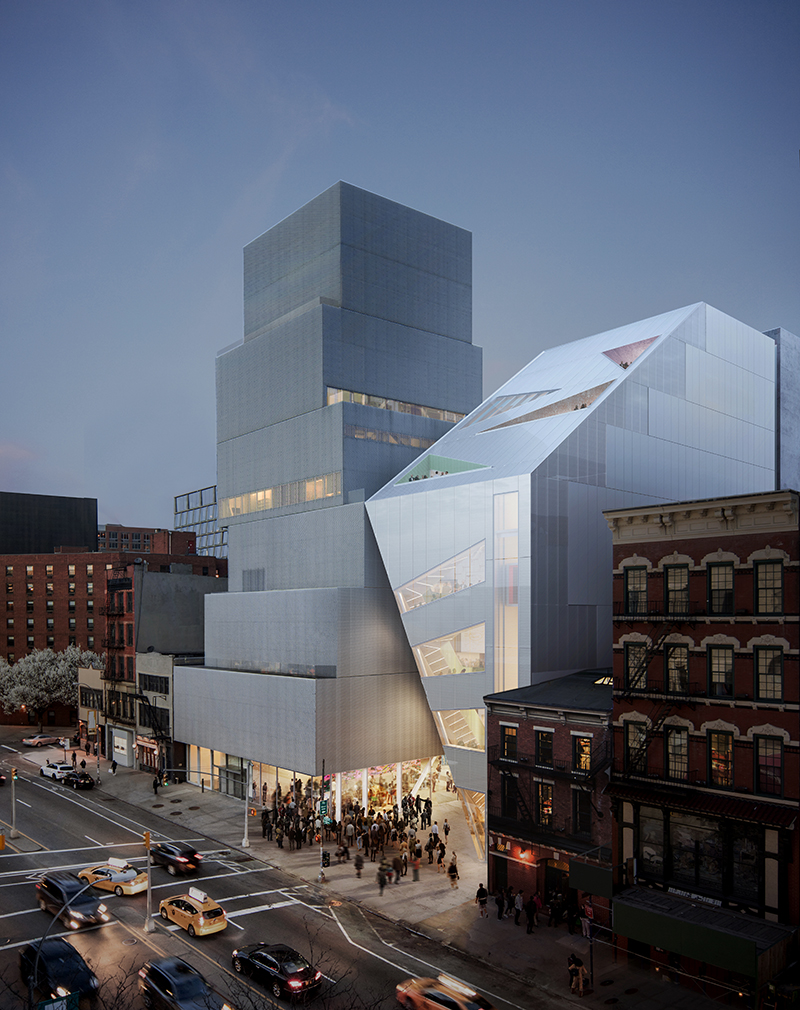
The New Museum and its new annex. Rendering courtesy of the New Museum.
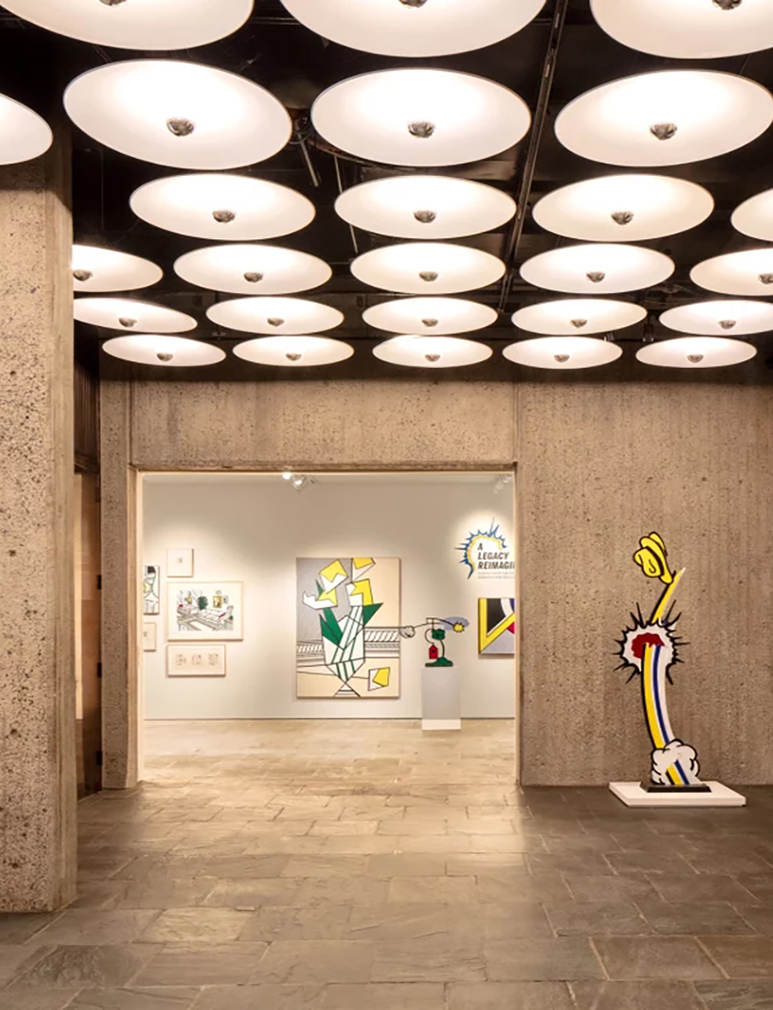
Sotheby’s at the Breuer Building. Photography: Stefan Ruiz.
Read next: A forgotten Marcel Breuer building is set to become a hotel in Connecticut
Manchester welcomes a major new events space designed by OMA
Herzog & de Meuron unveils its new campus for the Royal College of Art