
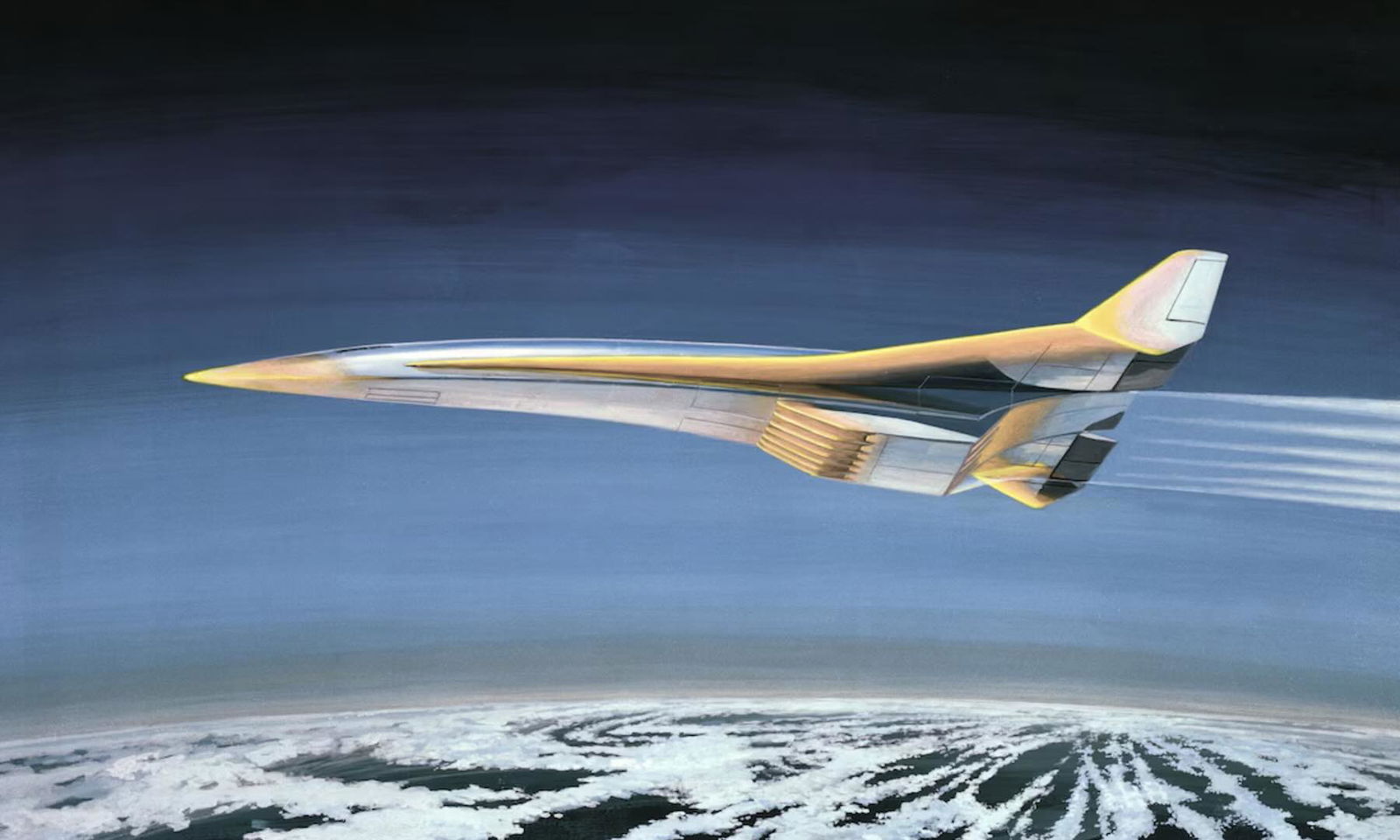
 Artist’s concept of a hypersonic aircraft (Credit: NASA)
This week in news from The Debrief, recent hypersonic experiments have confirmed a 60-year-old turbulence theory, offering fresh insight into airflow behavior at extreme speeds and potentially reshaping future high-speed flight. In archaeology, researchers unveiled a 12,000-year-old figurine showing that humans mastered pyrotechnology millennia before the rise of organized societies. Meanwhile, biologists observed a parasitic ant queen deploying a chemical weapon to manipulate worker ants into killing their own mother, revealing yet another remarkable layer of deception in insect behavior.
Researchers Trace How a Psychedelic Compound Alters Brain Circuits Tied to Addiction
Scientists have identified a neural mechanism that could explain how a psychedelic compound reduces alcohol intake.
An Unexpected Discovery in Lunar Soil Samples Could Solve a Magnetic Moon Mystery
Scientists have made a surprise discovery in lunar soil samples that could help unravel the mystery behind the Moon’s magnetic anomalies.
MIT Neuroscientist Proposes Brain Waves are the Hidden Engine Behind Thought and Consciousness
An MIT neuroscientist proposes that brain waves perform analog computations that give rise to thought and consciousness.
Neanderthals’ Disappearance May Not Have Been from Extinction, Controversial New Study Argues
Neanderthals may not have truly gone extinct, according to a new mathematical model that suggests they underwent genetic dilution over time.
Tales of sea serpents have haunted seafarers for centuries, and Scottish researcher Adrian Shine offers a naturalist’s view on some of history’s most famous cases.
Forget Drop Bears, Ancient Australia’s Real Life “Drop Croc” Ambushed Its Prey from Above
Australia may be known for its tourist myth of the drop bear, but researchers have now uncovered the remains of a real-life “drop croc.”
A recently discovered impact crater in China is among the best-preserved ever found, offering insight into how space rocks shaped our planet.
Our solar system appears to be breaking the cosmic speed limit, casting fresh doubt on the Standard Model of Cosmology.
New experiments confirm a decades-old theory of turbulence, revealing how air behaves at extreme speeds and shaping the future of hypersonic flight.
Bees Can Tell Time: New Study Reveals Shockingly Advanced Insect Intelligence
Bees can distinguish split-second flashes of light, revealing surprising timing abilities and advanced cognitive flexibility.
Archaeologists have unearthed a 12,000-year-old figurine that shows evidence of pyrotechnology thousands of years before the first societies.
Researchers have discovered parasitic ant queens that use natural “chemical weapons” to trick ants from rival colonies.
For the first time, astronomers have spotted a coronal mass ejection exploding from a star other than our Sun.
The long-standing issue holding back quantum computing, its high propensity for errors, may finally be in the past.
A comprehensive analysis has found no scientific evidence supporting the hypothesis that the gut microbiome causally contributes to autism.
Longest Government Shutdown in U.S. History Ends Amid New Epstein Controversy
This week, a political win following the longest U.S. government shutdown is eclipsed by fallout from newly released Epstein emails.