
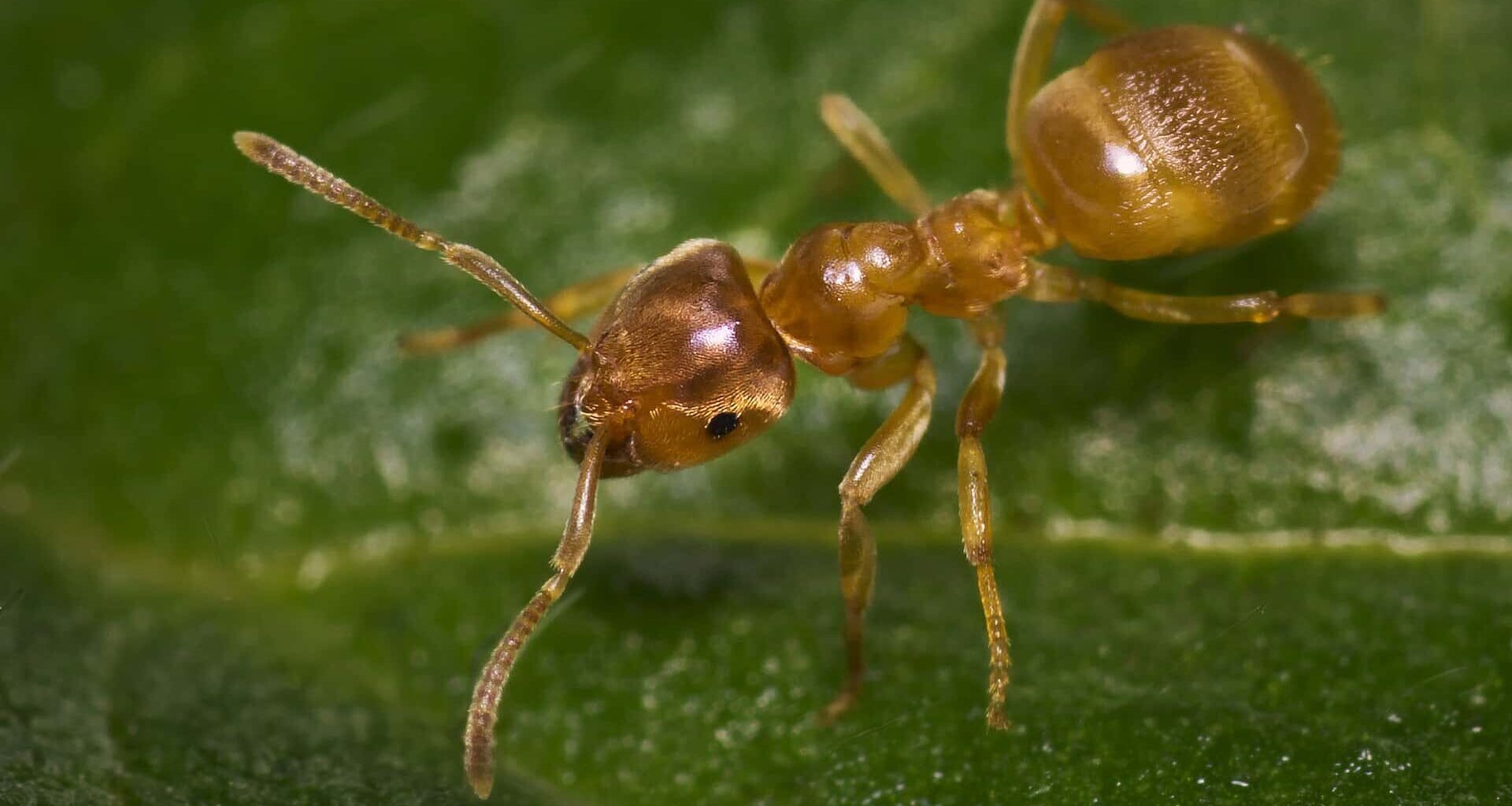
 The yellow meadow ant (Lasius flavus). Image via Wiki Commons.
The Lasius flavus ant colony is like a monarchy maintained by absolute loyalty. Thousands of worker ants, all sisters, toil ceaselessly for one individual: the queen. She is their mother, the genetic lynchpin of their society, and the sole reason the colony exists. In the brutal calculus of biology, protecting the queen is usually the highest imperative. The absolute last thing you want to do is harm the ant queen.
But nature, in its infinite and often horrifying creativity, has found a loophole.
A new study has uncovered a chilling biological heist. Invading queens slip in like ninjas, deploy a chemical weapon, and essentially brainwash the resident workers into tearing their own mother limb from limb.
Gladiators and Ninjas
The victims are the established colonies of Lasius flavus and Lasius japonicus. They’re your standard, hard-working subterranean ants. The villains are the queens of Lasius orientalis and Lasius umbratus. These species are “temporary social parasites”. They don’t build their own colonies from scratch. Instead, a newly mated queen seeks out an established nest, infiltrates it, and seeks to replace the sitting queen.
Historically, myrmecologists (ant experts) assumed this takeover was a brute-force affair. In many parasitic species, the invader physically throttles or beheads the resident queen. It’s a gladiator match, you fight for the colony. But Taku Shimada and his colleagues at the Department of Biological Sciences in Tokyo noticed something different. They observed that when these specific parasitic queens entered a host colony, they didn’t engage in a prolonged physical duel. Instead, they acted like assassin ninjas.
The parasitic queen approaches the resident mother covertly. She gets close, turns her abdomen toward the target, and unleashes a spray of fluid. This isn’t just a splash of water. The fluid is delivered from the acidopore, a specialized opening found in Formicinae ants, and it is almost certainly formic acid.
The spray doesn’t kill the host queen immediately. Instead, it acts as a “mark for death.” The host workers, the queen’s own daughters, suddenly turn on her. Agitated by the chemical cocktail, they launch an abrupt and vicious attack on their own mother. The parasitic queen, having lit the fuse, wisely retreats. She stands back and watches as the workers swarm the queen, biting and stinging her until she is dead.
Evolution’s Dark Creativity
The video evidence captured by the researchers is graphic. In one instance involving L. orientalis, the parasite sprays the host queen multiple times, then backs off. The workers, whipped into a frenzy, do the rest, cutting off the waist of their own mother. In another case with L. umbratus, the invader bites the host queen’s petiole (waist) while spraying, ensuring the chemical marker is applied exactly where it needs to be to trigger the lethal response.
This ninja operation is, in one way, all about risk management. An established queen is large, well-fed, and often defended. The attackers could perhaps take her down directly, but a direct physical confrontation carries a high risk of injury for the invader. If the parasitic queen is injured, her attempt to found a colony fails. By outsourcing the violence to the host workers, she keeps herself out of harm’s way.
The workers, now orphans, accept the parasitic queen as their new matriarch. They groom her, feed her, and eventually help rear her offspring. The colony continues to function, but its genetic future has been hijacked. The workers spend the rest of their lives raising the children of their mother’s murderer.
The study highlights that this specific strategy — using a chemical spray to incite matricide — has likely evolved independently in different lineages of ants. Although Lasius orientalis and Lasius umbratus are not close relatives within their genus, both have stumbled upon this same chemical backdoor. This is a classic case of convergent evolution, where different species arrive at the same solution to a biological problem.
There are reports of other ants, like Monomorium santschii, where the host queen dies after a parasite enters. Yet this parasite lacks the physical tools to do the deed herself. In those cases, scientists suspect a similar chemical “propaganda” is at play, overriding nestmate recognition systems.
The study was published in Cell.