
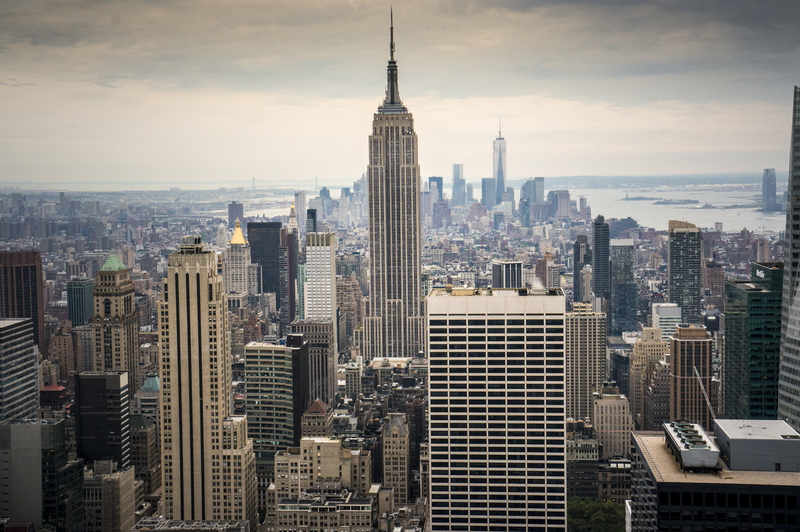
Launched on 5 January this year, the Central Business District Tolling Program (CBDTP) in New York City was the first congestion charge initiative of its type in the US.
Since then, drivers entering Manhattan south of 60th Street – into the Congestion Relief Zone (CRZ) – during peak hours pay a $9 daily toll.
In a country where driving your car wherever you want – at whatever time of day you wish – is seen by many as an unwritten Amendment, this was never likely to happen without incident. And so it proved.
New York state governor Kathy Hochul had already scuttled congestion pricing herself in a surprise move in 2024, before the scheme was finally reinstated. Then came legal action from the state of New Jersey – followed by a Trump Administration letter in February this year, insisting that the Federal Highway Administration “will work with the project sponsors on an orderly termination of the tolls”.
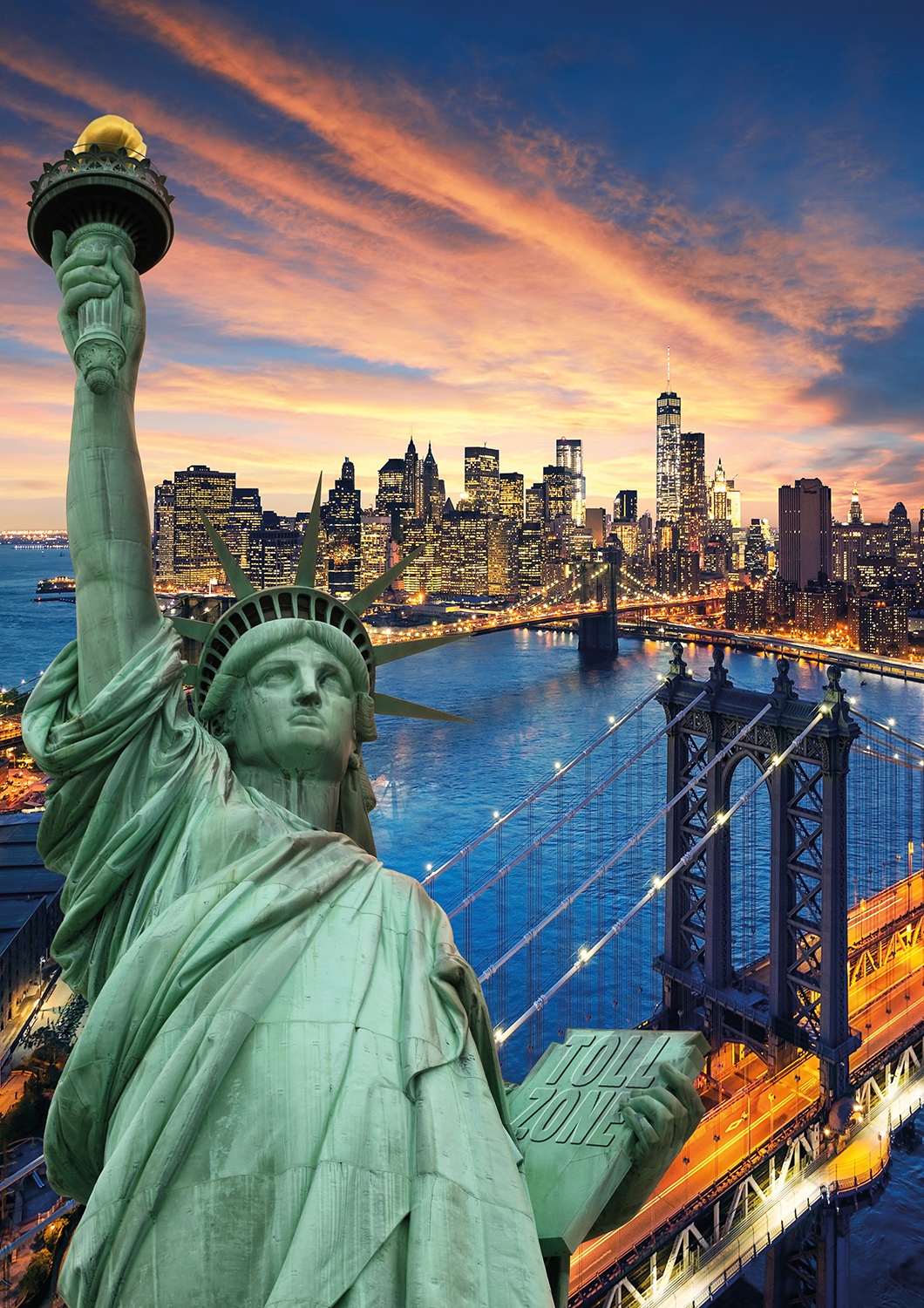
We finally, really did it (composite image: © Ron Sumners | Dreamstime.com | © Ilja Mašík | Dreamstime.com)
Yet despite the hoopla, the toll cameras stayed on – and they have remained so. Not only that, they have done their job, says New York Metropolitan Transportation Authority Bridges & Tunnels’ (MTA B&T). The new CRZ has reduced congestion, improved travel reliability, enhanced air quality and generated funding for mass transit.
Getting things done
So much for the politics. Behind the scenes, ITS professionals were quietly getting on with getting things done. TransCore provided all of the hardware for this enormous rollout in Manhattan. The company’s chief operating officer Clint Holley was the project manager for the CBDTP, and is now project principal as this massive undertaking transitions from the installation phase into the equally important maintenance phase.
Ten months on, Holley is rightly pleased with what his team has achieved so far. The company is well-versed in auto tolling but New York was “slightly different”.
TransCore’s system uses machine vision cameras, convolutional neural networks, and advanced machine learning to identify and classify in real time. It is powered by TransCore’s Infinity Digital Lane System, which captures raw data from overhead detection points and processes it centrally.
Holley explains: “There is all the lane hardware, the host hardware for the roadside, which is pretty typical, and then we’re also doing all the MIR – so the manual image review is done on the roadside hardware, instead of the back office, where it’s done on most projects.” TransCore sends a fully-formed transaction to the back office that’s ready to bill, either to a known account or for a violation.
Congestion pricing in New York had been an on-off discussion since at least the 1990s, but things gathered pace in 2018 with the passing of state legislation, and MTA put out a design and build contract with operation and maintenance attached to it.
“It was all new functionality: nobody had really moved into the AI front yet with machine learning and video,” Holley recalls. “There had been a couple of all-overhead systems, but none of them really operated in an environment like New York. So we did a couple of pilot roll-outs with MTA, and then got selected in 2019.”
Excitement – and trepidation
At that point, Holley experienced a combination of excitement and trepidation.
“It’s kind of a mixed bag,” he smiles. “It’s extremely exciting, cutting-edge – you know, the biggest city in the US, one of the biggest in the world. So, a huge opportunity for the city of New York and for TransCore. We were super-excited.”
And then there was actually making it happen. “We had a 310-day schedule, which was very scary,” Holley laughs. “You know, in a 300-and-something-year-old city where there’s still clay pipes in use for sewer transmission, we knew we were going to have to construct and dig and build in a highly-complicated scenario.”
In fact, ‘highly-complicated’ is putting it mildly. To accommodate the outsize balloons which fly on the annual Macy’s Thanksgiving Day Parade, for instance, one of TransCore’s poles had to be retractable for just that single day per year – an engineering conundrum.
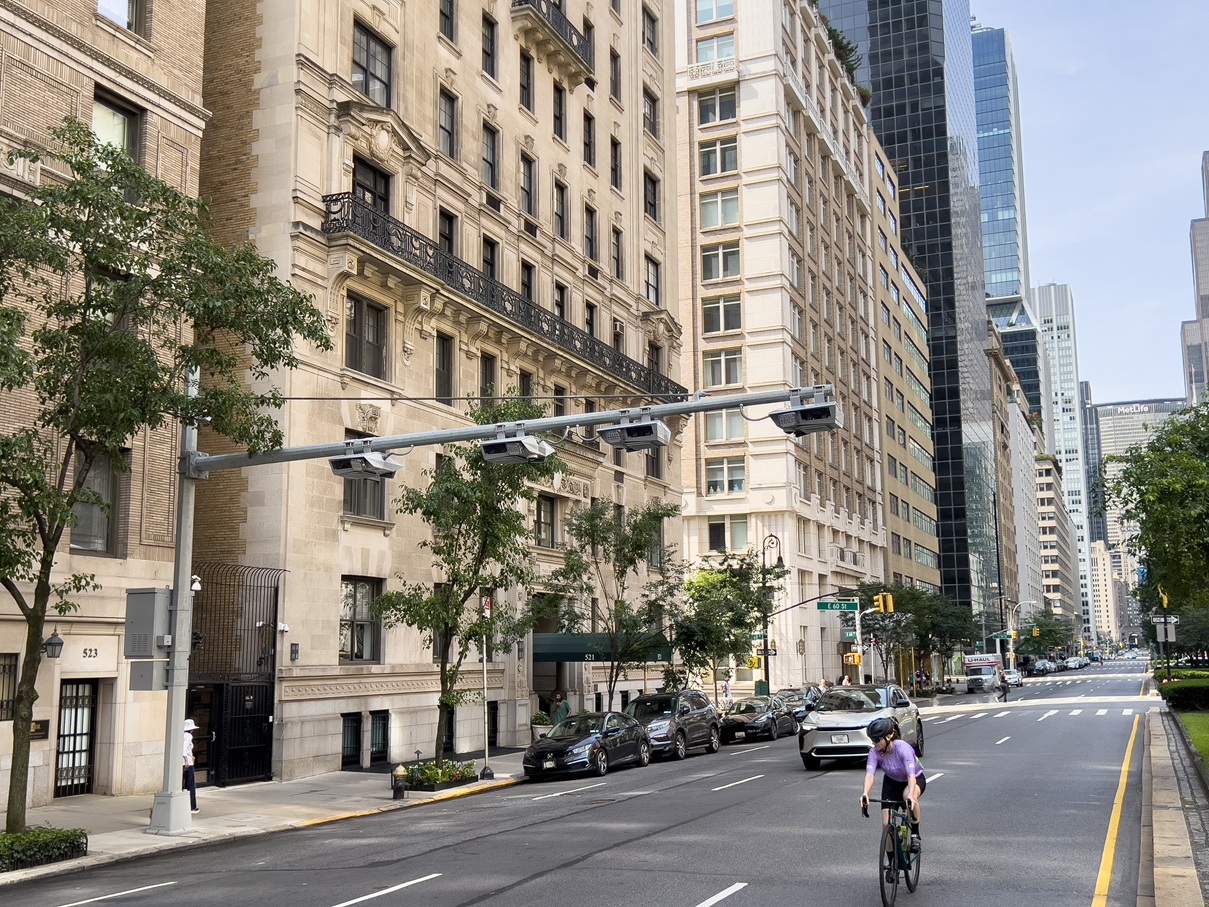
Overhead tolling gantries are powered by TransCore’s Infinity Digital Lane System (image: TransCore)
“I can honestly say that probably every scenario you could think of for a tolling system to have to operate in – it all occurs in New York!” Holley recalls.
“Like you say, we had to move one of the poles for the Macy’s Day Parade. Also, this was the first time I had to talk to the Secret Service, because we were having to operate and build during the UN [United Nations] General Assembly – nothing happens in the city during the UN week.”
There is also the often-overlooked fact that New York is a really old city. So quite apart from clay sewage pipes, streets aren’t necessarily that wide – unlike, say, a tolling operation on a rural highway – and the environment has built up over centuries, often in strange ways.
“Every city has to meet ADA – American Disability Act- requirements for walking, but in New York, we also had to deal with [the fact that] these were people’s neighbourhoods that we’re building in,” explains Holley.
The ‘décor’ element
“So not only do we have ADA restrictions, but New York has a lot of expectations for liveability in the city. So they didn’t want a pole in a certain place: maybe it met a requirement – but you were putting it in front of, literally, somebody’s apartment, or somebody’s front door to their flat. There’s a lot of historic churches there – nobody wanted a poll in front of a historic church, right? That would not be good. So there were a lot of things that you don’t deal with on a day-to-day basis.”
The roadside infrastructure footprint also had to be pretty light – gantries could not cover the full span of the road. “You had to have enough width that you could get an 18-wheeler through,” says Holley.

The Macy’s Day Parade balloons created a surprising issue for TransCore (© HooverTung| Dreamstime.com)
There was even a ‘décor’ element to the build, to complement existing light poles and match New York’s distinctive streetscapes. “Different blocks in Manhattan have different colour schemes,” he explains. “So we had to bring the architect in to match the city scene, so that our poles blended in.”
It turns out there are three different shades of green – who knew? – including a ‘Central Park’ green.
“Yes, we had sites in Central Park too, which is a natural federal historic area, so we had to deal with constraints related to that,” he continues. “There’s a Belgian block in Central Park, where it’s 200 years old, so we needed to take the stones out, put the pole in and put all the stones back, and keep up with how many were there; you know, not things you normally deal with on a toll site where we’re digging on the side of the road.”
Complicated though it was, this all worked because it was a partnership, insists Holley.
 “We had a 310-day schedule, which was very scary” Clint Holley, TransCore
Collaboration: not negotiable
“MTA was there, which is a state organisation; we had the city of New York; the New York City DoT; the state DoT for New York; and we spent a lot of time and meetings, coordinating – and the city did a lot for us,” he says.
“The permitting process can be arduous, and we got a lot of help from city administrators that were working with the team. The power was through ConEd and Verizon, and there’s permitting processes through the utility companies to bring power to the poles – but ConEd is not typically putting a meter on a pole! So we had to ask for the process to bend a little bit to keep it going. But everybody was working toward the same goal, because everybody – even in Manhattan – really wanted the system; nobody likes sitting in traffic. So we did get a lot of support from all the sister agencies.”
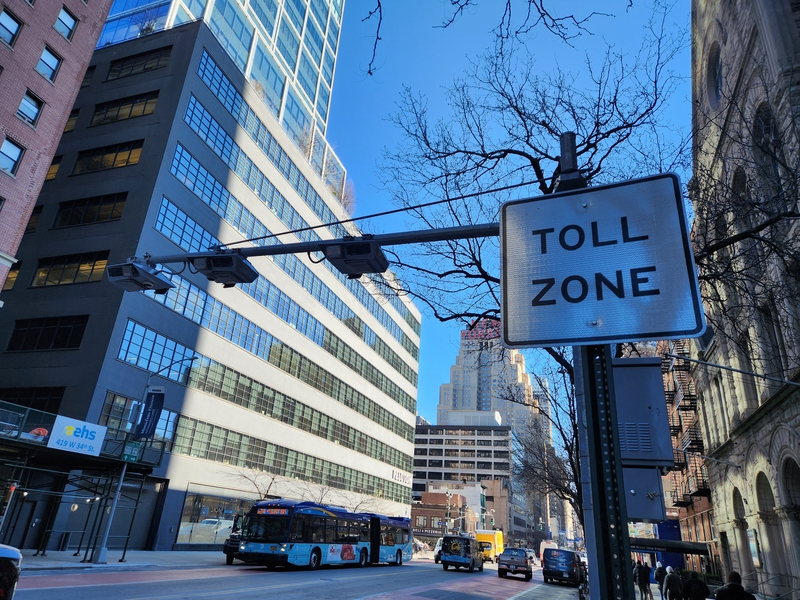
During peak hours, drivers pay a $9 daily toll (© Steve Seepersaud| Dreamstime.com)
Collaboration was not negotiable: there were something like a dozen primary agencies involved – quite a hefty number of organisations to pull in the same direction – but Holley reckons the total number was closer to 40.
“Just inside the city, you’ve got the Department of Parks, the Department of Forestry, the DEP [Department of Environmental Protection], plus the historic bridges along the water, so there’s all those organisations,” he says.
“And two of the roadways are actually state-owned, so we had to deal with them. And then you had the different neighbourhood associations that wanted to make comments, or had issues. And the Central Park Conservancy: nobody wants a jackhammer running next to a horse and carriage, right? That’s not necessarily a safe environment. So we had a lot of a lot of organisations we had to work through.”
It was certainly an educational experience. “The team learned a ton,” he says. “We laugh sometimes – now – about where we thought the complications were going to be in the beginning and where they ended up being at the end. A few of them were the same, but some of them were wildly, wildly different.”
Arborists and scaffolding
The frequency with which arborists – the people who specialise in looking after trees -were involved in the build was one of these. “You know, the number of times where a tree was located causing major, significant impact to a toll system is not something that we’d ever, ever considered when we started the project,” Holley laughs.
For all the difficulties, it’s a testament to the organisation and grit of the TransCore team and its partners that things went so well. In fact, the project was actually delivered one day early. Is Holley a good sleeper?
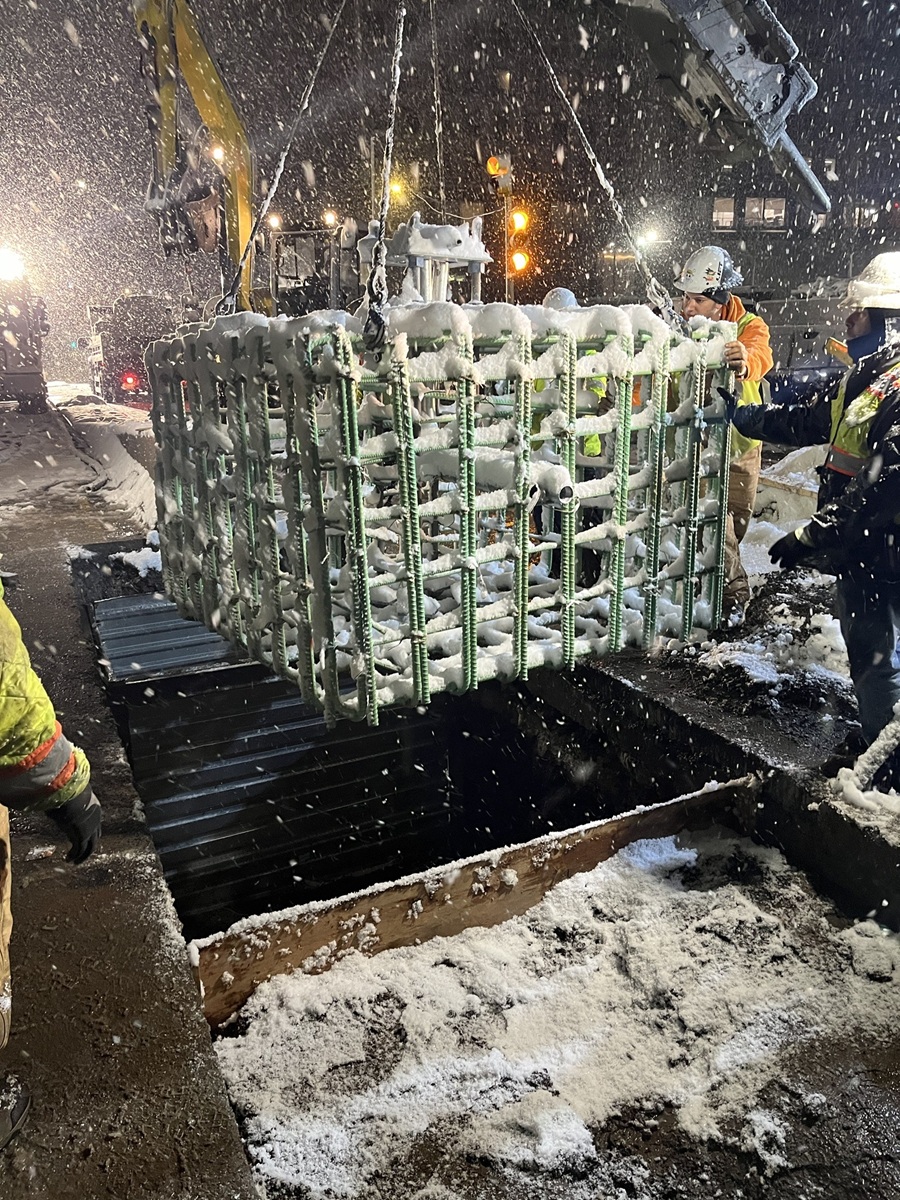
New York’s weather was just one of the obstacles which TransCore needed to overcome during installation (image: TransCore)
“No, I don’t think I slept most of that project,” he says seriously. Given that it lasted the best part of a year, that must have been pretty tiring. But there was always something to worry about. “We didn’t have enough time to slip very many days,” he emphasises.
“You would dig a hole and find something, or we go to install a pole and would have a ready-to-go foundation in place, and you show up the next day and there was scaffolding covering the site!”
The scaffolding company would say it would be clear in six to nine months: “We’re like, no, we need it in six or nine hours!”
Native New Yorker
He is hopeful that other cities can use the New York experience as a road map for their own congestion charging plans, with Boston and Washington, DC, as possible candidates.
“For some cities, the way the roadway systems are built makes it harder to implement,” he suggests. “Manhattan was great because it was very condensed and they had a very good transit system, which is a big part of this – people have a legitimate alternative.”
That’s not the case in other places, but time will tell what the US appetite really is.
As for Holley, he had never lived in a big, walkable city before so moving there for the duration of the project gave him an insight into the life of New Yorkers.
“I got a very intimate view of the city because we were out there at night and day, walking around,” he says.
“And I walked all of Manhattan, probably a dozen times, looking at sites. And I bet I’ve seen more Manhattan than some people that live in Manhattan.”