
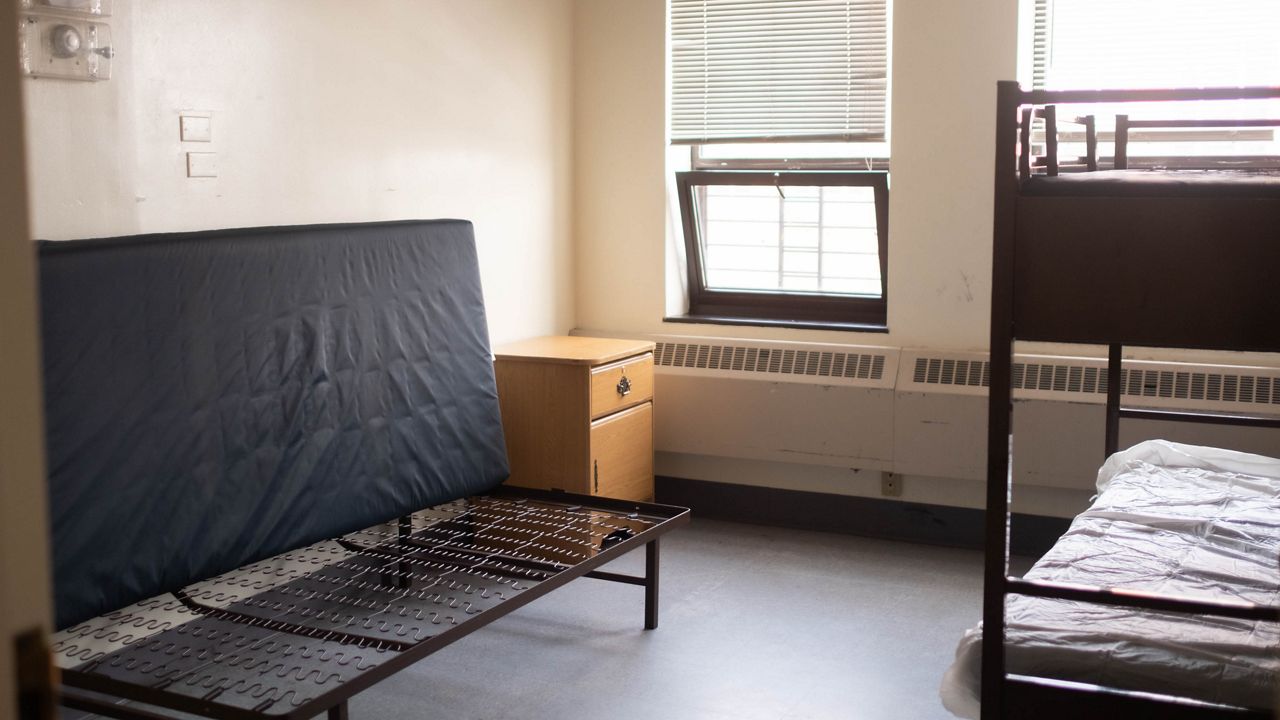
When homelessness among families skyrocketed, New York took to hotels to provide temporary housing for them when shelters are full. However, the services in shelters are typically more readily available including food, laundry and case manager support.
For the two dozen families at the Salvation Army’s shelter in Syracuse, there are a variety of different services available to families in need, said Matthew Waldby, director of the emergency family shelter.
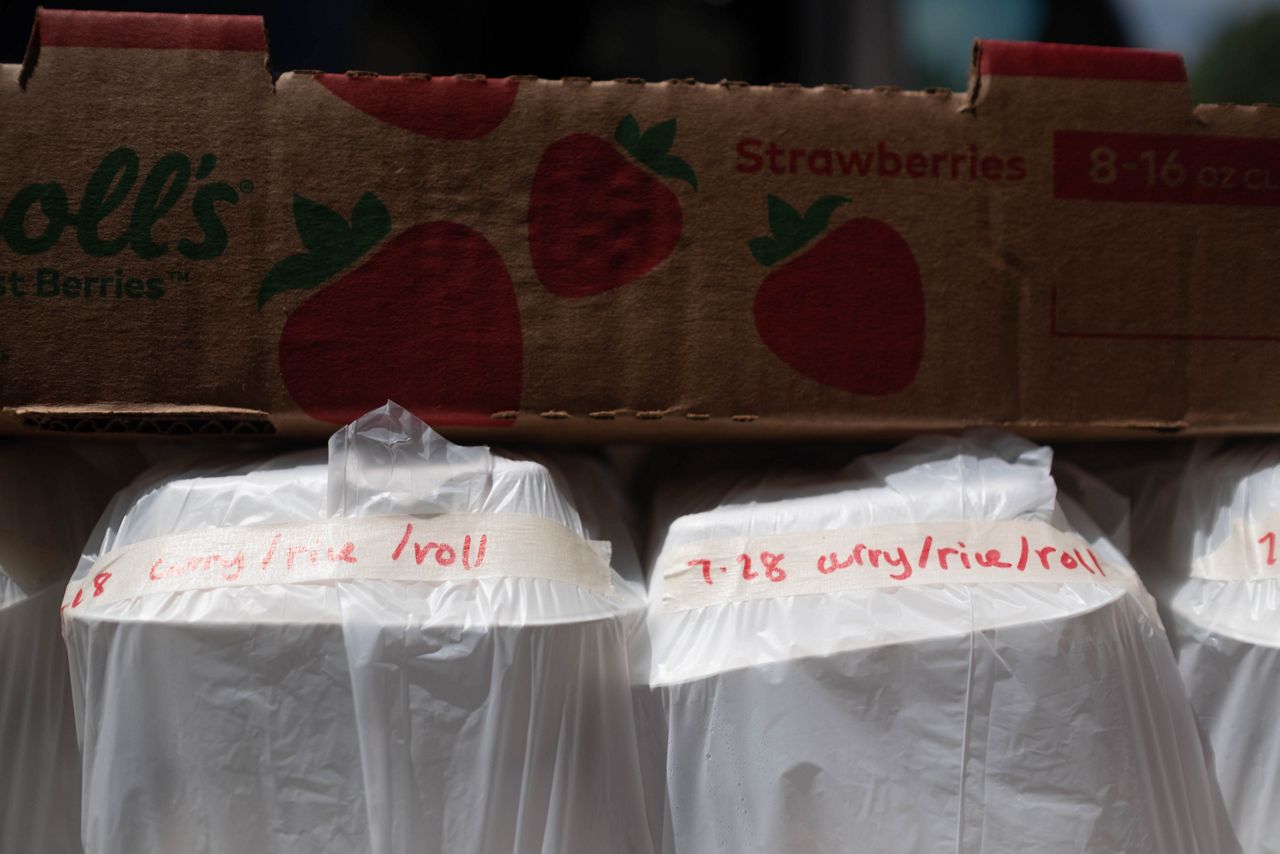
Food made and packed at Catholic Charities which they then deliver to families in the hotels. (Spectrum News 1/Emily Kenny)
“We can have them pick out clothes. We can see if they haven’t eaten all day, then they can sit down for a hot meal,” Waldby said. “Eventually they’ll sit down with staff and go over paperwork, demographic information and all that and then they’ll be assigned a case manager within 24 to 48 hours.”
At their initial appointment, the case manager will work with the family to assess the reasons for their homelessness and a plan to get them out of it. On average, a family will stay in the shelter anywhere from three to six months, but the process moves quicker in the shelter rather than a hotel because of the 24-hour access to staff, Waldby said.
While Onondaga County has a method to provide some services, others just aren’t available to people housed in hotels.
“We have direct services here in the shelter. They’ll receive three meals per day, two snacks. They have 24-hour staff, which translates to 24-hour support. If they need diapers at 2 a.m., if they need wipes, they can receive that. When you’re in a hotel, you will receive case management and food, but it’s ultimately up to that schedule,” he said.
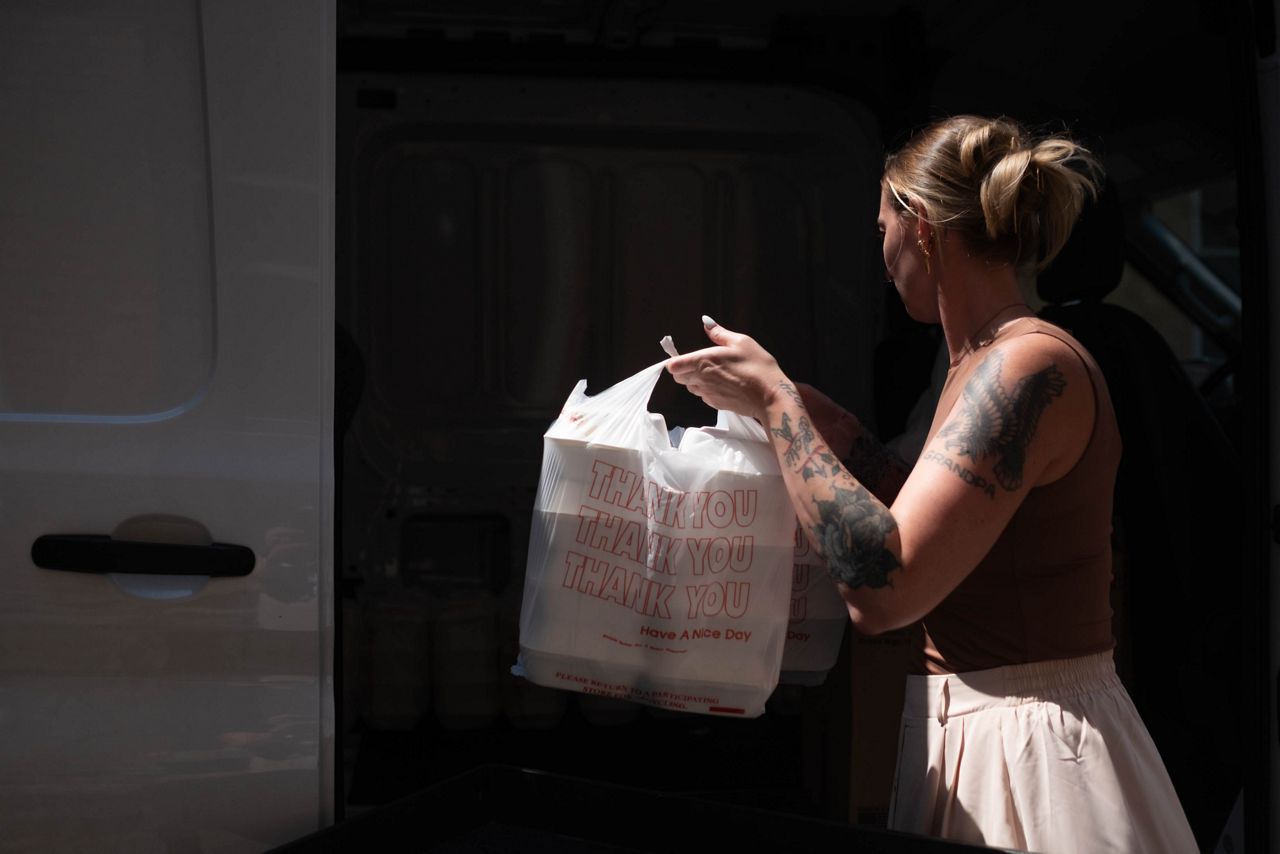
Jessie Butts helps pack food into a van for delivery to families in hotels. (Spectrum News 1/Emily Kenny)
Families in a shelter also work together to provide support for one another.
“[The sentiment is] if we do it together, maybe it’s a little less demanding on me and my family than if I had to figure it out by myself,” Waldby said. “Now you have a tag team where they can communicate and share things with each other,” Waldby said.
In the shelter, the families can do laundry, access a domestic violence specialist and receive transportation to and from school for children.
Onondaga County has contracted with Catholic Charities to provide warm meals, fresh fruits and vegetables and other food to the families in hotels. This has been crucial for the families living there, said Melissa Menon, director of food operations at Catholic Charities.
“I think it’s pretty obvious that if you’re living in the conditions that the families are living in that it’s not very comfortable and it’s not like home, so we try to make our food feel a little bit like a moment of home for them,” Menon said.
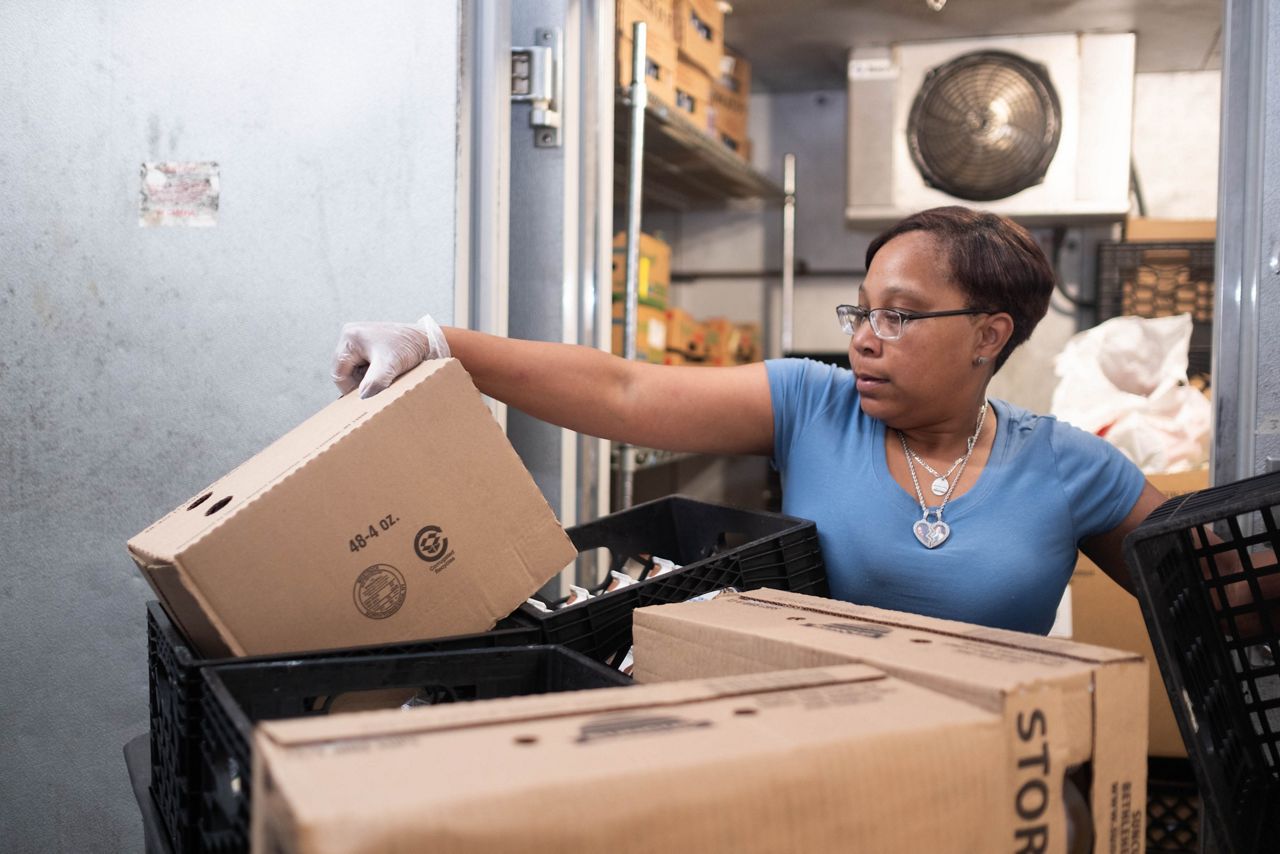
Another employee at Catholic Charities packs food to be taken to families in hotels. (Spectrum News 1/Emily Kenny)
Catholic Charities delivers meals five times a week to the families living in hotels, said Jessie Butts, program officer of shelter and emergency services at Catholic Charities of Onondaga County.
“The biggest problem is that they are in hotels, and the fridge space is limited. There’s no stove, so that is something that we had to work around to make sure these children are getting adequate and nutritious food.”
For families in shelters and hotels alike, a big misconception is that they are taking advantage of the system, Butts said.
“Nobody wants to be homeless. There’s a huge misconception that people have kids so that they can get more money and be on public assistance, which the amount you get for having a child is not significant. It does not equate,” Butts said. “People don’t want to live off the system. They want to live in housing that is affordable and safe.”