
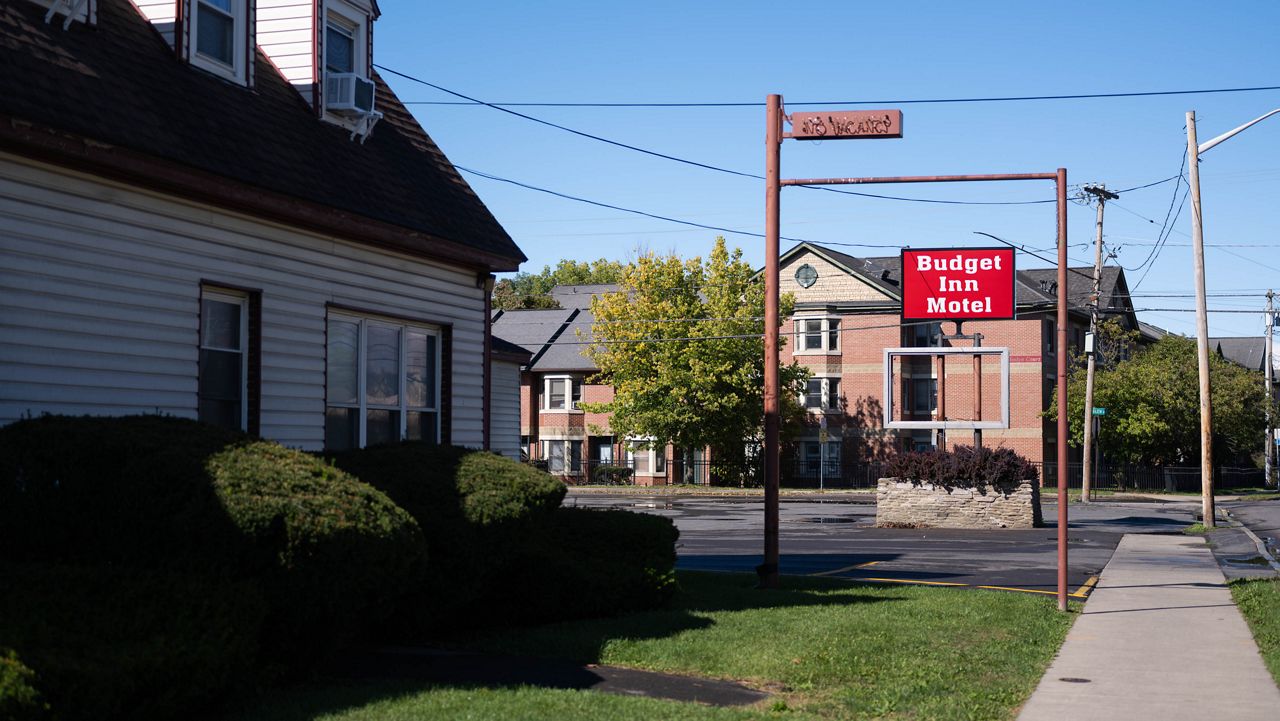
Struggling to find an affordable place to live and facing the prospects of living on the street earlier this year, Alica Burkhart and her toddler sought temporary shelter through Onondaga County.
With shelter space for families at capacity, the county placed mom and son in the Budget Inn on Syracuse’s south side. The hotel is located next to an abandoned restaurant in an area of the city that is deemed a food desert. The hotel has been described as outdated, with electrical problems and rodents.
“All you have is a microwave in there and then you get in trouble if you have anything hooked up or try to cook in there. If you have any kind of Crock-Pot or anything hooked up, they would supposedly know and kick you out,” Burkhart said.
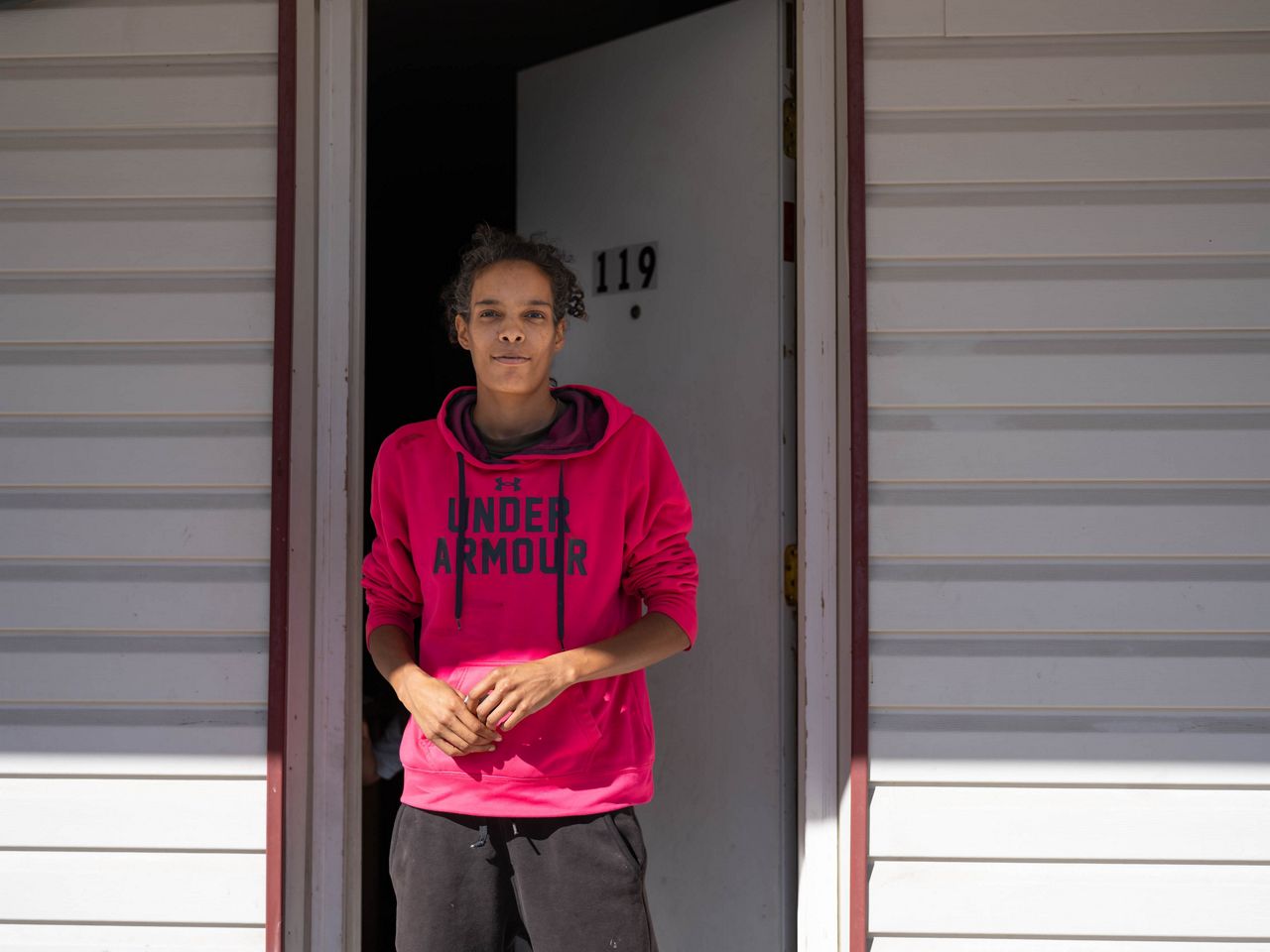
Burkhart stands in the entrance to her room at the Budget Inn. (Spectrum News 1/Emily Kenny)
Many families across New York are experiencing the same thing as Burkhart and her son.
With family homelessness spiking since the COVID-19 pandemic, several counties in New York are increasingly locking in annual contracts worth millions of dollars to house families in hotels, but without all of the services that are typically available in a shelter.
Excluding New York City, the number of homeless families in the state doubled since 2022 — and the cost to put them in hotels when shelters fill up ballooned to $172.6 million last year. Families experiencing homelessness now account for 60.4% of the homeless population, according to a report released earlier this year by the state comptroller’s office.
The homeless problem is even more pronounced in Central New York, where family homelessness has increased by 192% since 2019, according to data from the Housing and Homeless Coalition of CNY.
Trying to get on her feet, Burkhart, who was receiving cash assistance, began looking for a part-time job to provide for herself and her 3-year-old boy.
“When I got [the assistance], I thought there’s no way I can sit here another two weeks and wait on a chunk of change, so I went and got a job. Then they told me I was making too much,” Burkhart said.
She was working 15 to 20 hours a week at minimum wage, making her ineligible for funding so then she had to quit her job since she couldn’t get by on her paycheck alone. Without a job or a place to live, Burkhart and her son have been living out of the hotel for six months.
Cash assistance is a federal program that comes under the Temporary Aid to Need Families Program. Eligibility and the amount of money each family receives is determined by their county’s social services department and on an individual basis. Factors that influence the amount they receive include earned income and household size, according to information from the Onondaga County Department of Social Services.
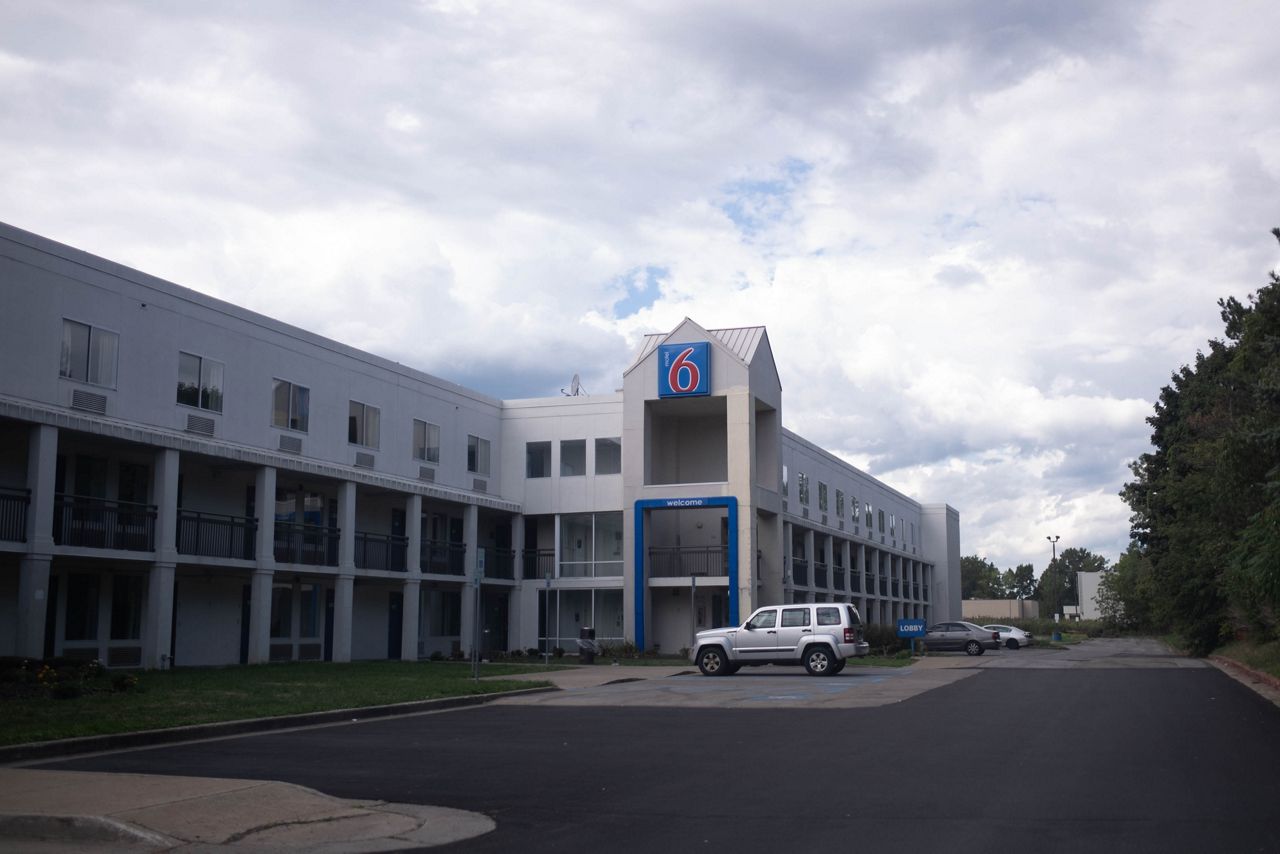
Motel 6 in Erie County which they use to house families. (Spectrum News 1/Emily Kenny)
A ‘last resort’ that’s not going away
Housing families experiencing homelessness can be quite profitable – to the point where business models change.
An online search of select hotels in Onondaga and Erie counties that have contracts to house homeless families showed that, starting in September, they were booked for the rest of 2025.
Onondaga County paid the Budget Inn on South Salina Street $850,240 in 2024 and could earn up to $867,462 this year, according to records from the New York Office of Temporary and Disability Assistance. The hotel has housed families since at least 2018, but now that is all they do. On the front door, a sign that reads “No Rooms.”
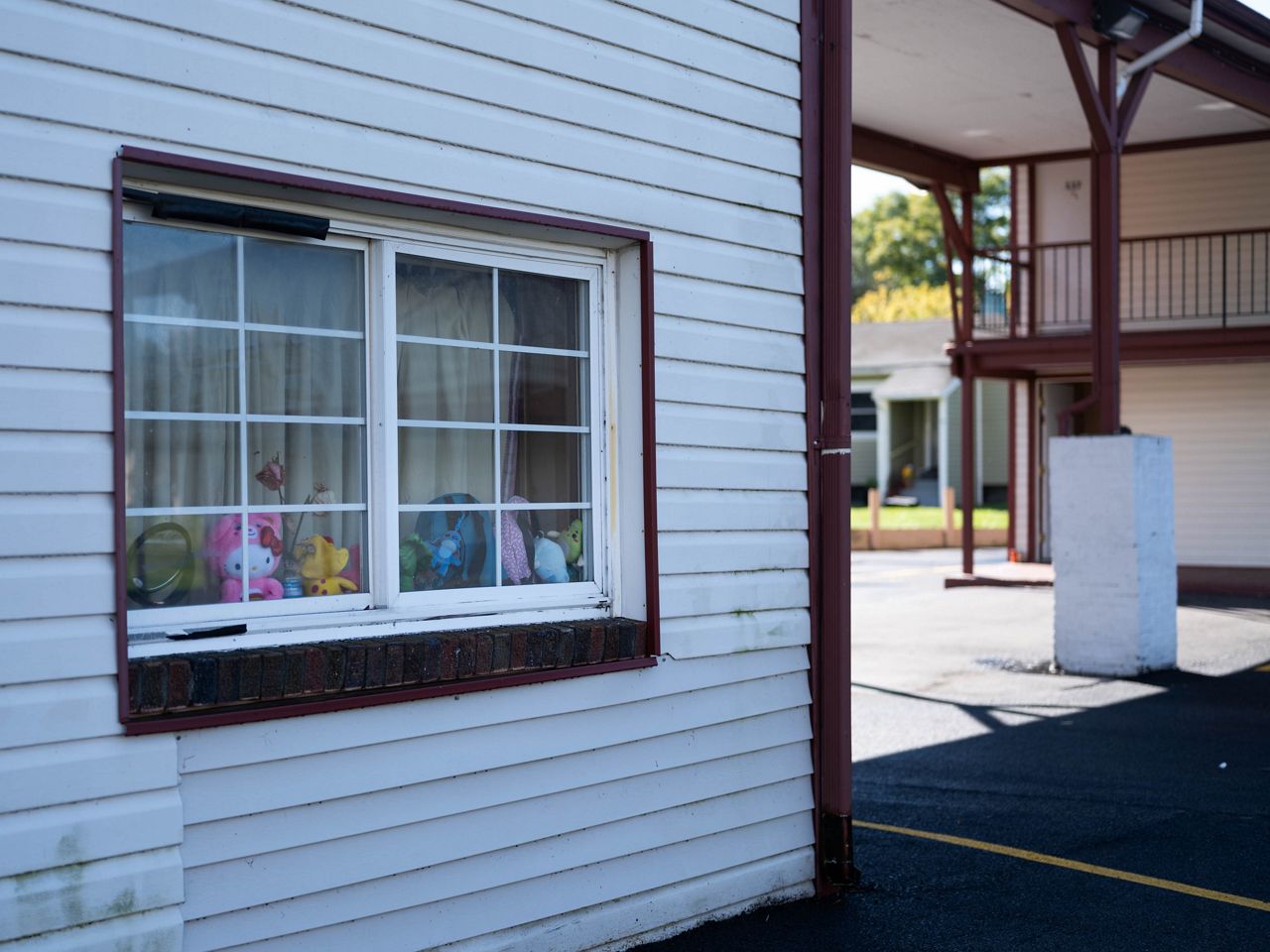
Toys are lined up in a window at the Budget Inn. (Spectrum News 1/Emily Kenny)
The owner, Neal Patel, declined an interview with Spectrum News.
The motel would need to charge about $95 a night and sell out each of its about two dozen rooms 365 days a year to make what the county is contracting. The contract between the county and the Budget stipulates that the motel is not paid for unused rooms.
Based on the value of last year’s contract with the Budget Inn, Onondaga County lost out on nearly $60,000 in room tax and the city of Syracuse missed out on $17,000.
Counties are reimbursed for the spending through the state’s Office of Temporary and Disability Assistance.
It’s a multi-layered problem connected to poverty, the lack of affordable housing, rising rents and stagnant state aid for people in need, county leaders and advocates say.
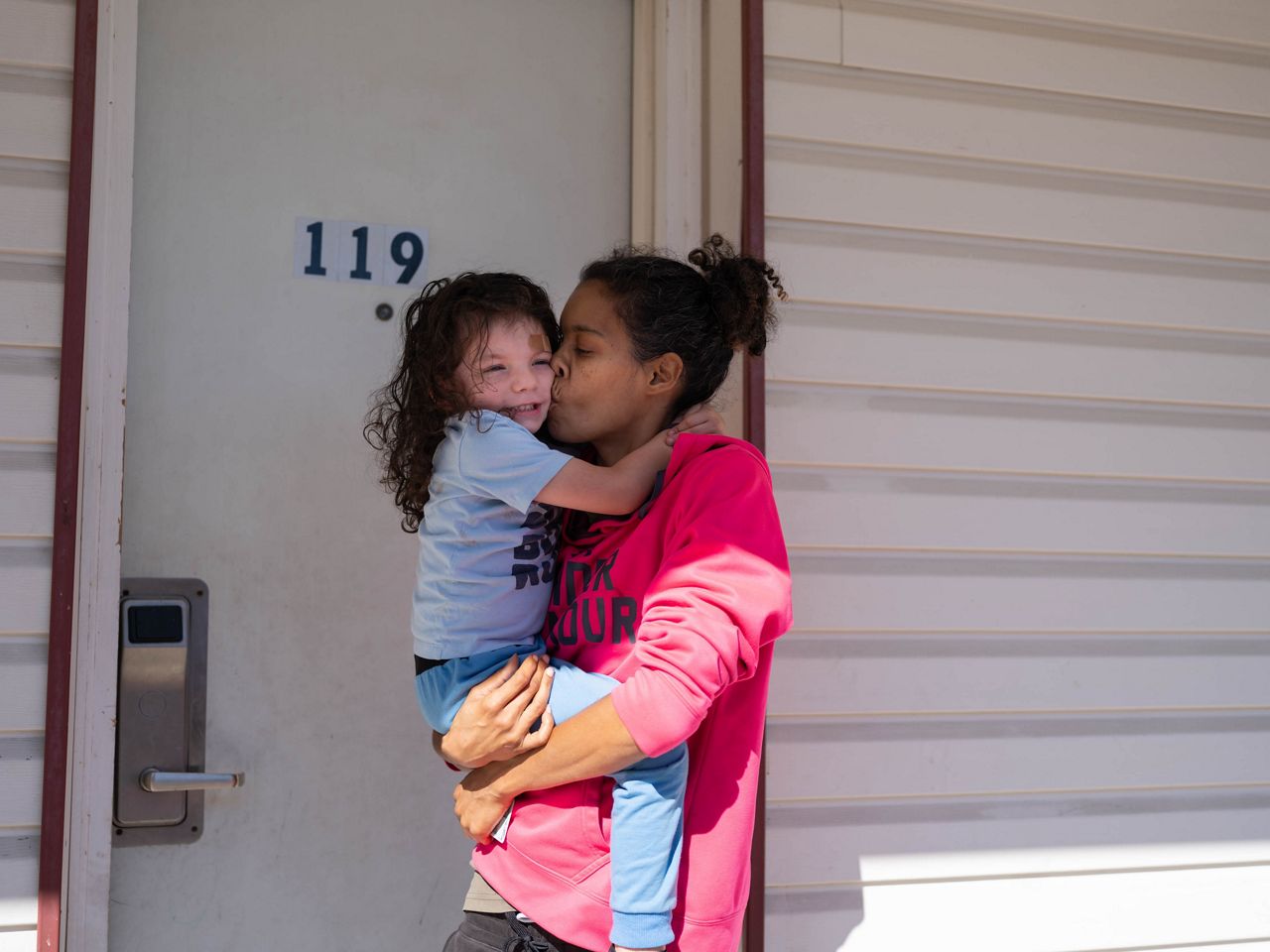
Burkhart and her son at the Budget Inn. (Spectrum News 1/Emily Kenny)
The poverty rate in the city of Binghamton is more than double the average state and county rates and has not declined in the last 10 years, according to Census data. As of July, the county of nearly 200,000 people had more than 300 adults and nearly 150 children living in hotels. County Executive Jason Garner said the hotels are used when the shelters are full.
“Basically, the last resort for people if they can’t find housing is to find it through [Department of Social Services], and we have contracted with at least 10 hotels in this county,” said Garner.
The county works with these hotels when the shelters are full, he said. In 2019, Broome County spent $468,075 on hotels. In 2024, that jumped to more than $9.4 million.
“It has absolutely skyrocketed and there are a lot of reasons behind that,” Garner said. “We used millions of [American Rescue Plan Act] dollars to make investments in housing. We created our own county housing fund just this year, and for the first time ever, the county created a multi-million-dollar housing fund to try to leverage more housing.”
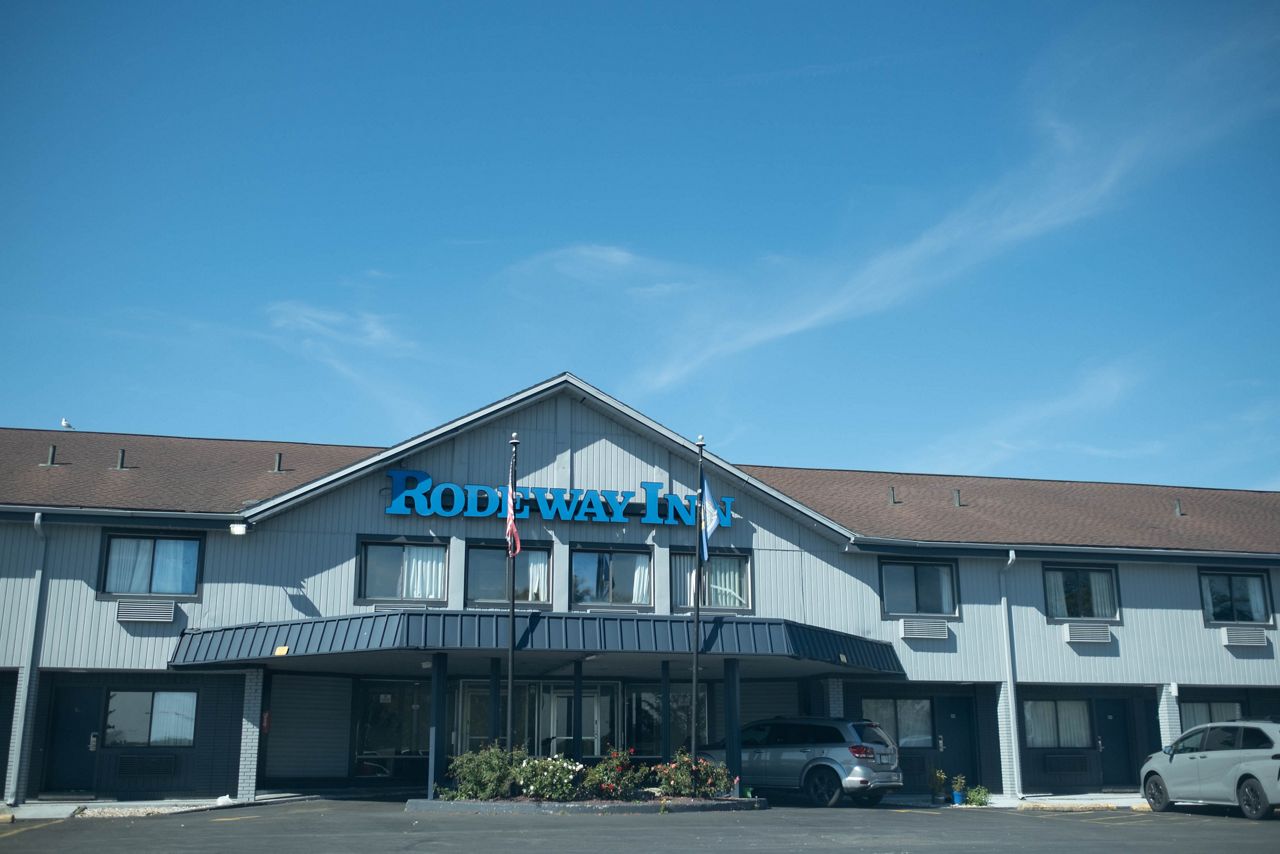
Another hotel in Onondaga County used for housing families and individuals. (Spectrum News 1/Emily Kenny)
While increasing the amount of affordable housing can help to solve this problem, right now the hotels still serve a purpose for those in need, Garner said.
“It’s better than people not having a place to stay, but in no way, shape or form do we believe it’s a good situation for people to be in. People need permanent places to stay that are affordable,” he said.
Another expense of having families living in hotels is the cost of transporting the children to school, and despite the financial cost, it is stressful for the kids.
“If they’re being moved from an apartment or a permanent place to living in a hotel, what that does to them emotionally, socially and educationally. That’s a really tough thing for kids,” Garner said.
According to a study Broome County conducted in 2024, it is estimated that they will need to increase their housing stock by 6,200 units in the next 10 years.
“Right now, we are building a little over 1,000 [units]. We expect to break ground next year on another 1,000, but that’s a huge undertaking. Before this increase in homelessness our extent of housing might be through our planning department just doing approvals for housing, but now we’re funding housing projects, and working with state and local officials to get those projects done, which is something counties never had to do before,” Garner said.
Broome County once touted its affordable housing options, but the market has changed substantially.
“What’s happened is we have a lot less homes for sale and they’ve increased in value a lot, which is nice for the people who own them, but for people trying to get housing, it’s been incredibly, incredibly difficult,” Garner said.
Garner said that trickles down and increases what people pay for rent too. The housing research found that renters in Broome County are paying slightly more than what is affordable for a place to live.
A statewide problem
Broome County is far from alone.
Erie County Department of Social Services said they are currently housing 182 families and 195 single people in hotels, and while there are mobile food pantries and public meal sites, they don’t have access to a kitchen in the hotel rooms. People in hotels qualify for SNAP benefits and other temporary assistance for restaurant food, but those funds may not go as far if they don’t cook for themselves.
The county provided Spectrum News with copies of contracts with four hotels for 2025, two of which have no rooms commercially available for 2025, leaving the county with fewer spots for tourists visiting the region. The average cost per night is $110. According to records from OTDA, the county has made payments to 18 hotels from April to June 2025.

Burkhart stands for a portrait in her permanent apartment. (Spectrum News 1/Emily Kenny)
Hotels in Erie County had contracts worth $13.1 million—the second highest in the state behind Nassau County (excluding New York City). Erie County spent $2.7 million through the first quarter of 2025, according to OTDA data obtained through a Freedom of Information request.
“What we’re seeing is an immense number of people without shelter, and there are not enough shelters in the county to provide beds for these people and so the county is being forced to put them up in hotel rooms as an option of shelter,” said Jordan Purrington, a spokesperson for Saving Grace Ministries in Buffalo.
Saving Grace Ministries has an emergency shelter that can hold 250 men, but they don’t have space for families. Purrington said that resources aren’t the same in hotels as they are for individuals living in shelters.
“They’re in a hotel room with nobody to necessarily offer them the services that they’re probably needing. I know there’s no food service at their fingertips like there would be in a shelter, no case management, no real push and motivation to take the steps to rebuild their lives,” Purrington said.
Back in Syracuse, Burkhart is only one example of many living out of these hotels and motels that have become a lifeline in Onondaga County since the only family shelter has been full since the COVID-19 pandemic.
Onondaga County has 60 families in hotels with contracts at eight different locations, down from the over 100 families they housed last fall, said Ann Rooney, the deputy county executive for human services.

The son of a mother who was recently staying at the Budget Inn plays in the parking lot across the street. (Spectrum News 1/Emily Kenny)
The Salvation Army’s family emergency shelter — the only one in the county that can house families — has been at its capacity of 26 families for four years, according to the executive director Matt Waldby.
“[Hotels] are challenging, but they have also filled a hole for us that I don’t think should be lost because absent those hotels, I’m not sure where we would be housing folks,” Rooney said. “The normal amenities that you would have in an apartment, separate sleeping areas, a kitchen, all the things that you enjoy in a home are not present in a hotel, so it’s not ideal.”

A saying that is painted on the wall of the Salvation Army’s family shelter. (Spectrum News 1/Emily Kenny)
In 2022, Onondaga County spent $259,293 on hotels and $1.8 million in 2023. However, in 2024 the county paid $3,485,847, and year to date, they’ve spent $1,406,790. On average, it costs $90 per night.
County Executive Ryan McMahon said it’s more than a lack of shelter space.
“I think overall you have a housing issue. If there’s more options related to housing then certainly when you have families who are in that moment in time, in life, and they need that support, you can put them into housing,” he said.
McMahon said the county has put forward millions of dollars in incentives to developers to build more housing with a variety of different options including mixed-use, affordable housing and mixed-income housing.
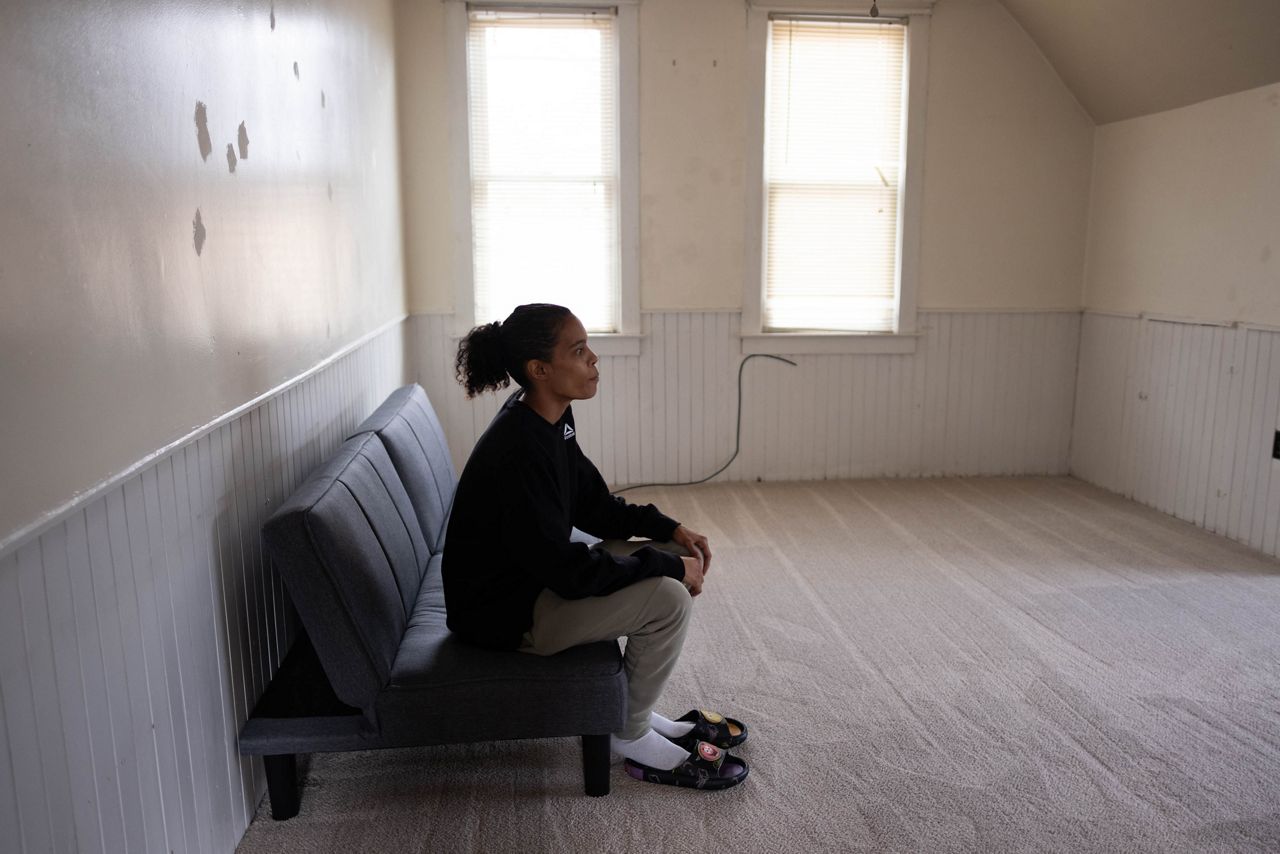
Burkhart sitting in her new apartment. (Spectrum News 1/Emily Kenny)
“It’s working. We have more housing units under construction and in the planning stages than we ever have had in our community. It will just take time,” McMahon said.
Despite the expanding housing options on the horizon, McMahon said he thinks hotels will still be a piece of the equation.
“You will need hotels no matter what moment in time because there will be people that will be housing insecure for a very short period of time and then they’ll have permanent housing later on,” he said.
A happy ending for one family
Alica Burkhart and her son were living at the Budget Inn in Room 119 for six months, but just this month, she moved into a permanent place.
“To come from where we started, the Budget Inn, and then to this and now I get to decorate. My son gets his own room. I just got the furniture voucher. Everything is falling in line,” Burkhart said.
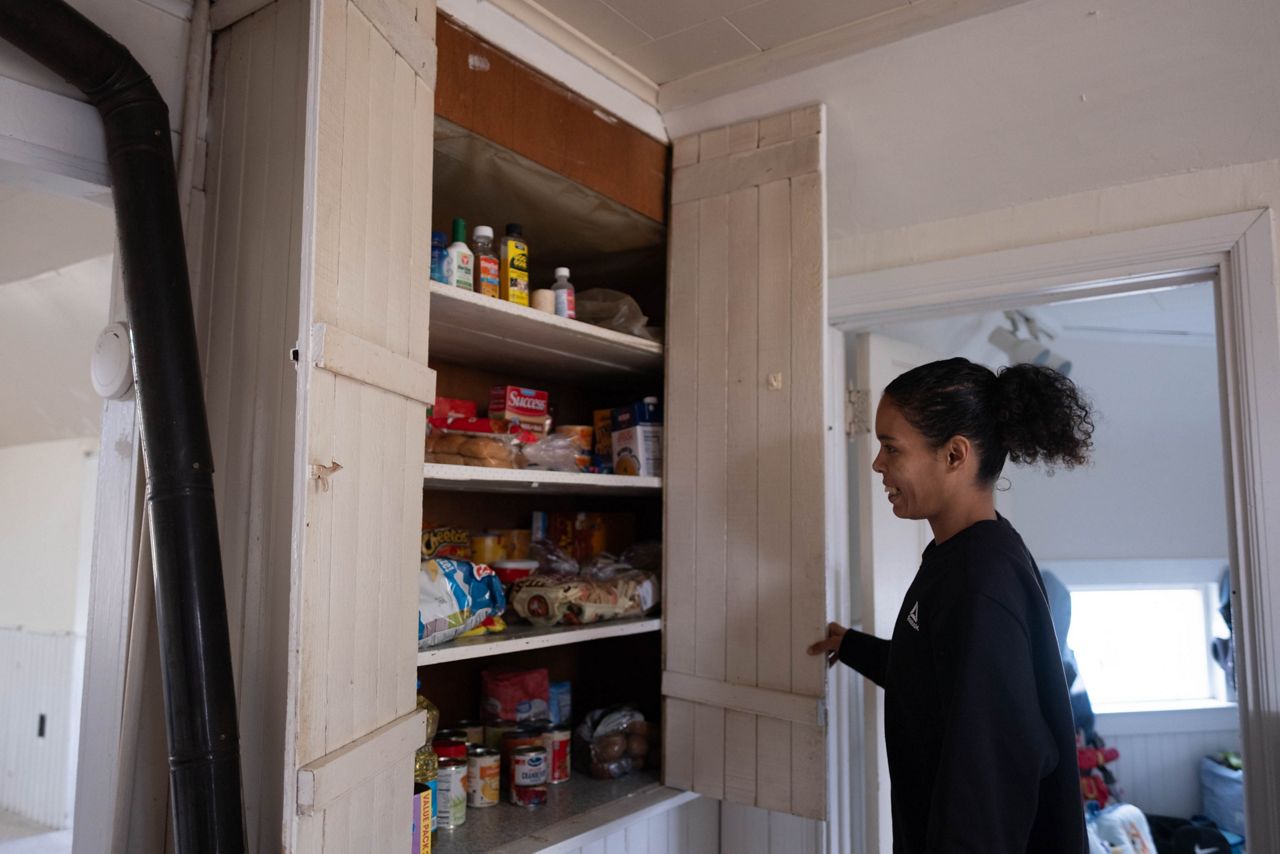
Burkhart shows off her full pantry. (Spectrum News 1/Emily Kenny)
And now she can now prepare meals for the two of them.
“We made meatloaf last night, mashed potatoes, baked beans, green beans. It’s amazing because now I know that my son is eating whole meals,” Burkhart said. “I’m probably not ever going to eat anything in the microwave again. I don’t even have a microwave.”
Burkhart plans to get a job and continue to move forward with her life here in Syracuse, she said.
“In the end, just stay positive, keep your head up. It’s going to get hard, but that’s life. You got to push through it because if you push through it, this is the outcome or even better,” Burkhart said. “It’s only up from here.”