
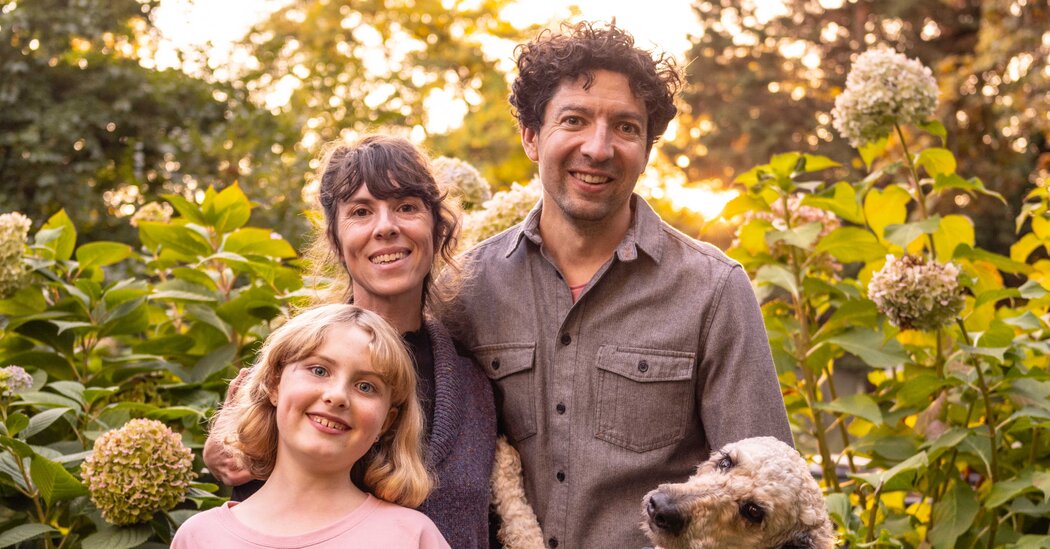
Jamie McPartland and Peter Oviatt met 23 years ago in New York City, though neither was from the area. She had come from California, he from Ohio, and they found in each other a similar yen for travel and adventure.
The couple flickered through odd jobs — watering office plants, bookkeeping, restaurant work — before earning graduate degrees: Mr. Oviatt has a doctorate in anthropology from M.I.T.; Ms. McPartland earned a master’s in creative writing from the New School. After they married and had a daughter — Oksana, now 9 — they continued to seek out wisdom through travel, living in Airbnbs and sublets for months at a time during her early childhood.
[Did you recently buy a home? We want to hear from you. Email: thehunt@nytimes.com. Sign up here to have The Hunt delivered to your inbox every week.]
“We used change and stimulation to bind us,” said Ms. McPartland, 41. Their travels led them to France, where Mr. Oviatt studied truffle cultivation; Turkey and Morocco, where they waited out visa requirements; and southern Oregon, where Ms. McPartland’s parents had moved. She created a hand-drawn logbook for Oksana titled “Places You’ve Slept.”
“I liked living a transient life. I thought it was the best,” Ms. McPartland said. “But then I realized it wasn’t good for my daughter. I started to long for a home we would stay in forever and have whatever forever is.”
In January 2020, just before Covid-19 lockdowns began, the family landed in Portland, Ore. They liked the city, despite its rainy climate, and needed more stability for Oksana — and themselves. “I honestly just enjoy being able to slow down and just spend time with people, see movies, go get drinks,” said Mr. Oviatt, 43.
He put his cultural anthropology training to work as a program director at a Montessori middle school, where he also teaches. Ms. McPartland began teaching high school French courses and continued working as an editor for other writers’ manuscripts.
They were in their third Portland rental when Mr. Oviatt lost both of his parents to cancer. He used the inheritance they left to buy a house. “My parents always wanted us to settle down,” he said. “I think they would be happy to know that this is how the money was spent.”
With up to $700,000 to spend, the couple wanted a modest house with two or three bedrooms and a garden. As a dedicated cycling family, they looked for places where they could have a bike workshop and rideable commutes to work and school. But more than that, they wanted to be good stewards of a home with history and character.
“We’d never bought furniture before,” Ms. McPartland said. “I was almost 40 when I got furniture.”
 Dan Cronin for The New York Times
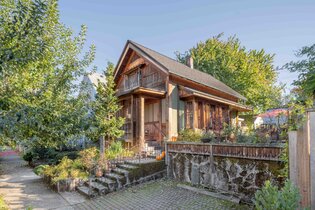
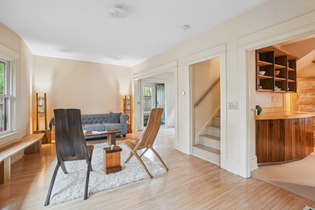
At 1,450 square feet, this two-bedroom, 1.5-bath bungalow was the smallest home they considered. Built in 1906, it had been restored by the sellers, a woodworker and his wife, who had installed cypress and cedar facades inspired by traditional Japanese farmhouses. Inside, original wood floors were complemented by poured-concrete counters and custom rosewood cabinets in the stylish kitchen. The cobbled yard would make gardening difficult, and the living and dining rooms were not as sunny as the second floor, where the bedrooms shared the sole full bathroom. The couple worried about maintaining the woodwork, but the home was close to coffee shops, restaurants and a grocery store, and the impressive basement would make for a great bike workshop. The price was $696,000, with taxes of nearly $6,000.
 Works Real Estate
Find out what happened next by answering these two questions: