
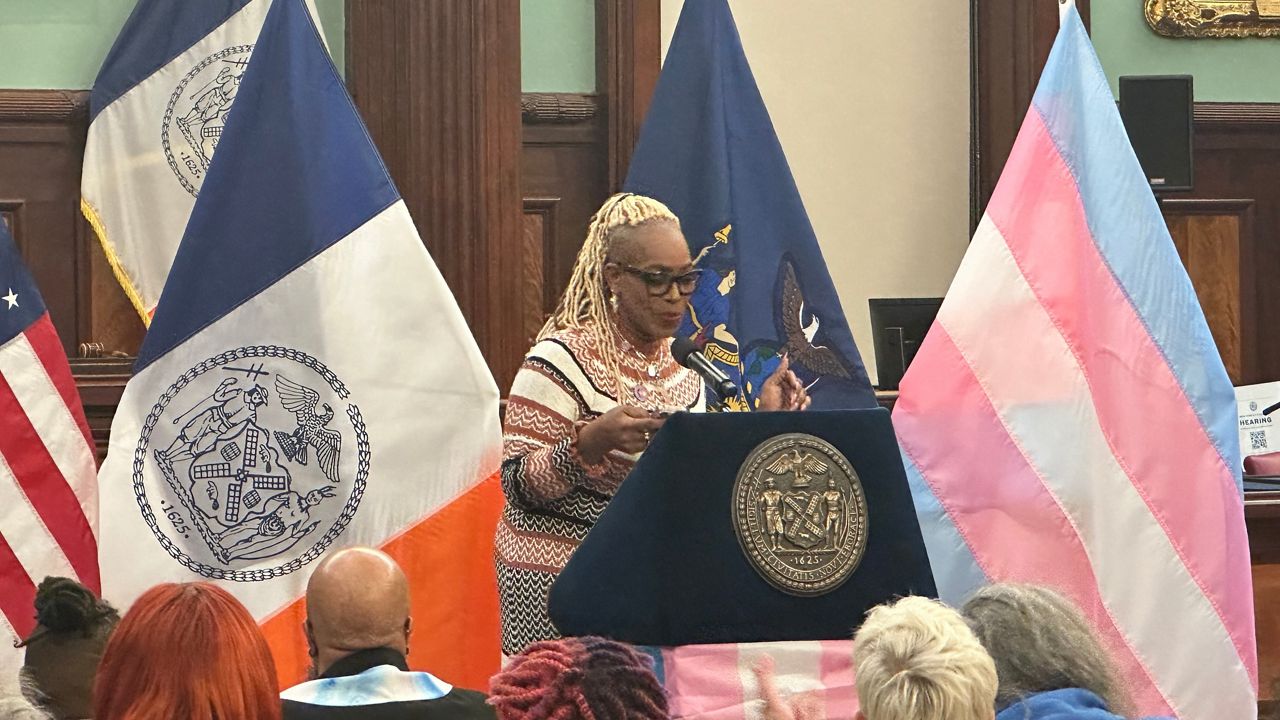
For Kim Watson-Benjamin, Transgender Day of Remembrance is about acknowledging loss, but also about recognizing the people who continue to endure.
“So many individuals in our lives have been lost, and not only lost to murder but also suicide,” Watson-Benjamin said.
What You Need To Know
This event marks the fifth year the Public Advocate’s office has held the event
Since last year, the Human Rights Campaign says at least 27 more people have been killed
According to a survey from the HRC, nearly 60% of transgender individuals say they’re less visible in daily life than a year ago and are less open about their identify
Watson-Benjamin, who is the LGBT and health coordinator at the Public Advocate’s office, says resilience matters especially at a time when national data shows the toll violence continues to take.
“We need to show up and show up for each other with love and to hold on to each other,” Watson-Benjamin said.
The day dates back to 1999 and the murder of Rita Hester in Boston, created so transgender people killed by violence would be remembered and named.
New national data from the Human Rights Campaign highlights the toll: nearly 400 people killed since 2013, more than 70% were people of color, 82% were transgender women and 71% were killed with a firearm.
Advocates note these are only confirmed cases, adding many victims are mis-gendered in police or media reports — meaning the actual number is likely higher.
“A lot of the headway and ground that we’ve made with the trans community have begun to recede,” entertainer Peppermint said.
Peppermint points to a national climate where laws and rhetoric targeting transgender people continue to grow.
“We stand at the intersection of racist policies and anti-trans and anti-LGBTQ policies. We’re seeing a lot of those policies being emboldened in this country right now,” Peppermint said.
Public Advocate Jumaane Williams says those policies translate to real inequities, especially for those most at risk.
“Unfortunately, Black trans women are [going to] get the brunt of this. The ones who are most in-housed, the most unemployed are Black trans women,” Williams said.
Williams says this day is also about a collective commitment to stand with those who remain.
“I’m hoping that we all learn is that [we’re] all in this together and there has to include everyone and we have to mean everyone,” Williams said.
According to a survey from the HRC, nearly 60% of transgender individuals say they’re less visible in daily life than a year ago and are less open about their identify.