
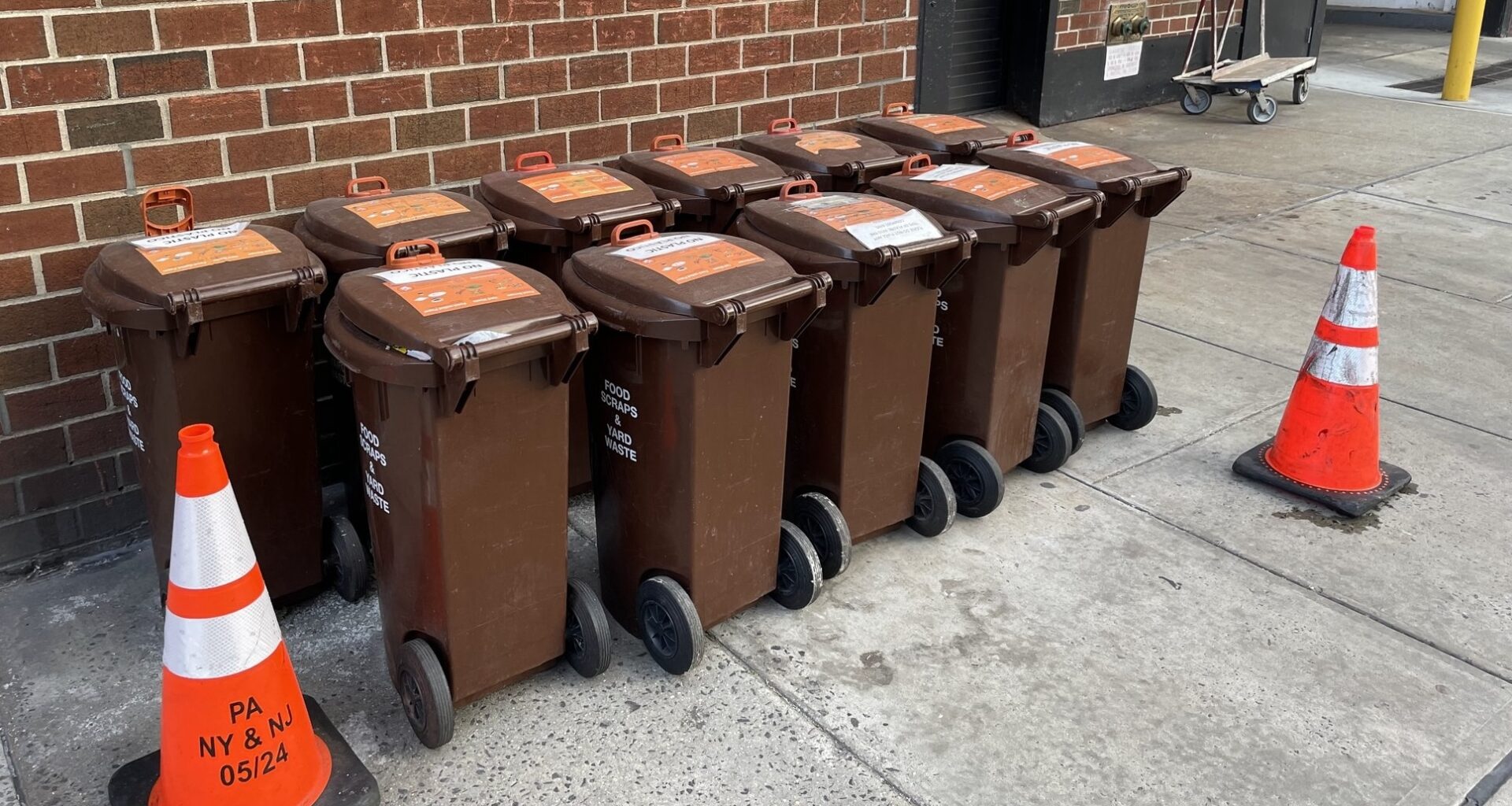
New York City’s Curbside Composting program hit a record high last week, bringing in 6 million pounds (3,000 tons) of food scraps and yard waste from residents. This topped the 5.9 million mark set the week before, according to the New York City Department of Sanitation (DSNY). The previous record, 5.4 million pounds, was recorded in May.
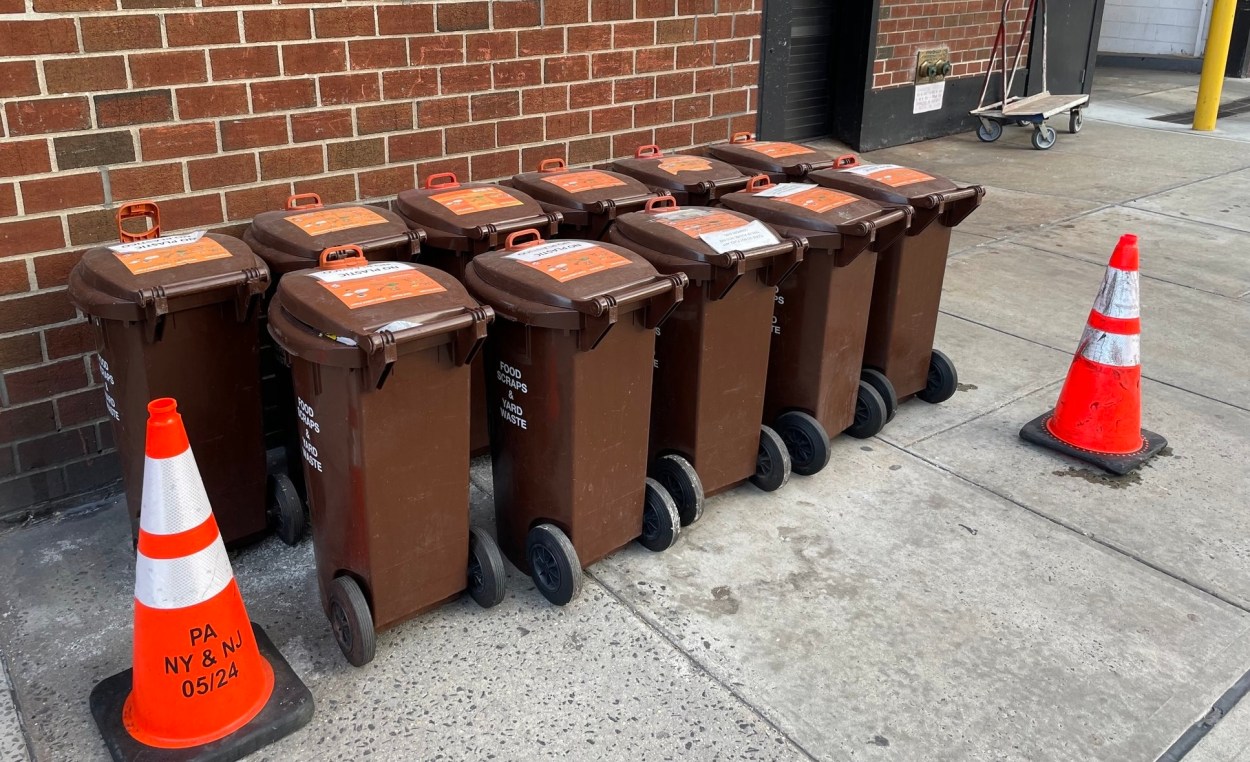 If your building is not providing compost bins, you can make a report on 311 and DSNY will get in contact with the property owner. Photo: Catie Savage
Last October, Manhattan became the final borough to join the program, which started as a pilot in Queens in 2022. With Manhattan’s inclusion, composting officially became mandatory for all city residents.
Previously, Hell’s Kitchen residents had to bring their organic refuse to a volunteer-run collection site at Mathews-Palmer Playground or find their nearest Smart Composting Bin. Now, they could separate their food scraps and set them on the sidewalk in a clearly-labeled bin for collection on recycling day.
Manhattan’s Community District 4, which encompasses Hell’s Kitchen and Chelsea, contributed 31,240 pounds of organic material to this weekly total. For October, DSNY collected 148,440 pounds of organic waste from District 4 residents, up from 85,800 pounds in October 2024 when the program first went into effect.
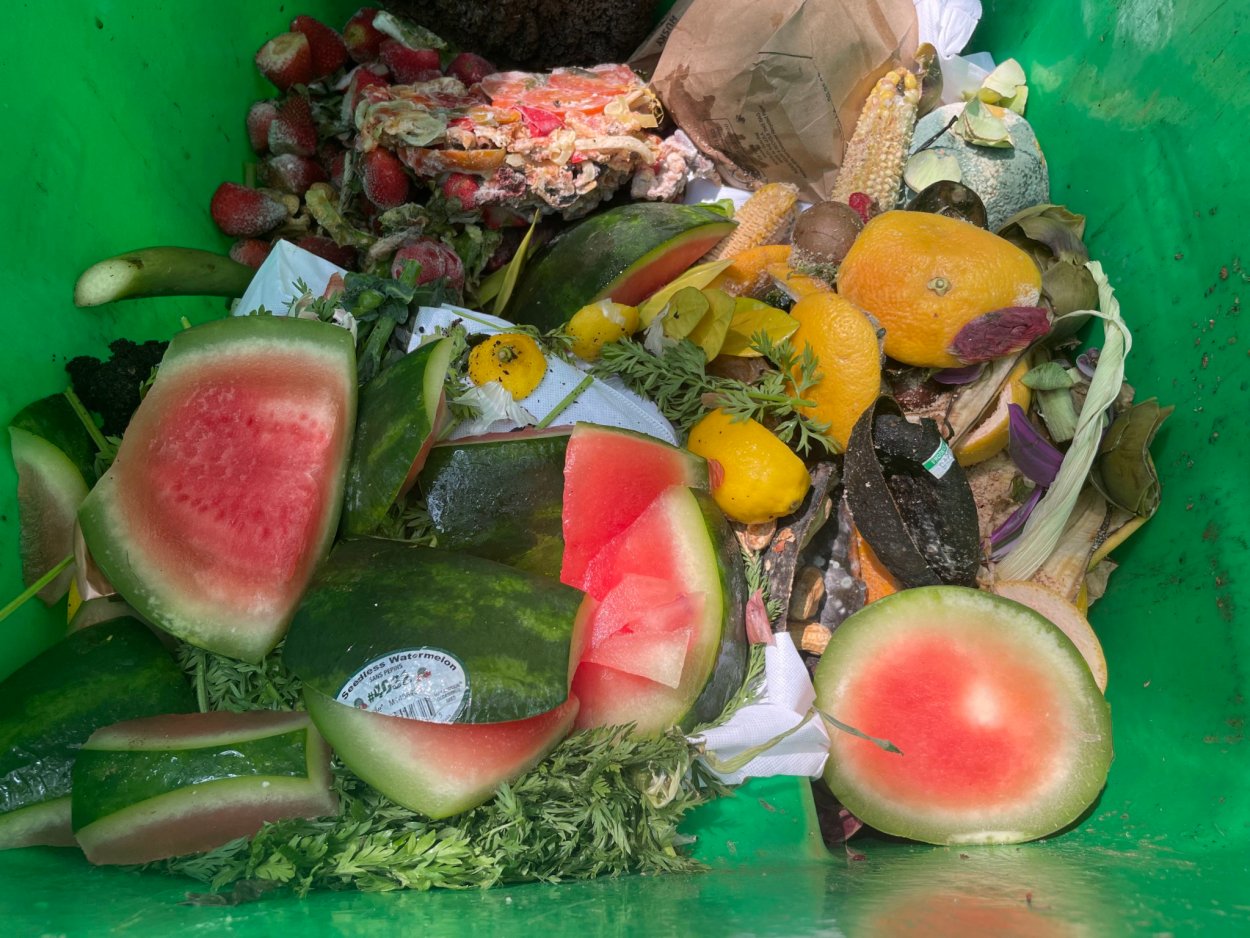 In the most recently available report from June 2025, DSNY collected 143,400 pounds of organic waste from District 4 residents. Photo: Catie Savage
So far this year, the city has diverted 90,223.2 tons of organic waste, up from 53,882.4 in 2024. Nearly 3.4 million households contribute organic refuse weekly, according to the DSNY, making its curbside composting program the nation’s largest.
Collected material is brought to “organic dumps,” where it is turned into compost for city parks and gardens or used as fuel to heat homes and businesses. Finished compost is distributed free to residents at designated sites and popup events across the city, according to the DSNY.
But while composting has become more convenient, residents often must rely on their landlord to participate, and confusion persists around process and enforcement.
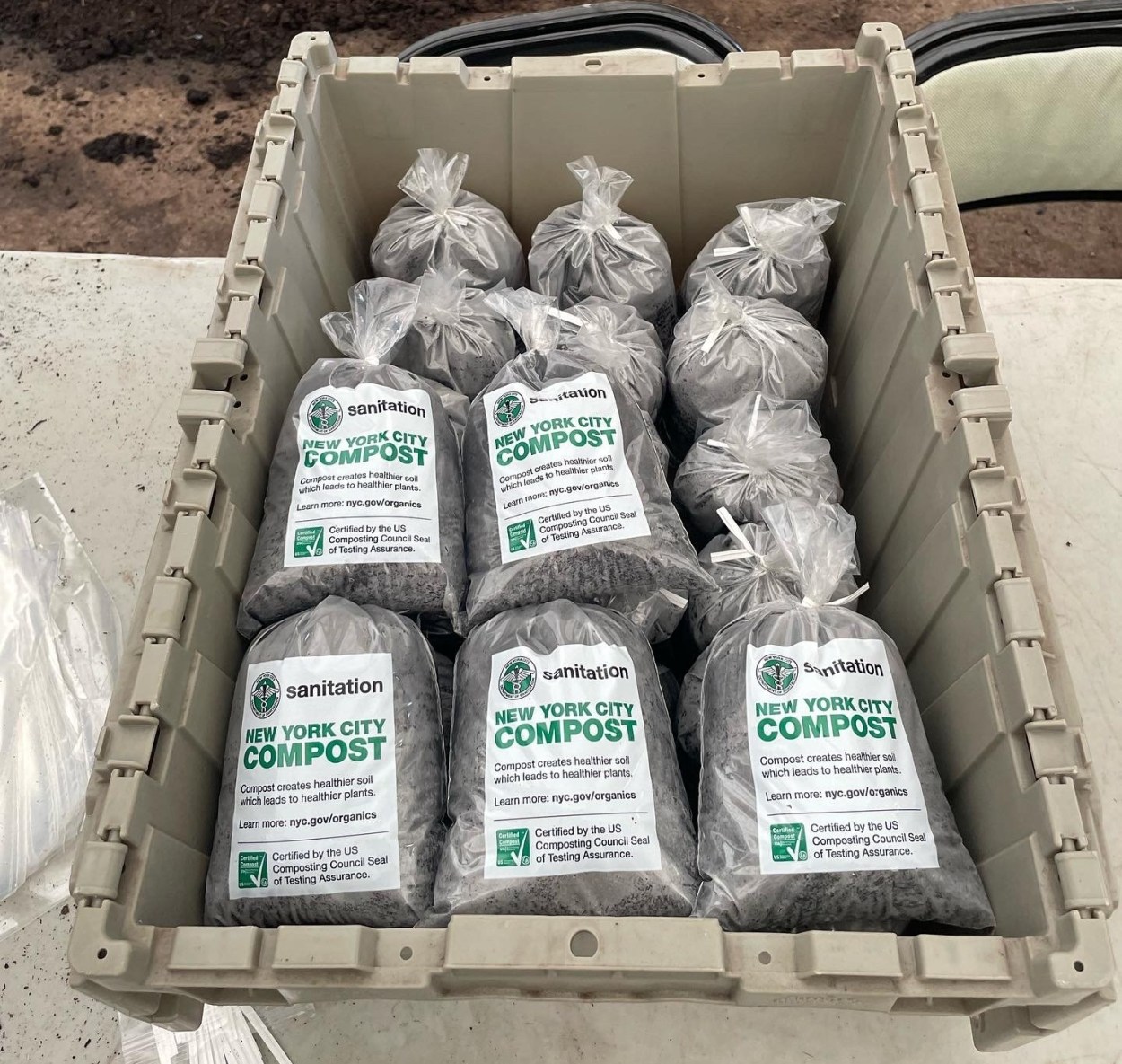 Finished compost ready to be distributed for free to residents at designated sites and popup events across the city. Photo: Catie Savage
The DSNY began handing out fines for non-participation last April following a six-month grace period. However, the program is still in an “educational period,” said Steven Caruso, citywide community affairs officer for DSNY at the November 13 meeting of Community Board 4’s Waterfront, Parks and Environment committee. This means that violators get three warnings, followed by an in-person information session, before any summons are issued. The DSNY said it has issued over 63,000 warnings since the program launched.
In a statement, the DSNY said it “remains committed to increasing participation” in the program and is engaging the community through outreach campaigns, multilingual education efforts and community partnership.
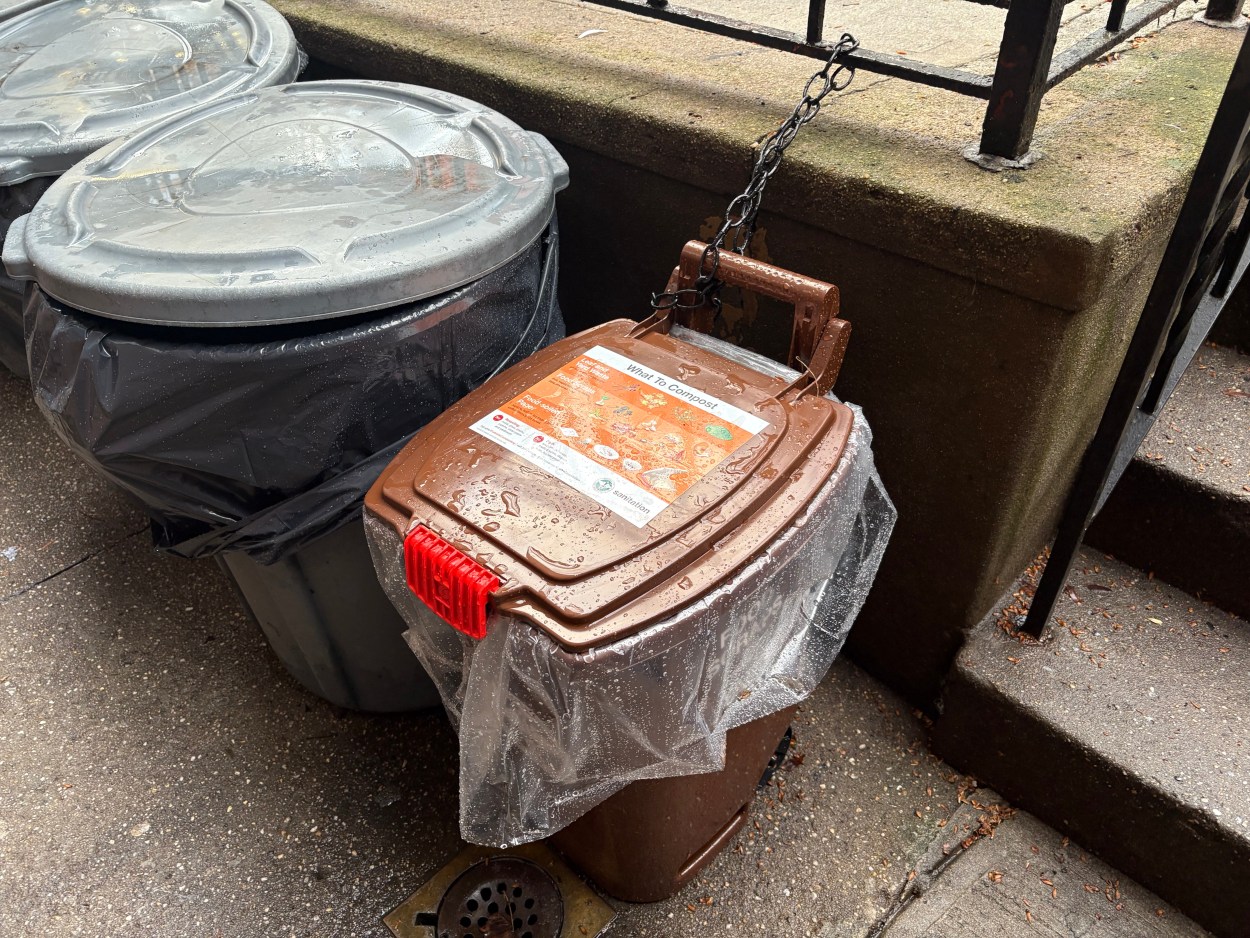 New York City’s Curbside Composting program hit a record high last week, bringing in 6 million pounds (3,000 tons) of food scraps and yard waste from residents. Photo: Catie Savage
The department encourages tenants whose buildings are not participating in the program to take action.
“Anyone who lives in a building that is not providing an opportunity to compost can make a report to 311, and we will respond,” said Vincent Gragnani, Press Secretary for DSNY in a statement to W42ST.
Meanwhile, the smart bins remain in place, and are available 24/7 via the NYC Compost app.