
Credit: Meekii Modez/Instagram
The Miss Universe universe is a bizarre place at the best of times.
So perhaps it shouldn’t have raised many eyebrows when, a fortnight ago, Fatima Bosch, aka Miss Mexico, stormed out of the world’s biggest beauty contest after the pageant’s director appeared to call her a “dumbhead”.
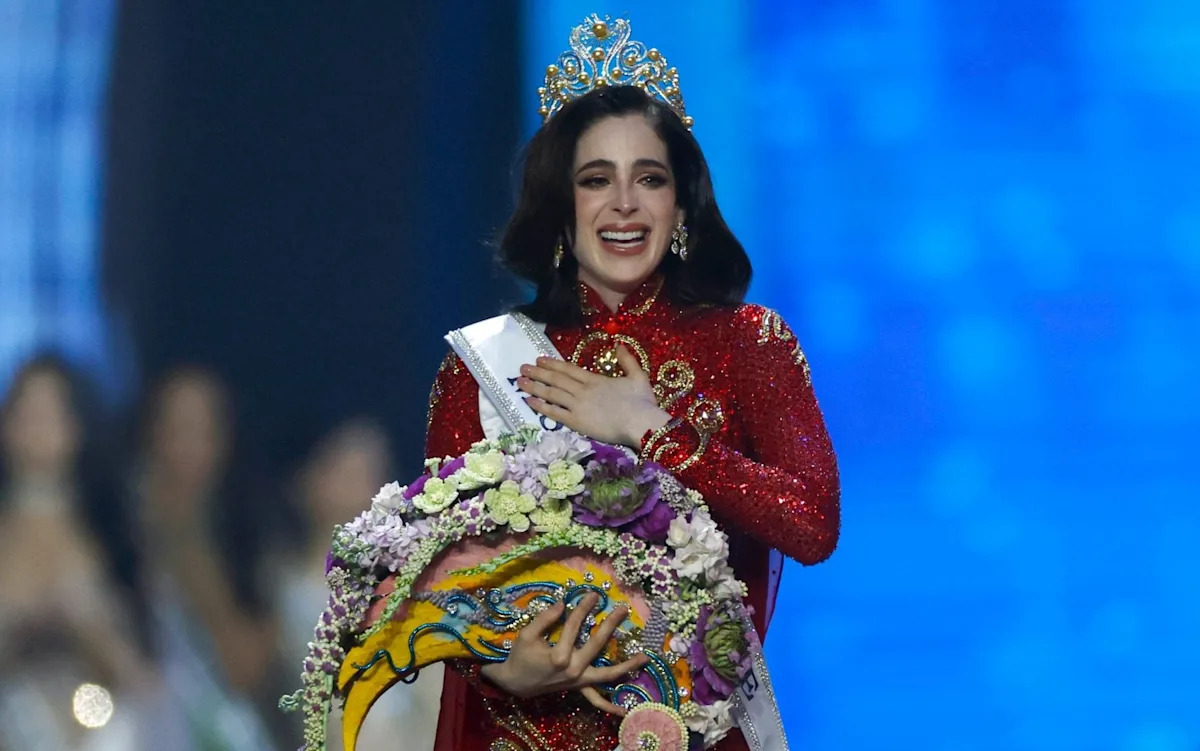
But Bosch’s return to claim the crown at a ceremony in Bangkok on Friday certainly did, drawing global attention after days of high drama that made this year’s event the most controversial in the competition’s history.
Credit: Miss Universe Thailand
Far from being the sole moment of madness, Bosch’s clash with Thai Miss Universe director Nawat Itsaragrisil was emblematic of a competition in total chaos. Behind the glamorous gowns and gleaming toothpaste-commercial smiles lurked allegations of rigging, manufactured political rivalries and racism – not to mention the candidate caught pretending to snort cocaine on camera.
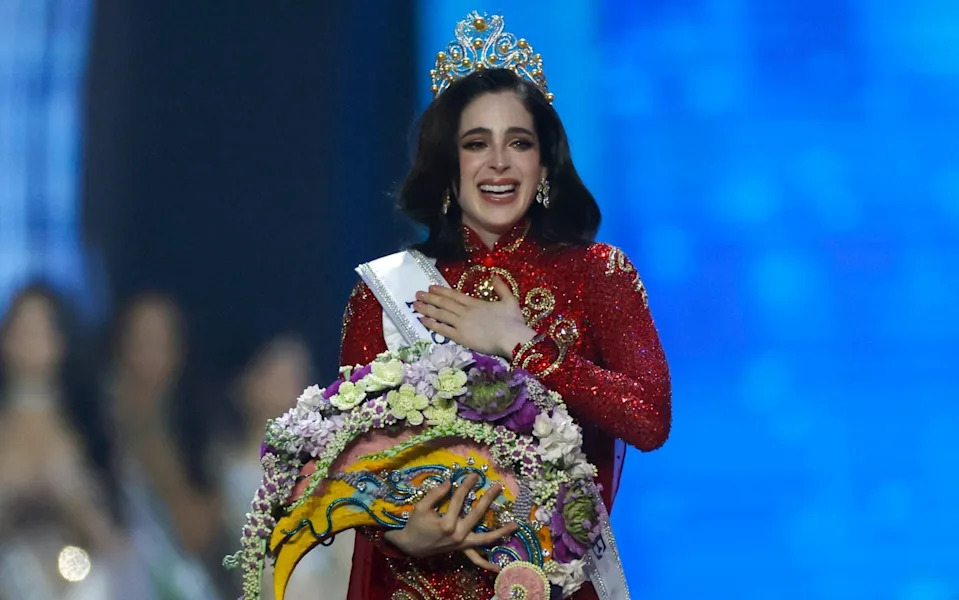
Fatima Bosch’s coronation came just days after her headline-making walkout – Rungroj Yongrit/EPA/Shutterstock
And while Bosch’s coronation as the 74th Miss Universe has been deliriously celebrated in her native Mexico, many keen pageant watchers are crying foul, suggesting that her victory was engineered by panicked organisers intent on damage limitation.
A backstage blow-up
The spat between Bosch, 25, and Itsaragrisil, 60, began when the latter publicly berated her in front of the other contestants – and in a video live-streamed on Facebook – for not taking part in activities promoting this year’s host country, Thailand.
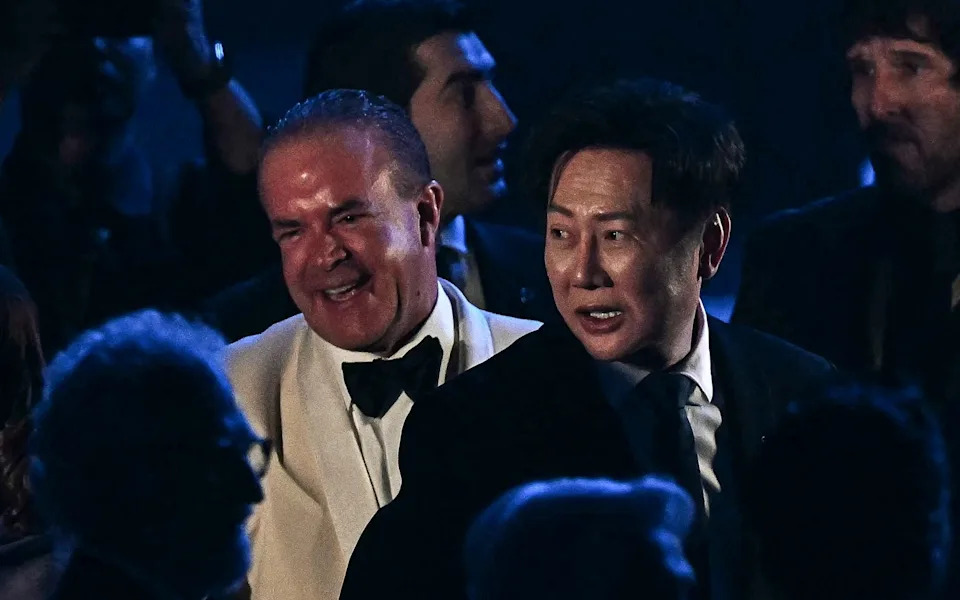
Miss Universe Thailand director Nawat Itsaragrisil (right) with Raul Rocha, the Mexican businessman who now heads the Miss Universe Organisation – Lillian Suwanrumpha/AFP/Getty Images
“If you follow the order from your national director, you are a dumbhead,” Itsaragrisil reportedly fumed, citing Bosch’s apparent refusal to join a photoshoot on the advice of her management.
When Bosch tried to defend herself, telling the Thai official she “has a voice” and wanted to be respected “as a woman”, the irate director ordered security to remove her. Bosch marched out, and several other contestants followed in solidarity.
Credit: Miss Universe Thailand/Facebook
Raul Rocha, who runs the Miss Universe Organisation (MUO) out of Mexico, described Itsaragrisil’s behaviour as “serious abuse” and criticised his “constant desire to be the centre of attention”. Itsaragrisil later issued a tearful apology, saying “I am human”, but denied using the word “dumb”.
The scandal was then compounded by Venezuelan Miss Universe 1996 winner Alicia Machado referring to Itsaragrisil as Chinese in a subsequent Instagram Live video. When a commenter pointed out that he was Thai, Machado said “everyone with slanted eyes” was Chinese to her – and then pulled back the corners of her eyes to demonstrate her point.
Claims of secret juries and staged rivalries
Bosch’s victory amid all that nastiness might be cheering were it not for the fact that the legitimacy of the entire process has been called into question. Two judges, former Chelsea star Claude Makélélé and Lebanese-French composer Omar Harfouch, quit in protest days before the grand final, with Harfouch calling the contest a “charade”. He alleged that an impromptu jury had met in secret and pre-selected the 30 finalists without the judges’ involvement, claiming that the results were “rigged” and calling it a “betrayal”.
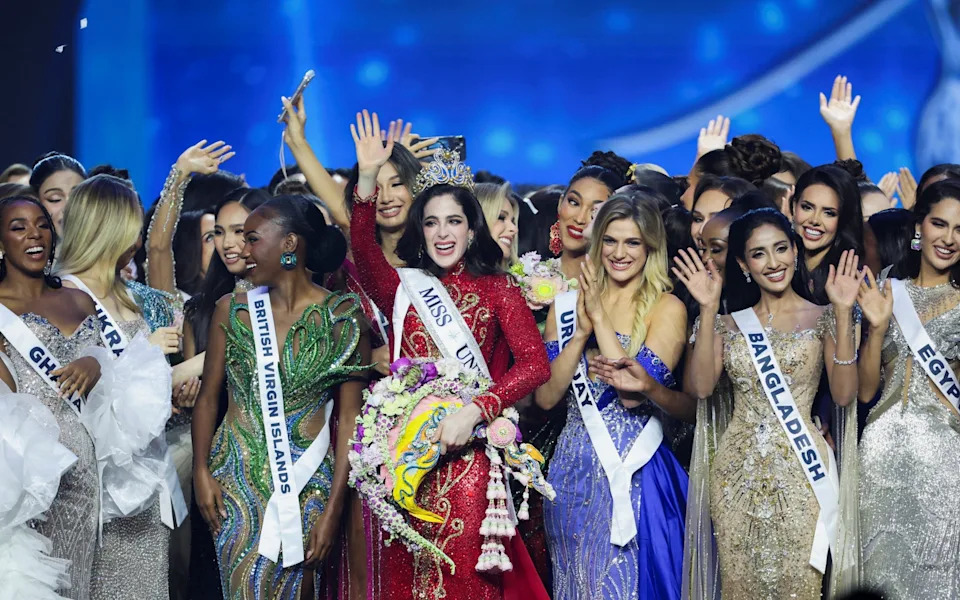
This year’s Miss Universe promised glamour and unity; instead it delivered mutiny, on-camera rows and allegations that shook the pageant world – Chalinee Thirasupa/Reuters
The MUO rejected Harfouch’s allegations, saying “no external group” had been “authorised to evaluate delegates or select finalists”.
It suggested he may have been referring to the Beyond the Crown programme, a social-impact initiative that operates independently of the beauty pageant and has its own selection committee. The MUO argued that Harfouch had “mischaracterised” the programme.
However, suspicion still lingers, and trust in the contest isn’t exactly at an all-time high given other glaring missteps this year, including allegations from Miss Israel that the pageant failed to protect her after a video appearing to show her scowling at Miss Palestine went viral.
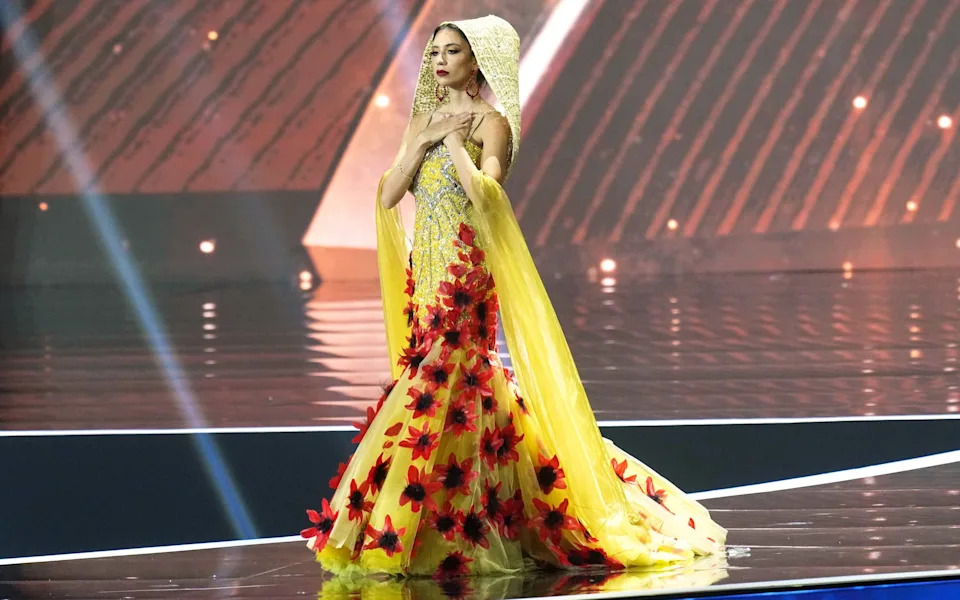
Miss Israel (Melanie Shiraz) says the pageant failed to protect her after a viral clip sparked death threats – Sakchai Lalit/AP
Melanie Shiraz, the Israeli entry for the competition, reportedly received rape and death threats over the clip, which she argued had been misleadingly “edited” by the MUO to give the impression that she and Miss Palestine were standing side by side when, in reality, they were not.
Sources told The Telegraph they believed that Shiraz and Miss Palestine, Nadeen Ayoub, had been “artificially drawn” into a conflict, accusing the event’s organisers of a “deliberate provocation”. (This year’s competition was the first to feature a Palestinian representative.)
Viral slips, stage tumbles and ill-judged jokes
A more absurd scandal came courtesy of Miss Chile, Inna Moll, who posted a TikTok video in which she appeared to snort a line of cocaine off her arm.
Credit: Instagram/@innamoll/@eak_makeup
Moll had in fact dabbed make-up powder on her wrist, but reaction to the footage forced the 28-year-old into issuing a hasty apology in which she pinned the blame on a make-up artist.
“I want to apologise to everyone who felt offended, but I also want to explain the situation,” she said. “The person who uploaded that video was a make-up artist, and that make-up artist told me, ‘record this’.”
“I don’t know if it was because of the language barrier that we weren’t understanding each other well, because I kept saying no and he kept going and going, and with everything that’s going on, I didn’t refuse.”
This year’s competition also saw a gasp-inducing fall from the stage. Miss Jamaica, Dr Gabrielle Henry, was strutting down the runway in her orange evening gown on Wednesday evening when she suddenly plunged off the edge. Henry was rushed to hospital on a stretcher; organisers later said she had no broken bones and was “under good care”.
Past controversies
The string of incidents will undoubtedly add fuel to calls from some quarters for the competition to be scrapped.
Yet the contest, which began in 1952 in Long Beach, California, has weathered numerous storms over the years, not to mention seismic changes in social attitudes.
There have been disputes over the choice of host countries, including Russia (in 2013) and Israel (in 2021), scandals over the incorrect naming of winners (such as Miss Colombia in 2015) and fallouts over allegedly forced dethronings – such as in 2002, when Russian Miss Universe winner Oxana Fedorova was accused of failing to fulfil her duties and stripped of her title. She was reportedly more focused on completing her police training and law degree instead.
Conversely, the contest has also served as a launch-pad for a number of stars, such as Hollywood actress Gal Gadot. The Wonder Woman star was crowned Miss Israel in 2004 and represented her country at the international pageant later that year.
But what exactly is the purpose of a decades-old beauty contest in the supposedly enlightened 21st century? Although it has recently been rebranded, rather dubiously, as a source of female empowerment, the origins of Miss Universe don’t exactly scream women’s rights. It was founded by clothing company Pacific Knitting Mills after Miss America winner Yolanda Betbeze refused to wear their Catalina Swimwear swimsuit.
The contestants soon became a running joke, giving pat answers about wishing for world peace while parading around in expensive frocks. The trope was lampooned in the 2000 comedy Miss Congeniality, in which Sandra Bullock’s FBI agent, while undercover as a pageant contestant, calls for “harsher punishment for parole violators… and world peace”.
A glossy institution struggling to reinvent itself
Miss Universe has begrudgingly amended some of its more archaic rules in recent years.
In 2022, women who had been married or had a child were finally allowed to enter the contest, and in 2023 organisers dropped the upper age limit of 28. More controversially, transgender contestants were invited to compete in 2012, with Spain’s Angela Ponce becoming the first in 2018.
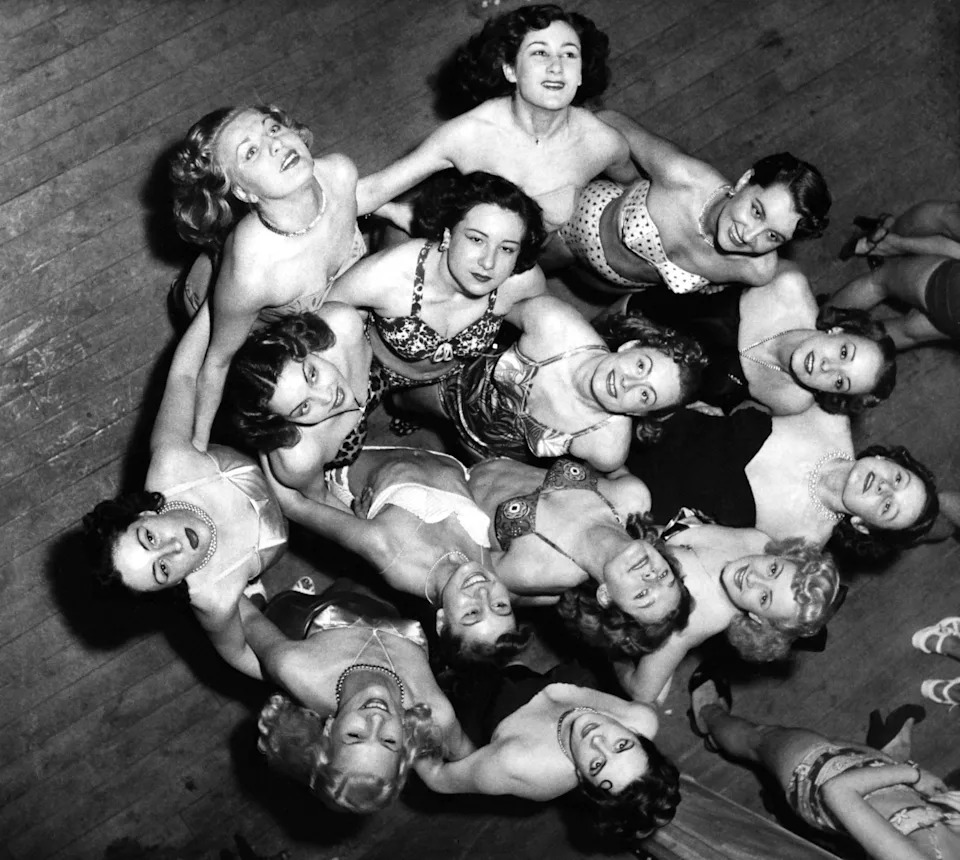
Candidates for Miss Universe 1952 pose during the elimination round at the Moulin Rouge Robinson in France – Keystone-France/Gamma-Rapho/Getty Images
Still, it remains something of a throwback and is battling to reverse declining audience figures under Rocha’s leadership.
The businessman acquired the brand from Thai transgender media mogul Anne Jakrajutatip, whose entertainment company, JKN, filed for bankruptcy in 2023, citing “liquidity problems”.
The competition had previously been run by the talent agency Endeavor and, before that, Donald Trump, who bought the pageant in 1996. He owned it for nearly two decades, until 2015, when he sold up after broadcaster NBC severed its business arrangement with the contest over his stance on illegal migration from Mexico.
Given Miss Universe’s struggles to remain relevant, the controversies that beset this year’s competition may be a major cause for concern for Rocha and his team.
But then again, it’s never been the earnest speeches that hook viewers. (Bosch offered the usual empowerment platitudes, saying in a video that she was not just “a doll to be made up” but a voice for women and girls.)
It’s the theatrical spats and wild clothing choices – from Miss Norway emerging from a giant salmon outfit to the sensual bikinis that dominate the swimsuit round – that keep the show going. And the past fortnight’s catalogue of catastrophes may only end up burnishing its crown.