
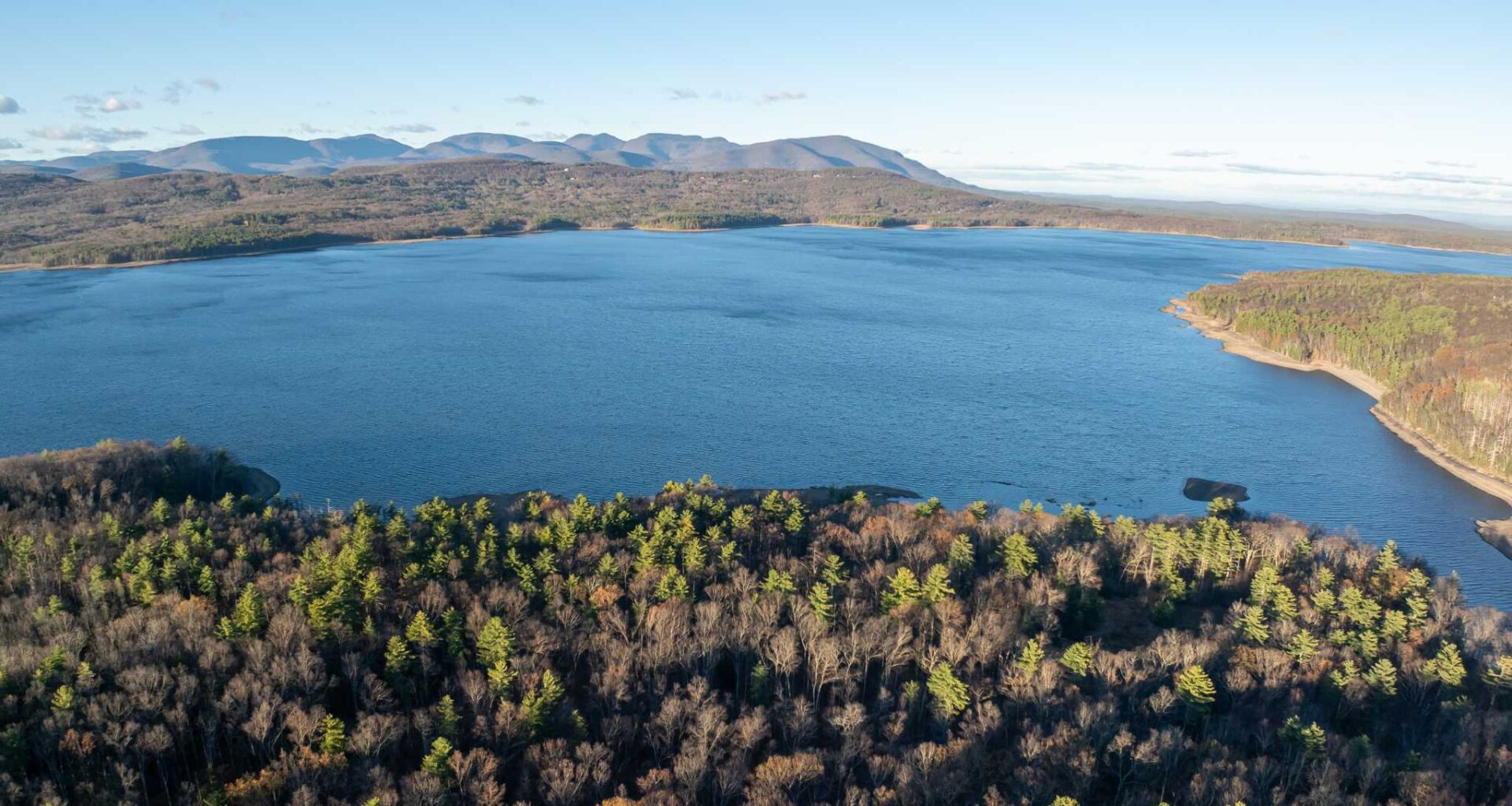
The Ashokan Reservoir, a source of water for New York City, is seen on Nov. 12, 2024, in Shokan.
Jim Franco/Times Union
ARKVILLE — Years of negotiations over New York City’s land purchases in the Catskill Mountains are nearing a close.

The discussions between the city Department of Environmental Protection, local leaders in the Catskills and environmental groups broke down in early June, but are now making progress, with all parties saying they hope to reach an agreement on a two-year permitting plan by the end of the year.
Article continues below this ad
The agreement will put new guidelines around a landmark land-purchasing program that has provided drinking water to nearly 10 million people and been a thorn in the side of many Catskills communities.
Since 1997, the DEP has purchased more than 220 square miles of land in the Catskills under a plan with the state that allowed the city to continue drawing water from its reservoirs in the region without installing a filtration system, which would cost billions of dollars. The agreement requires the city to purchase land to buffer the reservoirs from runoff, which could introduce pollutants into a system that provides water for 90% of New York City and about 1 million people in the Hudson Valley.
Some Catskills towns have chafed under the arrangement, with leaders arguing the land purchases inhibit growth, strangle property tax revenues and undermine self-determination in the region. Environmental groups have said the purchases preserve natural habitats. The DEP has attempted to balance its acquisitions with funding for programs the agency says benefit reservoir protection and Catskills residents. In February, it pledged $228 million to agricultural and forestry initiatives in the Catskills, programs that would also protect the reservoirs from runoff.
The 10-year permit for purchasing land around the reservoirs — confusingly called the Water Withdrawal Permit — ends this year, and the state Department of Environmental Conservation is tasked with approving a new permit. Negotiations between agencies, environmental groups and the Coalition of Watershed Towns — a group of municipal leaders from the five counties in the reservoir’s watershed — have been fraught.
Article continues below this ad
In early June, DEP Commissioner Rohit T. Aggarwala withdrew the agency from negotiations, later telling the Times Union they “were no longer moving forward in a constructive way.” But after the Coalition of Watershed Towns and environmental groups expressed a desire for the DEP to return to the table, Aggarwala and DEP Deputy Commissioner Paul Rush attended an Oct. 20 meeting in Arkville to address town leaders.
During the meeting, Aggarwala sought to quash rumors that the DEP would cut programs or eliminate financial support. He also told the Times Union that Catskills towns had criticized the DEP for submitting a draft permit proposal that was not public. The draft permit is identical to the one submitted 10 years ago.
The DEP subsequently reengaged the other stakeholders by offering to negotiate a separate arrangement called the Intergovernmental Agreement, which would encapsulate more recently negotiated changes. Much of what will be in that agreement has already been hashed out, Aggarwala said. The most significant change is ending most of the city’s large land purchases.
But significant changes may come in 2028, after the Intergovernmental Agreement would expire. An outside panel of experts is now reviewing DEP scientific research to produce a report to inform how the city should maintain the reservoir system amid the growing threat of climate change. Previous studies have looked back at how the DEP’s programs worked, whereas the new report will look toward the future.
Article continues below this ad
The study may conclude efforts to protect the reservoirs should be shifted from the Catskills to Westchester County, Aggarwala said, where the Kensico Reservoir holds Catskills water on its way to New York City. With a resurgence of wildlife in the area and heavy rainfall, there are concerns about animal feces polluting the water.
Ric Coombe, the chairman of the Coalition of Watershed Towns, told reporters this month that the coalition may create its own scientific panel.
“We all want these decisions to be based on sound science, and sound science, while in theory, is what all scientists should want, you want to make sure the groups are independent and unbiased,” Coombe said later in a Times Union interview. “We are willing to use resources to engage proper experts if required.”
Article continues below this ad