
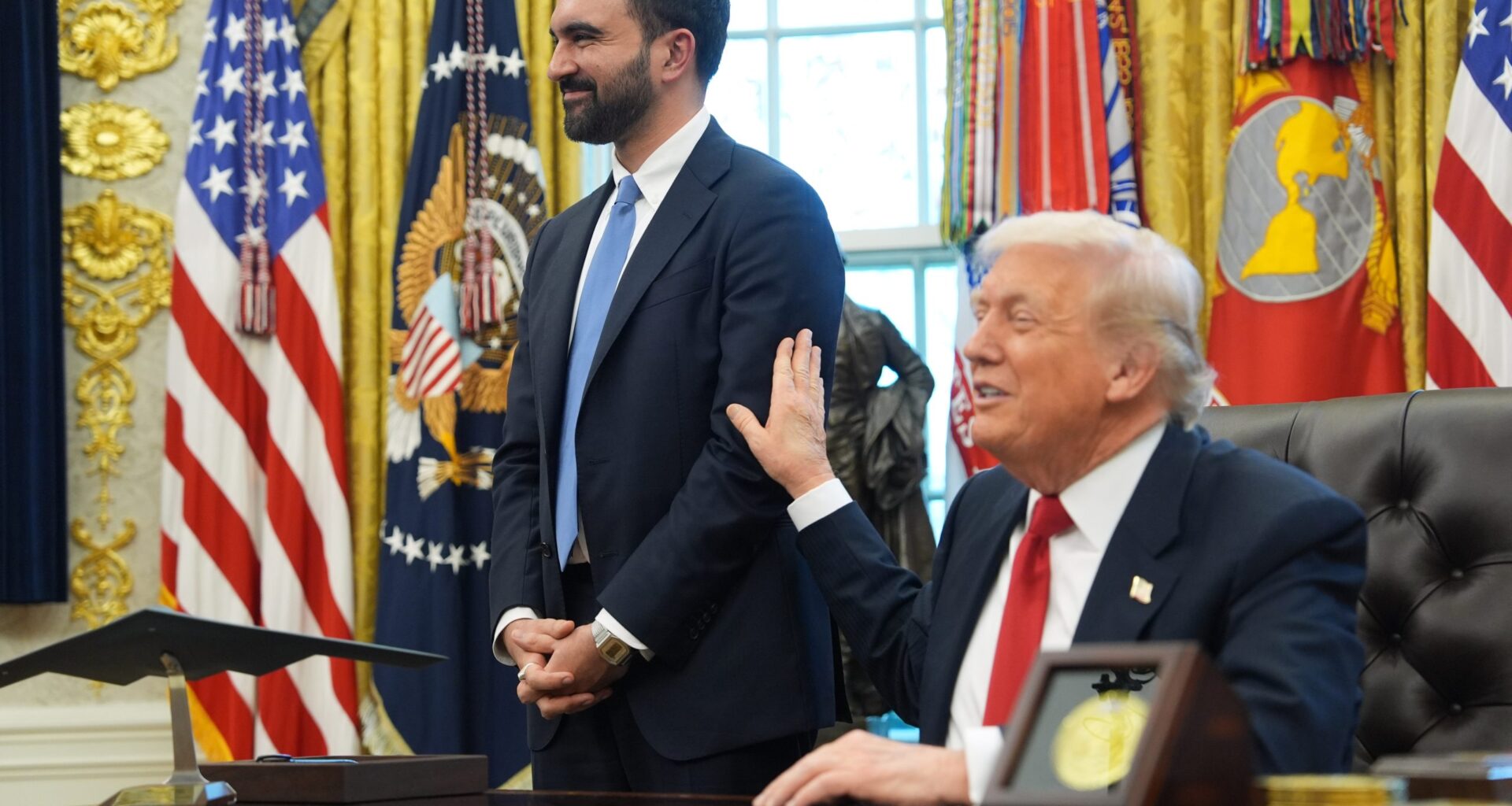
On Jan. 1, Zohran Mamdani will become the first Muslim mayor of New York City and also the first socialist, depending on how you characterize Fiorello La Guardia. Critics, including some Catholic commentators, have predicted that Mr. Mamdani will implement redistributive policies that will be disastrous for the world’s financial capital, even raising the specter of Soviet-style bread lines. (Never mind the food insecurity already afflicting the city.)
But Mr. Mamdani’s policy platform shares far less with centrally planned state socialism than with one of the foundational texts of Catholic social teaching: Pope Leo XIII’s 1891 encyclical “Rerum Novarum.”
Written in response to the social upheaval of the Industrial Revolution, “Rerum Novarum” steered a middle course between revolutionary communism and unrestrained capitalism. On the one hand, Leo XIII rejected the notion of class struggle and affirmed the sanctity of private property. On the other hand, he insisted that the state must prioritize the rights of workers, both because of their vulnerability to exploitation and because their labor, in fact, creates society’s wealth.
Leo XIII hoped that by protecting the rights to just wages, reasonable working hours and collective bargaining, the state could help working-class people to become property owners themselves, thus ensuring the stability and autonomy of families—in his view, the foundational unit of society. This is in keeping with his insight that “the more that is done for the benefit of the working classes by the general laws of the country, the less need there will be to seek for special means to relieve them.”
Mr. Mamdani’s economic policies are largely aligned with this aim. Far from seizing capitalist property, his affordability agenda, including what he refers to as his three “big commitments”—fare-free buses, free universal child care and a rent freeze on rent-stabilized apartments—would accrue savings to working-class families, increase their purchasing power and protect them from being priced out of their homes and communities.
Of these policies, freezing the rent would require no additional funding. To freeze the rent on the city’s rent-stabilized apartments, Mr. Mamdani would only need to appoint members to the Rent Guidelines Board, which establishes rent adjustments for the city’s one million rent-stabilized units, 37 percent of which are low-income households. But to cover the approximately $6 billion annual cost of universal child care, a priority for his first year in office, Mr. Mamdani has proposed raising the city income tax on earnings above $1 million from 3.9 percent to 5.9 percent, and raising the corporate tax rate from 7.5 percent to 11.5 percent to match that of New Jersey.
Such redistribution of wealth would by no means violate property rights. It would merely help working people to continue living in the city whose immense wealth they help to create. (According to a recent study by the Fiscal Policy Institute, housing and child care costs are the main drivers of migration from the city, and families with children under the age of 6 are 47 percent more likely to leave than the rest of the population.) In “Rerum Novarum,” Leo XIII wrote that justice demands that the working classes “may themselves share in the benefits which they create—that being housed, clothed, and bodily fit, they may find their life less hard and more endurable.” Mr. Mamdani’s policies exemplify what Leo XIII described as “the first and chief” responsibility of government leaders: “to act…with that justice which is called distributive—toward each and every class alike” (emphasis in the original).
An income tax hike may depend on the approval of New York Gov. Kathy Hochul, who said throughout Mr. Mamdani’s campaign that she would oppose it. But as mayor, Mr. Mamdani will have significant leverage: his allies in the state legislature, including Assembly Speaker Carl Heastie; the young voters who turned out for Mr. Mamdani in November and whose support Ms. Hochul may need in her 2026 primary election; and a wide array of labor unions, including the United Auto Workers and the United Federation of Teachers, that endorsed his candidacy and support his agenda.
Mr. Mamdani’s mobilization of and support for unions is another point of alignment with “Rerum Novarum.” In keeping with the Catholic principle of subsidiarity, which states that decisions should be made at the closest level possible to the person and the highest level necessary, Leo XIII extolled the right of workers to secure their well-being not only through state assistance but also through joining together in “workingmen’s unions.” As organizations that engender unity and solidarity among workers independent of the state, he thought it “greatly to be desired that they should become more numerous and more efficient.”
Mr. Mamdani himself displayed such solidarity as a member of the New York State Assembly when he helped secure $450 million in relief for debt-crippled taxi medallion owners by joining them in a 15-day hunger strike. He is unlikely to engage in such direct actions as mayor, but his post on X on Nov. 13 supporting a boycott of Starbucks in solidarity with striking employees suggests that he will use his bully pulpit on behalf of organized labor.
Aside from a meeting with Cardinal Timothy Dolan in August, Mr. Mamdani did not seem to play up his outreach to Catholics during the campaign. Exit polls suggest Andrew Cuomo, running as an independent, won the Catholic vote by a wide margin in November, while Mr. Mamdani handily won the “nones.” It is likely that Mr. Mamdani’s differences with church teaching on abortion and gender issues will continue to alienate some Catholic New Yorkers.
However, since his election, he has met with the leadership team of Catholic Charities of New York, and religious service organizations stand to benefit if Mr. Mamdani is able to make progress with his “affordability agenda.” C.C.N.Y., for instance, recently expressed concerns over federal cuts amounting to $11 million of its funding, most significantly affecting immigration services and food programs. By allocating more municipal funds to immigrants’ legal defense, and by addressing the affordability crisis more broadly, Mr. Mamdani’s government may prevent faith-based charities from becoming overburdened, allowing them to focus their resources on those who need them most.
Whether Mr. Mamdani succeeds in implementing his most ambitious proposals will depend on his ability to negotiate for funds with Albany, contend with Trump administration policies that are hostile to major cities (notwithstanding Mr. Trump’s friendliness toward Mr. Mamdani at their meeting last week), and make pragmatic compromises without alienating his progressive base. A tall order, to be sure—but so was his election victory. Rather than reacting to his election with fear or cynicism, Catholics can take heart that the most economically unequal city in the country will soon be led by a mayor who not only centers his politics on the struggles of working people but also champions solutions highly similar to those found in “Rerum Novarum.”
Related