
As many people brace for the winter months ahead, we’re getting a look at may be in store for the tri-state this upcoming season.
From snow to sleet, rain to sun, winter in the tri-state can be a rollercoaster. Last winter, it felt like a never-ending plunge. The New York City area shivered through 64 days below freezing, twice as many as the previous two years, with the average temperature nearly 35 degrees.
But all that cold didn’t lead to snow. In fact, the last three winters have been disappointing
In Winter 2024-2025, we got just over a foot in all. The year before that, it was a measly 7.5 inches. And the winter of 2022-2023 delivered a tiny 2.3 inches – a record low for the city.
“It’s difficult to make it snow in most winters here in the mid-Atlantic,” said New Jersey State Climatologist David Robinson.
What’s the reason for the smaller snowfall totals? Robinson points to La Nina, the weather phenomenon in the Pacific Ocean that’s brought warm temperatures to the East Coast over the past few years.
“The storm tracks tend to go up through the Great Lakes, which keeps us a little drier. Sometimes only warmer and a little wetter,” said Robinson. “To pop a big snowstorm, you need a nor’easter, a coastal storm event.”
Nor’easters, though, are tough to predict since everything from Siberian snow to a shrinking Arctic ice cap to wobbly polar wind patterns all disrupt the jet stream.
“Just a degree change in temperature can make a difference between rain or snow,” Robinson said.
Nelson Vaz, a warning coordination meteorologist with the NYC office of the National Weather Service, said “variability is the key.” He and his team are once again gearing up for wild weather swings this year that often come with little warning.
“The signals are only there one to two weeks out in how things are going to evolve,” said Vaz.
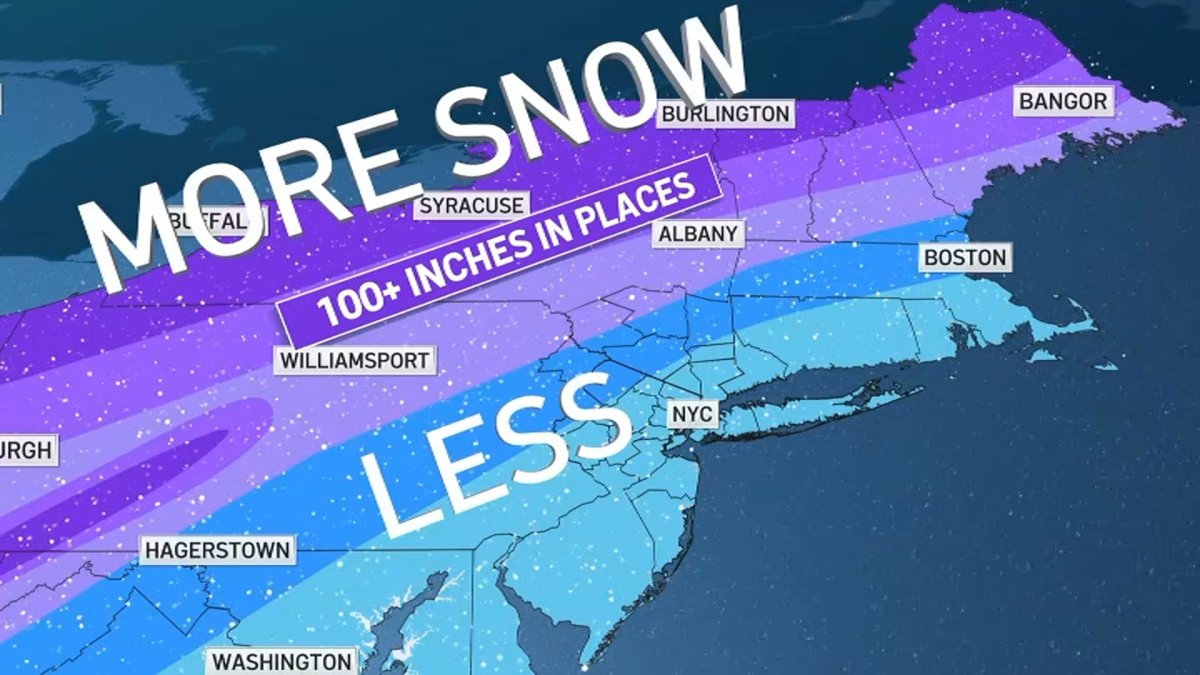
So what does the upcoming season have in store in terms of weather for the tri-state? However snow eventually does fall, whether it’s in big storms or more frequent smaller ones, overall totals are expected to be well below the historical average of about two and a half feet.
At the same time, look for it to be much warmer than last year’s deep freeze. Average temperatures should be closer to 40 degrees – with 30-40 days below freezing.
The big winner this winter: skiers. Northern New York, Vermont, and Western Massachusetts are all expected to get above average snowfall, perhaps as much as 100 inches.
“No matter where you live, enjoy the snow when it arrives,” said Robinson. “You get hit, and it might be a one-and-done for the winter, but it can result in a very memorable event.