
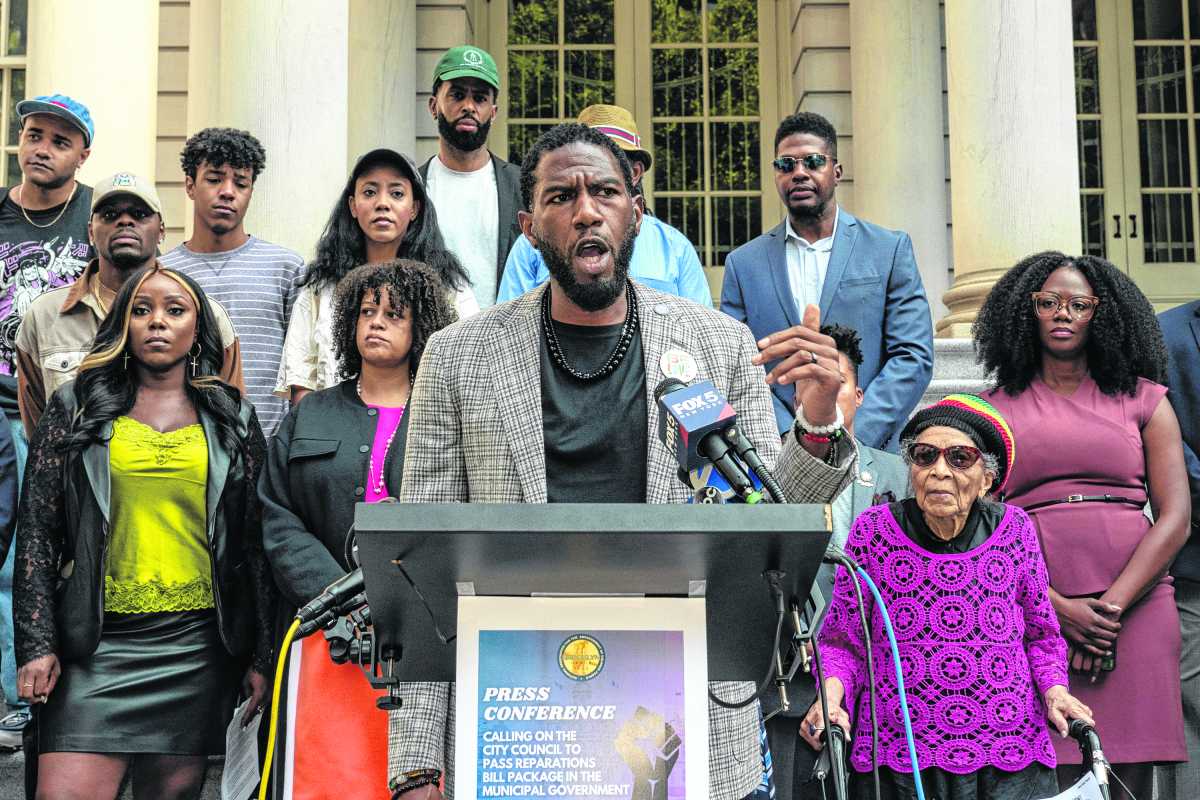
In a new report, NYC Public Advocate Jumaane Williams called for stronger support of Minority and Women-owned Business Enterprises (M/WBEs).
Photo by Gabriele Holtermann
Days before Brooklyn’s commercial sectors fill with Small Business Saturday shoppers, New York City Public Advocate Jumaane Williams urged the city to rethink its position on how it supports minority entrepreneurs — and to do so at a moment when many institutions nationwide are scaling back on DEI initiatives.
In a new report titled “Diverse Entrepreneurial Inclusion,” Williams outlined structural gaps in city contracting and argues that Minority and Women-Owned Businesses Enterprises (M/WBE) continue to be disadvantaged, despite years of promises and programming.
Williams framed the report within the city’s long-standing identity as a homefor diverse entrepreneurs.
“In New York City, we have long strived to celebrate diversity, recognizing it as a strength for not only our culture, but our economy,” he said. “Small businesses built by immigrants, minorities, and women are at the core of our economic identity in this city – but too many systemic barriers still prevent these ventures from growing their bottom line and our economy.”
The borough is home to 792 minority-owned businesses and 442 women-owned businesses, with 607 enterprises falling into both categories, according to the Brooklyn Chamber of Commerce.
And while national backlash against Diversity, Equity and Inclusion (DEI) practices continues to grow, Williams argued that narratives around DEI have been manipulated.
“Many of the same critics who attack DEI principles are currently fanning the flames of hysteria about the incoming administration and its economic agenda, claiming it will harm businesses. But as this report demonstrates, the truth is that this can be a new era for business in New York City – strengthening the small and diverse businesses we are fortunate to have today, and supporting the entrepreneurs of tomorrow.”
The report concluded that “supporting diverse entrepreneurs is both socially and economically responsible.” Williams also acknowledged that in one of the world’s leading economic capitals, small business commerce must be embraced.
Local barriers carry local consequences
The Public Advocate’s office found that M/WBE’s receive only about 5% of city contracts — a figure that has remained stubbornly low. Those contracts also tend to be “low in value,” limiting potential for growth and stability.
Many Brooklyn business owners have long voiced concerns over the city’s procurement process. The report says that many M/WBE’s “face a competitive disadvantage when pursuing city contracts compared to larger, longer-established and often national or international corporations.”
The report also found “several instances in which emergency waivers were used to bypass processes which would have afforded M/WBEs a shot at contracts, including on migrant services, NYC Solves, and NYC Reads.”
In some cases, the report notes, awarding contracts outside the M/WBE pool contributes to problems such as “low quality or culturally insufficient food in shelters,” an issue that hit close to home for communities hosting temporary shelters across the borough.
As Mayor-elect Zohran Mamdani prepares a new city administration, Williams outlines a series of recommendations, including restoring the budget for the Department of Small Business Services, improving procurement efficiency and increasing transparency in how contracts are awarded.
Williams also called for the recruitment and support of M/WBE businesses, stronger statewide reforms and continuing Adams-administration initiatives like the creation of a Chief Business Diversity Officer.
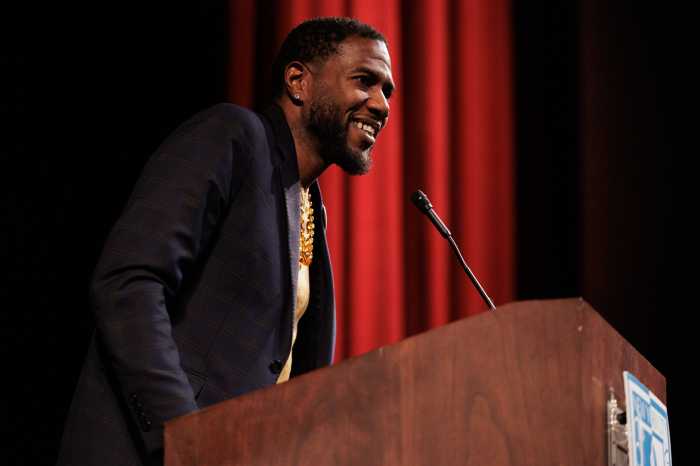 NYC Public Advocate Jumaane Williams speaks during the Brooklyn state of the borough address at CUNY City Tech on Wednesday, March 13, 2024.File photo by Paul Frangipane
Why this matters for Brooklyn
Many Brooklyn neighborhoods, such as DUMBO, Williamsburg, Park Slope and Carroll Gardens, are pillars of local commerce. Many hire from within their communities, reinvest earnings locally and tend to create products that reflect the cultural identities of the neighborhoods they serve.
With Williams’ report, he hopes it will “urge New Yorkers to seek out and support M/WBEs.” These businesses, he noted, contribute to a “more vibrant, equitable, and resilient local economy.”
“This weekend, between Black Friday and Small Business Saturday, New Yorkers will spend a lot of money – let’s work to spend it in our communities, seeking out and supporting M/WBEs as we decide, with our dollars, the kind of economy we want to build. We can build economic power by exercising the economic power we have already fought for and gained,” he continued.