
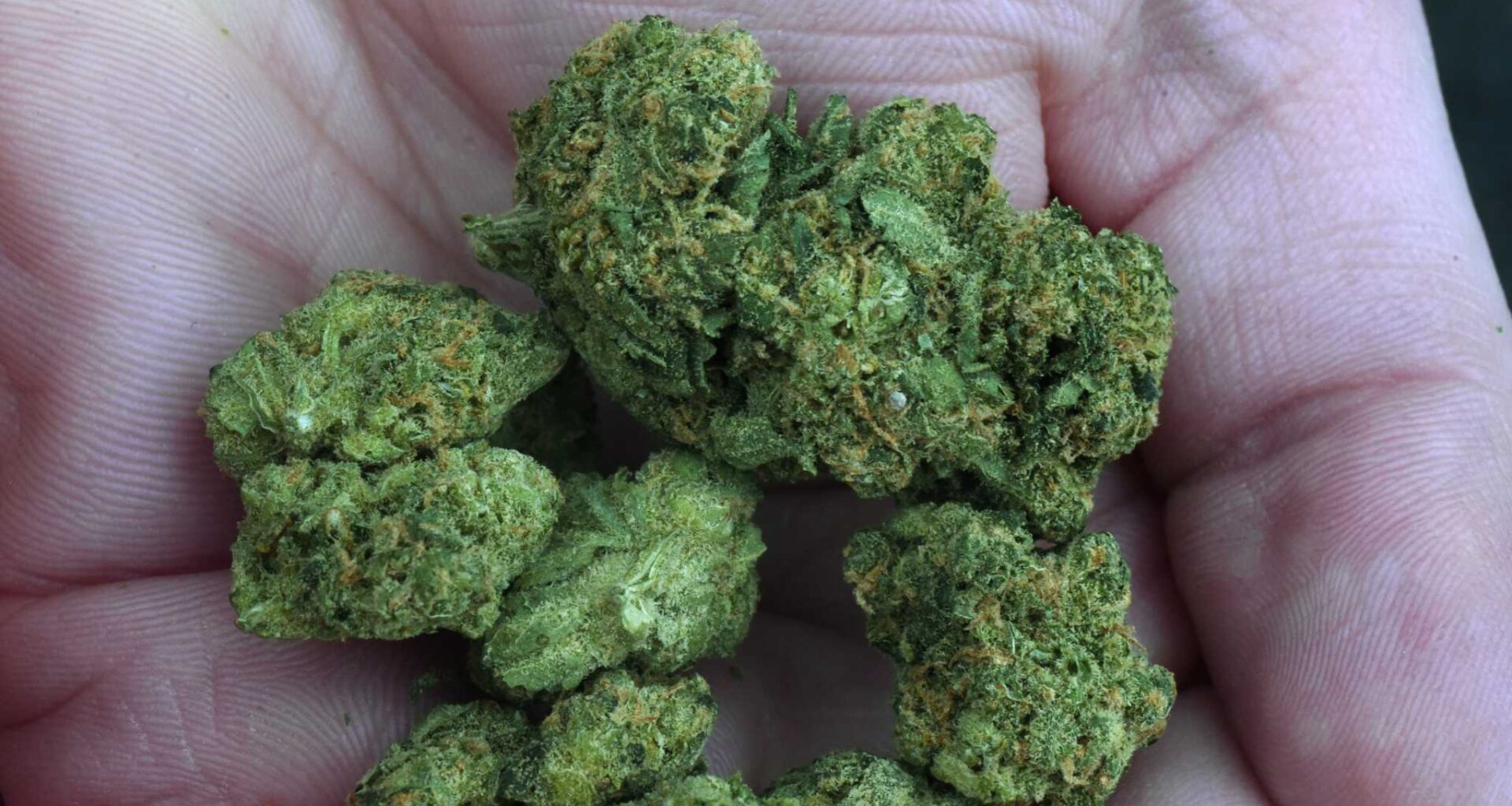
New York has enacted new regulations governing medical cannabis, including allowing people with prescriptions in other states to purchase products here.
Will Waldron/Times Union
ALBANY — New York has enacted new regulations governing medical cannabis, including allowing people with prescriptions in other states to purchase products here and also streamlining the process for certifying patients.

The enacted legislation, signed into law by Gov. Kathy Hochul, will also extend patient certifications from one to two years and permit those 18 and older to cultivate cannabis at home for personal medical use.
Article continues below this ad
“Patients deserve a medical cannabis program that truly supports their care, and these updates move us closer to that goal,” said Dr. June Chin, chief medical officer at the state Office of Cannabis Management. “By expanding access and modernizing the system, we are ensuring that treatment decisions are guided by evidence, clinical expertise, and the lived experiences of the people we serve.”
The legislation was enacted as the New York Medical Cannabis Industry Association is engaged in litigation with the state. The organization recently filed a lawsuit seeking a court order compelling state regulators to “fulfill their legal responsibility to thwart the influx of illicit cannabis product.”
The lawsuit was filed in state Supreme Court against the Office of Cannabis Management and Jessica Garcia, chairwoman of the state Cannabis Control Board.
It alleges the board and Office of Cannabis Management have disregarded their statutory mandates, “and abdicated their responsibility to create a safe, regulated and insular intrastate adult-use cannabis market.”
Article continues below this ad
The lawsuit contends the proliferation of illicit cannabis in New York is not only the result of unlicensed marijuana shops. It notes that illicit cannabis has also infiltrated the licensed cannabis market, and has “placed adult-use consumers and medical patients at risk, threatened the financial viability and reputation of the regulated adult-use market, bolstered the illicit cannabis market and robbed communities impacted by the War on Drugs of critical tax revenue.”
The botched rollout of New York’s retail cannabis industry has been plagued with regulatory and administrative missteps, poor decision-making, a lack of communication and transparency, and a bustling illicit marijuana network that has undermined the ability of those who invested in the marketplace to do well, according to court records, interviews with industry stakeholders and testimony at public hearings.
The medical association’s lawsuit noted that “less than 30 percent of cannabis businesses are profitable.” It also alleged that “most cannabis businesses struggle to remain viable in the hope that the federal government’s re-categorization of cannabis from Schedule I to Schedule III will lower their tax burden and enable them to realize modest profits.”
Last year, the association filed a lawsuit challenging the constitutionality of what it alleged was a punitive $20 million fee that’s required for medical cannabis operators to enter the retail marketplace.
Article continues below this ad
That lawsuit argued that regulations requiring registered medical marijuana companies to make four payments of $5 million as a condition of entering the retail market were so “onerous” that they essentially constituted a “regulatory taking” of their business — and at a time when the number of individuals with valid marijuana prescriptions in New York has been plummeting.
The fallout, they said, has also deprived the state of tax revenue, kept medical operators out of the retail cannabis market and inhibited medical marijuana patients’ access to products.
But that litigation was preempted when the Legislature codified the special licensing fee for medical marijuana companies at $15 million instead of $20 million.
Article continues below this ad
Closures of medical marijuana businesses have limited the options for medical marijuana patients with prescriptions. Their numbers had already been sharply declining in the wake of the increase in both licensed retail shops and illicit sales; and with fewer medical patients, there has been a decrease in medical sales, another factor that’s hurt those companies. The decline has also impeded the ability of patients to obtain medical guidance for marijuana prescriptions.
Medical companies were held out of the retail cannabis market for the first three years of the rollout and their ability to enter it — even at a high price — has been questioned by other industry stakeholders, including cultivators, who have argued that the state’s poor execution had already crippled smaller vendors in various aspects of the market. Indeed, many licensed retail store owners had to wait far longer than expected to open, while many cultivators and processors found themselves with mountains of product but not enough storefronts to sell it.