
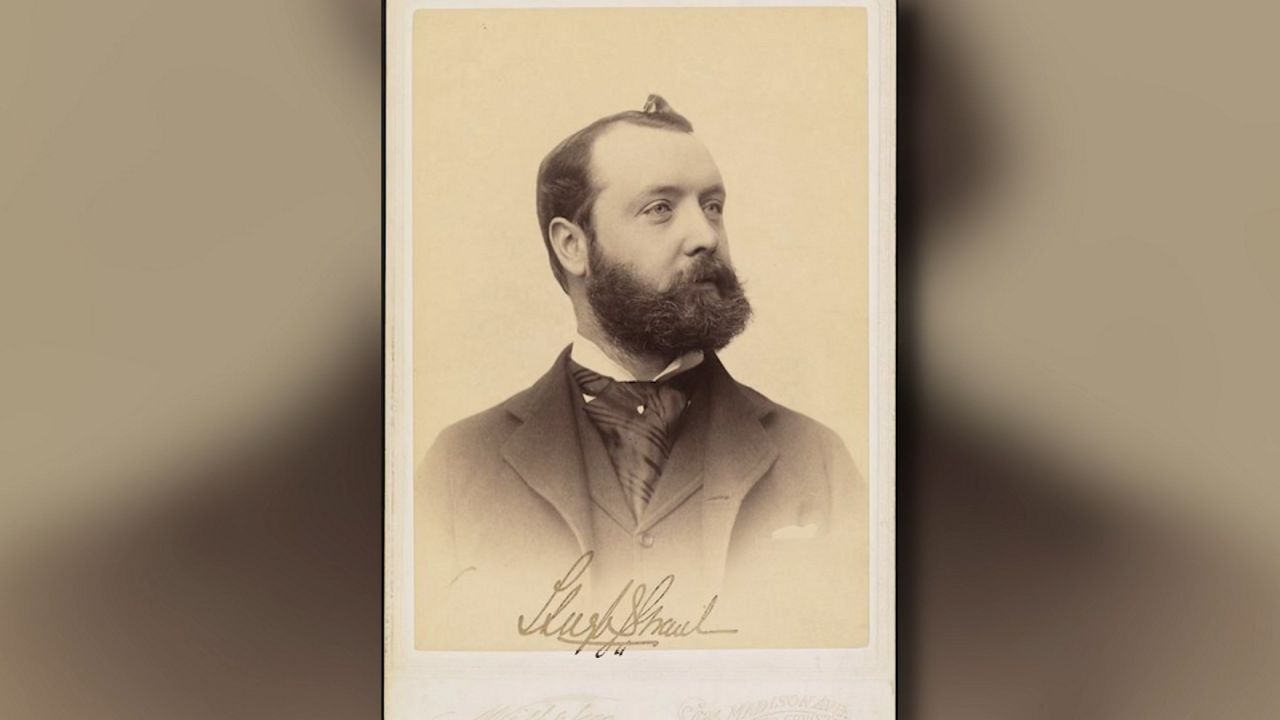
Hugh J. Grant, who became mayor of New York City in 1889, was a Tammany Hall politician — the New York City political machine often synonymous with corruption and patronage.
The fact that he was only 30 years old only worked in his favor.
“The whole point was he was a fresh face, with a clean record,” said historian David Hammack, who wrote about Grant for the Encyclopedia of New York City and other volumes. “It was an advantage for him to have been young, because politics was very rough and tumble. And the longer you’re in it — certainly in those days, and I don’t think that’s changed — the more ammunition you give to potential enemies.”
What You Need To Know
Zohran Mamdan, 34, will become the city’s second-youngest mayor when he’s sworn into office on Jan. 1
Mayor Hugh J. Grant was just 30 years old when he took office in 1889, though his age was not entirely clear at the time
Since its consolidation in 1898, the city has had 23 mayors with an average age of 50.7 at the time of their election
It was another mayor, John Purroy Mitchel, who was known as the “Boy Mayor,” having taken office in 1914 at 34 years old and five months of age.
Zohran Mamdani, who turned 34 last month, will be slightly younger than Mitchel come inauguration day.
But Grant was younger than both men, though his precise age wasn’t clear even during his life. His 1910 obituary in the New York Times said he was born in 1853, which would have made him 35 when he became mayor.
Later accounts, including a 2011 New York Times column, pointed out that his death certificate and some census records pointed to an 1858 birthdate.
“My interpretation is that his relative youth was maybe soft-pedaled during his election because he was a Tammany guy, and Tammany did not want to emphasize his youth,” said Lilly Tuttle, a curator at the Museum of the City of New York.
Tuttle notes that Grant governed a very different city, at a time before the five boroughs were consolidated in 1898. Since then, the city’s 23 mayors have averaged 50.7 years of age at the time of their election, according to the museum.
Grant, the well-connected son of a tavern owner, was an alderman and sheriff before winning two two-year terms as mayor. One of his notable achievements was pushing to have the city’s overhead utility wires buried underground.
But for the most part, Grant did not leave a large historical imprint.
“It would be kind of a little dismissive to just call these people managers, but that was often kind of the term that was used,” Peter-Christian Aigne, director of the Gotham Center for New York City History at the CUNY Graduate Center, said. “And I think Grant was just kind of filling a seat. That’s kind of the impression you get sometimes reading this period of history.”