
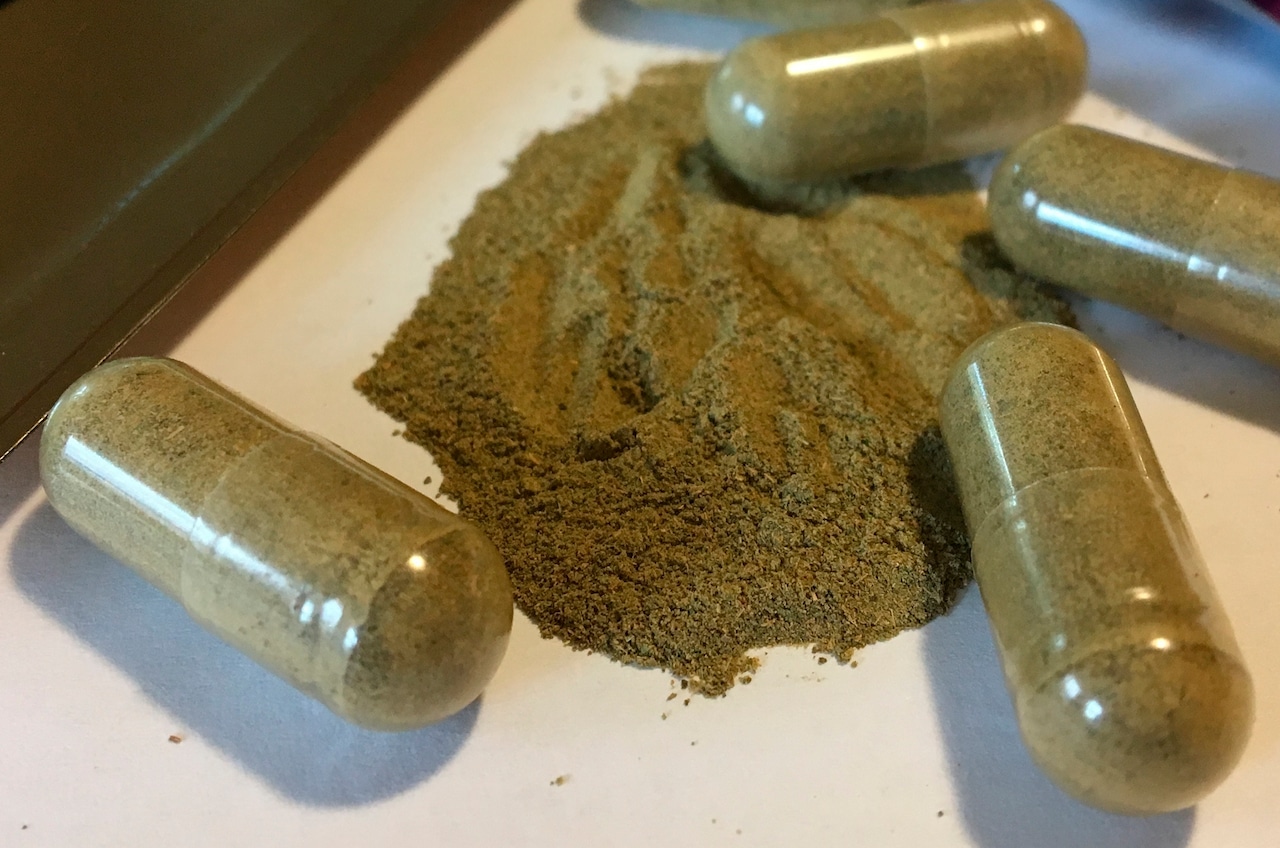
STATEN ISLAND, N.Y. — The Staten Island Fentanyl and Overdose Task Force is calling for a statewide ban on the sale of kratom, a legal but dangerous substance that critics say is being marketed to children.
Kratom, an opioid-like substance, could become the next major gateway drug that sets children on the path to addiction, according to the task force’s final report and recommendations for Gov. Kathy Hochul and state legislators.
The report, unveiled at a news conference earlier this month hosted by District Attorney Michael E. McMahon, shines a spotlight on the plant-based substance that often is touted as a natural supplement.
Widely sold at convenience stores, delis and gas stations on Staten Island and throughout the United States, kratom is legal in New York and most other states and is not regulated by the U.S. Food and Drug Administration.
“In the U.S., the use of kratom has increased markedly in recent years,” according to the U.S. Drug Enforcement Administration.
McMahon previously said he cannot prosecute for kratom because it is not on the schedule of controlled substances for New York State.
The task force unanimously agreed to advocate for statewide regulation of kratom after Dr. Tucker Woods, associate chairman of emergency medicine at Northwell Staten Island University Hospital, and Jayne Graham, a grieving mother, raised the alarm about the substance during a task force meeting earlier this year.
Produced from the leaves of the mitragyna speciosa tree native to Southeast Asia, kratom acts as a stimulant when ingested in small amounts and as a sedative when consumed in higher doses, according to the U.S. Drug Enforcement Administration.
The drug affects the opioid receptors that are found throughout the body and play a role in regulating pain, according to medical experts.
“At low doses, it mellows you out,” Woods said. “But at high doses, it acts just like an opioid. It goes to the opioid receptors, and I almost consider it like opioids being sold in gas stations and smoke shops.”
Woods described kratom as “a huge problem” both in terms of its addictive quality and the fact that “it’s so accessible. When you buy your lottery tickets, you can also get kratom.”
The doctor cautioned that when it comes to kratom, “it’s buyer beware because in these gas stations and smoke shops, it might say kratom, but you have no idea what’s in it.”
Push to keep kratom away from kids
The task force unanimously agreed that kratom’s status as a legal drug “represents a grave public-health risk” and has asked that the substance be added to the New York State Schedule of Controlled Substances.
The report also points out that there is no age limit for purchasing kratom in the borough and throughout the state, turning children into easy prey for unscrupulous manufacturers and sellers.
“Like the vaping epidemic, kratom products are marketed in appealing forms that could draw adolescents and young adults,” according to the report. “Without regulation or education, young people risk using kratom as a gateway into opioid and substance addiction.”
But setting an age limit for sale, such as is currently in place for cigarettes and alcohol, would not go far enough in protecting the public, according to the report.
“Implementing age restrictions alone will not be enough to address the underlying risk,” according to the report. “Kratom’s chemical composition and addictive potential make it an opioid-like substance that should not be available for casual or unmonitored use.”
Kratom contains the highly addictive component 7-hydroxymitragynine (7-OH).
The task force seeks “statewide regulation, public-awareness campaigns, and retail accountability to curb exposure among minors and protect the next generation.”
Since the product is not subject to oversight by the Food and Drug Administration, manufacturers do not have to comply with any safety standards. They are free to determine the ingredients and change them at any time, experts say.
“Kratom is dangerously under-regulated, with no oversight of potency, manufacturing, or additives” according to the report. “Variability in product composition means that consumers can unknowingly ingest lethal combinations, including synthetic opioids and adulterants.”
The Food and Drug Administration “has warned consumers not to use kratom because of the risk of serious adverse events, including liver toxicity, seizures, and substance use disorder,” according to the agency’s website. “In rare cases, deaths have been associated with kratom use, as confirmed by a medical examiner or toxicology reports. However, in these cases, kratom was usually used in combination with other drugs, and the contribution of kratom in the deaths is unclear.”
The task force is asking the governor and the state legislature to do the following:
Add kratom (mitragyna speciosa) to the New York State Schedule of Controlled Substances as a Schedule I substance;Ban or tightly regulate retail sale and distribution of kratom products across all commercial outlets;Implement statewide enforcement measures to prevent youth-targeted marketing and underage access;Launch public education campaigns to raise awareness of kratom’s dangers, particularly among young people and families;Monitor and analyze kratom-related overdose and hospitalization data to inform future prevention and treatment strategies.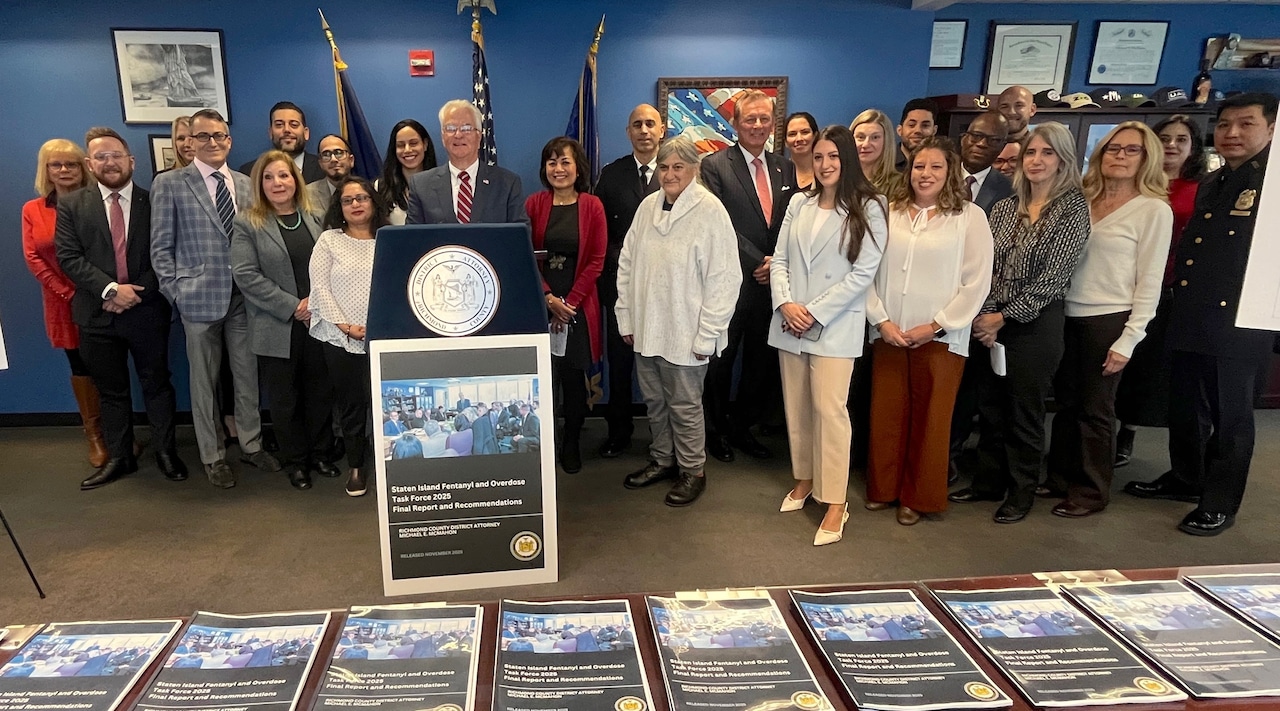 The Staten Island Fentanyl and Overdose Task Force reveals its legislative agenda during a news conference Wednesday hosted by District Attorney Michael E. McMahon at his office in St. George on Wednesday, Nov. 12, 2025. McMahon speaks at the podium.(Advance/SILive.com | Jan Somma-Hammel)Mother says son died from using kratom
Jayne Graham told the task force that her son, Francis, 34, died after overdosing on kratom in April 2023. She recalled the horror of finding her son after she knocked on his bedroom door because she hadn’t seen him for a few hours.
“I’m a mother with a vengeance,” Graham said, explaining that she has been trying to raise awareness about the dangers of kratom.
“I’m just stunned that it’s not even regulated, let alone illegal,” Woods said of kratom. “But I think at a minimum, it has to be regulated.”
Woods said that users often develop a “super high tolerance” to kratom. He cited a patient who escalated from seven to 80 capsules per day in just a few weeks, consuming all doses within minutes of waking for the day.
Woods warned that some companies will extract that 7-hydroxymitragynine to “make it even more potent, so you get it in this little elixir, and it can be deadly.”