
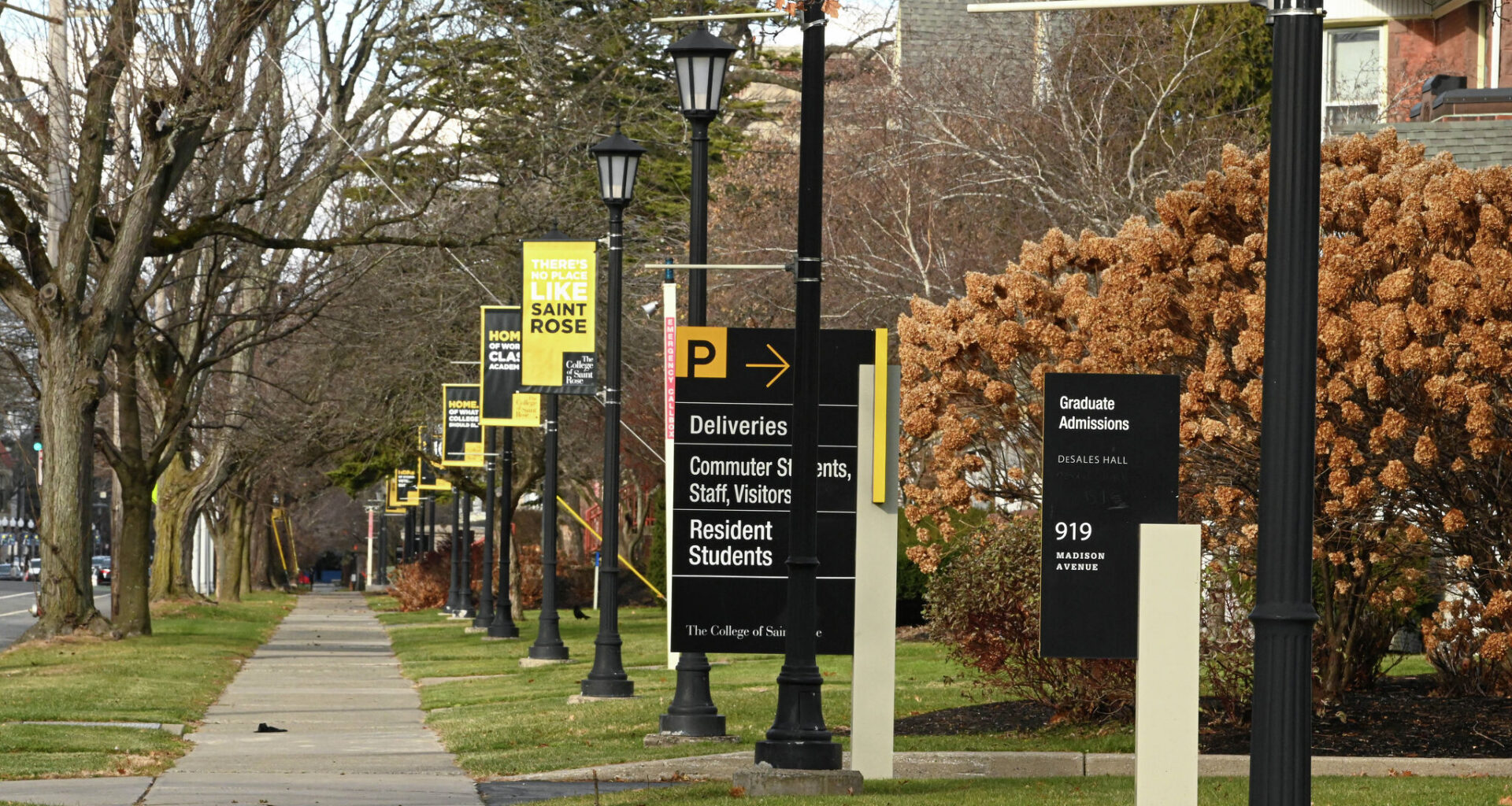
The announcement that two buildings on the former campus of The College of Saint Rose might be sold to the Henry Johnson Charter School came as a surprise to a large number of people. Among them: the community that surrounds the shuttered campus, and state Sen. Patricia Fahy, who represents the neighborhood and last year sponsored the legislation that created the Pine Hills Land Authority.
The authority now controls the ex-campus, which it purchased a year ago for $35 million with bonds backed by the county. And it has been moving with great speed to offload the properties — such as allowing Albany County itself to purchase five buildings for $6 million. Since the seven-member board of the authority includes four members appointed by county Executive Dan McCoy, one imagines the negotiations were not contentious.
As the Times Union’s Steve Hughes reported last week, the resolution issuing a “90-day statement” for the possible Henry Johnson purchase never appeared on the public agenda of the authority’s Nov. 10 meeting. The statement is a formal notification to the state that a public authority is seeking to dispose of a property through a negotiated sale, rather than through a competitive bidding process.
Kevin O’Connor, the authority’s CEO, told Hughes that its bylaws allow for the board to pass written resolutions only “whenever practicable.” He explained he had received the school’s official letter of interest in the purchase — a written letter, just imagine — only that morning, and that failing to vote on the 90-day statement would have required the board to wait until (gasp!) its next meeting in the second week of December.
While the board meeting was still going on, Mr. McCoy hosted a hastily scheduled news conference announcing the charter school’s interest in the two buildings. Placing his thumb squarely on the board’s 90-day due diligence and pressing hard, he called the potential transaction “a catalyst for the larger redevelopment plan we’ve set in motion.” Mr. O’Connor claimed to have been unaware the county executive was hosting his news conference until after the board meeting ended.
Sen. Fahy responded to questions about the unwritten agenda item by stating, “Whether it’s legal or not, this is not the intent of the legislation” that created the authority.
And to that we say: Indeed.
When the legislation was introduced last year, Ms. Fahy said the creation of the authority would “ensure critical oversight” of a project of such significance. That transparency is essential, and it’s missing here.
Unanswered questions abound about this transaction, and about the broader process of Saint Rose’s redevelopment. What would this sale mean for the charter school’s finances, and the West Hill neighborhood where it is currently sited, a mile north of the former college campus? How would the possible purchase work within the options for overall Saint Rose redevelopment, as described in a report that the authority’s board formally received at the very same meeting where the charter school’s offer made its unwritten appearance?
The Pine Hills Land Authority board needs to remember that it was created to serve the interests of the people of Albany County, not the county executive’s artificial timeline of announcing potential sales of $35 million in Saint Rose real estate by February.
The redevelopment of the campus is a turning point for the Pine Hills. This is no single-lot changeover; the authority is tasked with repurposing some 90 buildings on 27 acres in the heart of Albany. The community is looking to this body to create “a vibrant, walkable district” while “honoring Pine Hills’ character and building on its strengths,” as the project’s own website promises.
In other words, the plans need to be durable enough to sustain the neighborhood and benefit the city of Albany for decades to come. That requires moving with deliberation — not with fire-sale urgency and an unacceptable lack of transparency.