
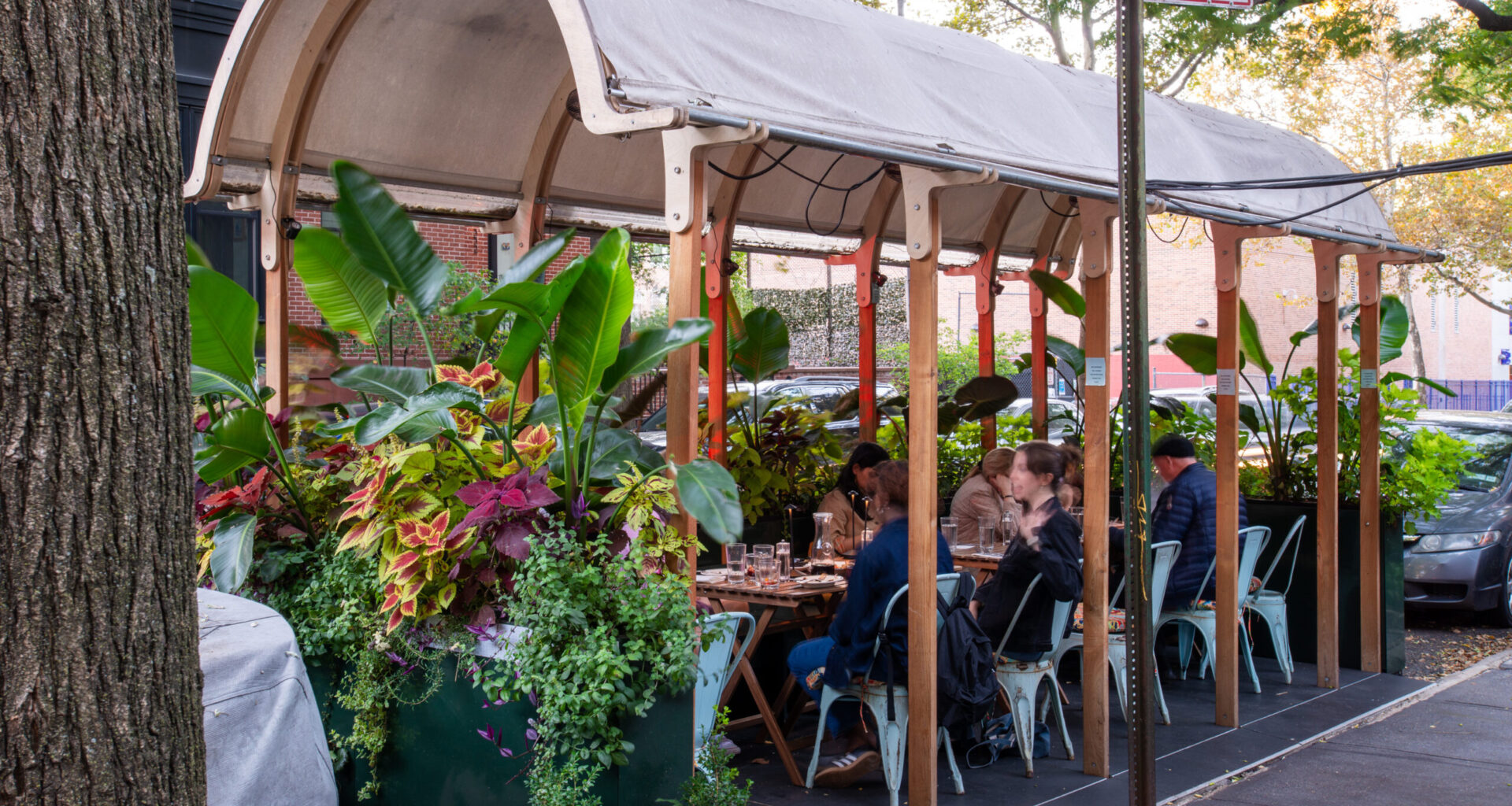
“Now is the time for the NYC Council to fix the Dining Out NYC law so it truly supports small businesses, workers, and the millions who love dining al fresco across all five boroughs. Today’s proposals are a strong step forward — allowing year-round streeteries by ending the costly four-month teardown rule, restoring long-standing sidewalk café seating, and improving the licensing process. These are common-sense reforms, and we hope to see more soon so Dining Out NYC can reach its full potential,” says Andrew Rigie, executive director of the NYC Hospitality Alliance.
The NYC Hospitality Alliance, representing thousands of restaurants, bars and nightclubs across the five boroughs, submits this testimony in support of Int. Nos. 1421, 1444 and 1446 to improve the Dining Out NYC program.
We have long advocated for outdoor dining reform. The 1970s-era sidewalk café law was outdated, restrictive and expensive. During the pandemic, we worked with the City Council and two mayoral administrations to create the temporary outdoor dining program that saved thousands of small businesses and over 100,000 jobs. It was also beloved by countless New Yorkers and visitors during such a difficult time.

The new Dining Out NYC system was meant to build on that success — expanding access and simplifying participation for restaurants — but in many ways, the program has fallen short of many people’s hopes and expectations. Before the pandemic, about 1,400 restaurants were licensed under the old restrictive sidewalk café program, mostly located south of 96th Street in Manhattan. Then during the pandemic under the Open Restaurants program, nearly 13,000 businesses registered citywide in neighborhoods across the Bronx, Queens, Brooklyn, Staten Island, and upper Manhattan. Finally, because the city cut red tape and fees, outdoor dining was made accessible and equitably distributed to small businesses and workers across countless neighborhoods. New Yorkers could dine alfresco in their own communities and attract visitors seeking a great meal.
Under the new Dining Out NYC program, it is difficult to obtain precise data on restaurant participation. We estimate that fewer than 3,000 restaurants currently offer outdoor dining, with most concentrated again in lower Manhattan. The majority are still operating under conditional approval from the Department of Transportation (DOT), meaning this number is likely to decline further as more applications are denied or withdrawn due to high costs and other barriers. Based on current trends, we may end up with fewer than 2,500 restaurants participating — representing an approximately 80% reduction in outdoor dining establishments.
This dramatic decline underscores how the diverse small businesses that powered the pandemic-era outdoor dining expansion are once again being left behind by the City of New York. The City has failed to deliver the small-business-friendly outdoor dining program it promised.
This is why the NYC Hospitality Alliance supports the following bills to create a better outdoor dining program so it can live up to its hope and expectations!
Int. 1421 would make roadway dining year-round — a crucial fix. Seasonal roadway dining simply doesn’t work for too many restaurants: setup, breakdown and storage costs make it unviable for many small operators.
Int. 1444 restores the eight-foot clear-path standard for sidewalk cafés, which worked for decades pre-pandemic and was endorsed by DOT during the temporary program. The current, more complicated standard has cut seating and revenue, customer capacity, and jobs and worker pay. The proposed 8-foot standard is clear, fair, and consistent with best practices — San Francisco, for example, recently adopted a 6-foot clearance standard, at a minimum New York City must restore eight feet.

Int. 1446 improves accessibility and equity by allowing businesses to submit paper applications in person and by requiring a “save your work” feature on the online portal — vital for many small businesses and for those owners who are not technically savvy.
Additional proposed tweaks like streamlining community board review and allowing use of adjacent roadway cafe frontage will further help small businesses generate revenue and create jobs.
In addition to the bills before the Council today, further outdoor dining reforms are urgently needed. The City should allow sidewalk café enclosures especially during cooler months to help restaurants sustain sales, preserve worker hours and income, and provide comfortable seating for New Yorkers and visitors year-round. Restaurants pay for annual sidewalk café licenses, so they should be able to operate year-round.
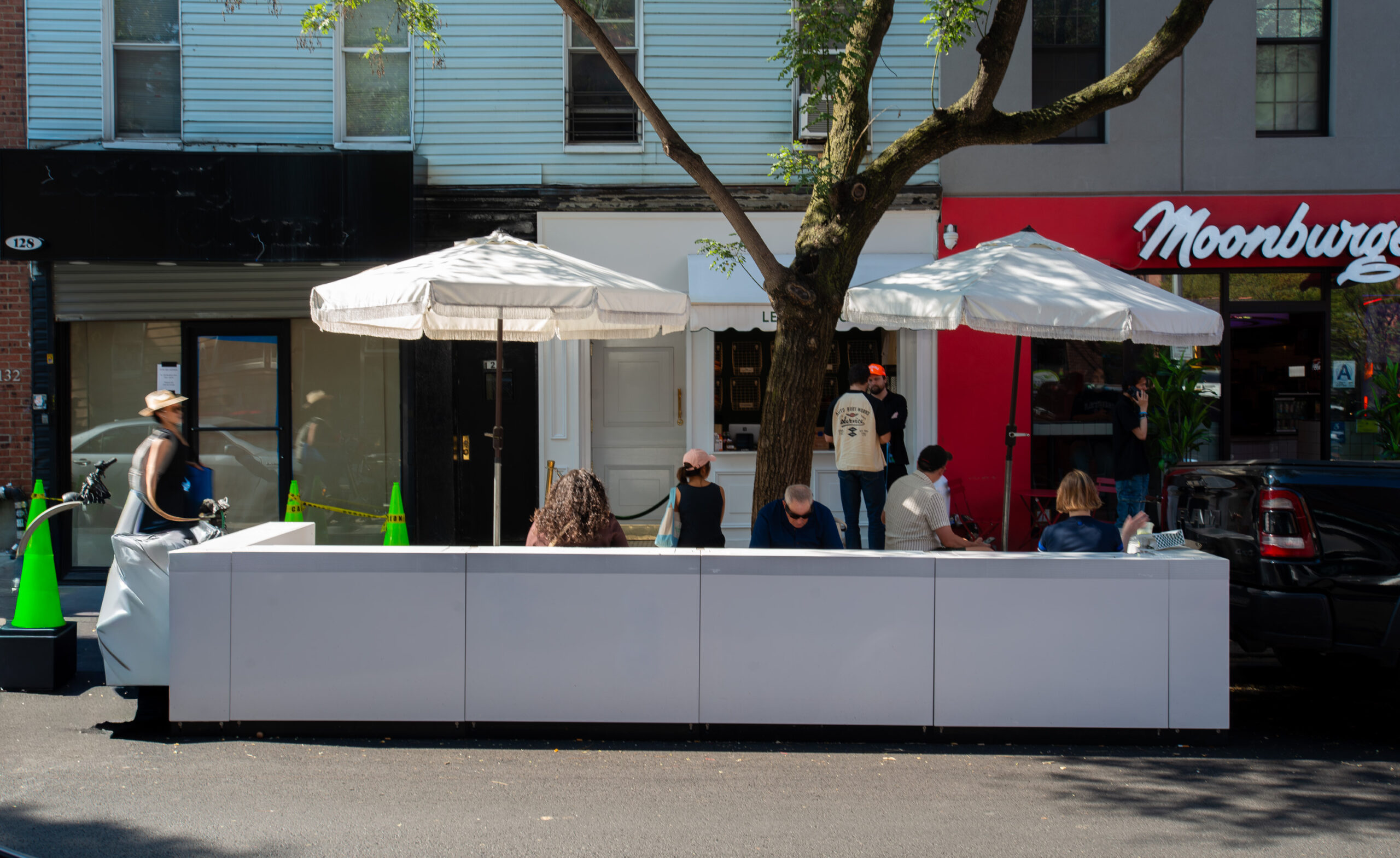 Leon’s Bagels, 128 Bedford Ave. Suite B, Brooklyn, NY 11249. Photo: Re-ply
Moreover, the requirement that restaurants obtain a revocable consent for outdoor dining should be eliminated. This mandate adds significant costs and delays — often months — to the application process. Since the City Council originally added this requirement to the law, it has the authority to remove it now and make the system more efficient, affordable and accessible for small businesses.
The outdoor dining fees paid to the City should also be permitted to be paid in installments. The DOT’s requirement that all fees be paid in a single lump sum imposes a financial burden on many and may be cost-prohibitive for others, creating additional barriers for restaurants seeking to participate.
Outdoor dining remains overwhelmingly popular with New Yorkers. It supports thousands of jobs, strengthens neighborhoods and enhances our city’s vibrancy. We thank Chairs Julie Menin and Brooks-Powers for holding this hearing, and Council Members Powers and Restler for their leadership and urge swift passage of these practical, small business-friendly reforms.
The Eagle Suggests:
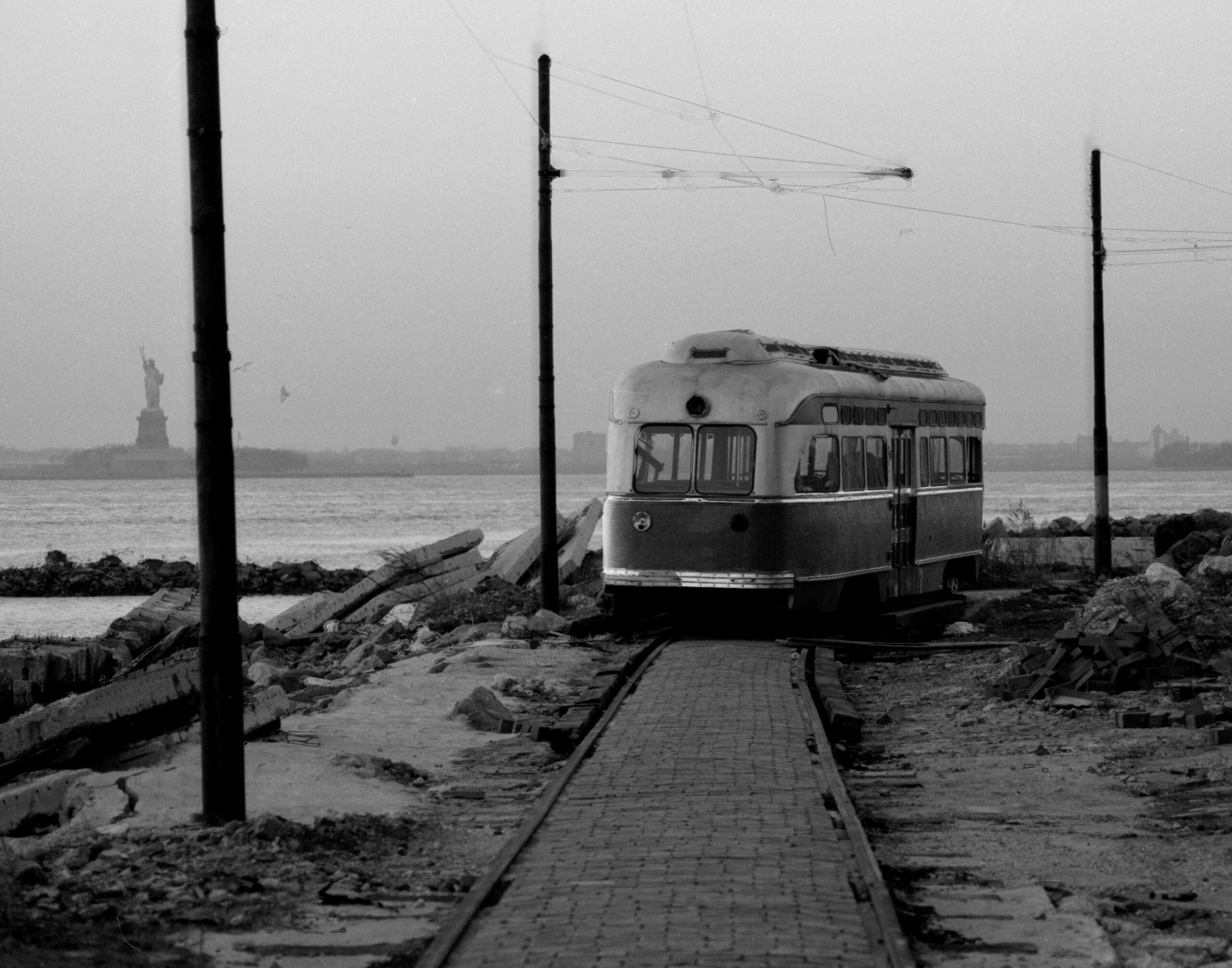 A historic trolley sits on the Red Hook waterfront. Photo by Richard Moses
This photo taken by the late Richard Moses in the 1970s shows a historic trolley, part of an attempt to create a trolley museum in Red Hook years ago. It reminds readers that a vehicular device, like a bus or a trolley, could be modified for dining and designed to park seasonally adjacent to participating restaurants. Off season, it could be removed to restore the street to normal use.