
Hi Neighbor,
It was a Thanksgiving weekend to remember. Especially for Staten Islanders in 1950.
Think back 13 years to Hurricane Sandy. This storm might have been worse.
Thanksgiving 1950 fell on November 23. On November 25 — Saturday — a wild hurricane savaged our shorefront, from Fort Wadsworth to Tottenville, floating bungalows off their foundations, swallowing city buses in sandy sinkholes, hurling boats inland and floating airplanes around two airports in New Springville.
Oddly, there was no hint of a massive storm on the horizon in the days before. Maybe Advance editors back then didn’t care much about predicting the weather. Or maybe forecasters didn’t have all the fancy tools like Doppler radar, weather satellites, and high-performance computers.
Readers on the day before “Turkey Day” were treated with “Island Whets Appetite for Thanksgiving” above the fold. “79-Year-Old-Woman Dies On City Bus” was another, and “Workman Pinned Under Rag Bales” appeared in the middle of the page.
Nor was there any storm prediction in the Advance Friday. But all hell broke loose Saturday. It was so bad, the Advance presses didn’t roll because there was no electricity.
“Thousands of Islanders driven from houses on the South Shore by the worst gale in Island history were hit anew, by freezing cold, as they tried to return to their homes,” began the story in the “Saturday” Staten Island Advance on Sunday.
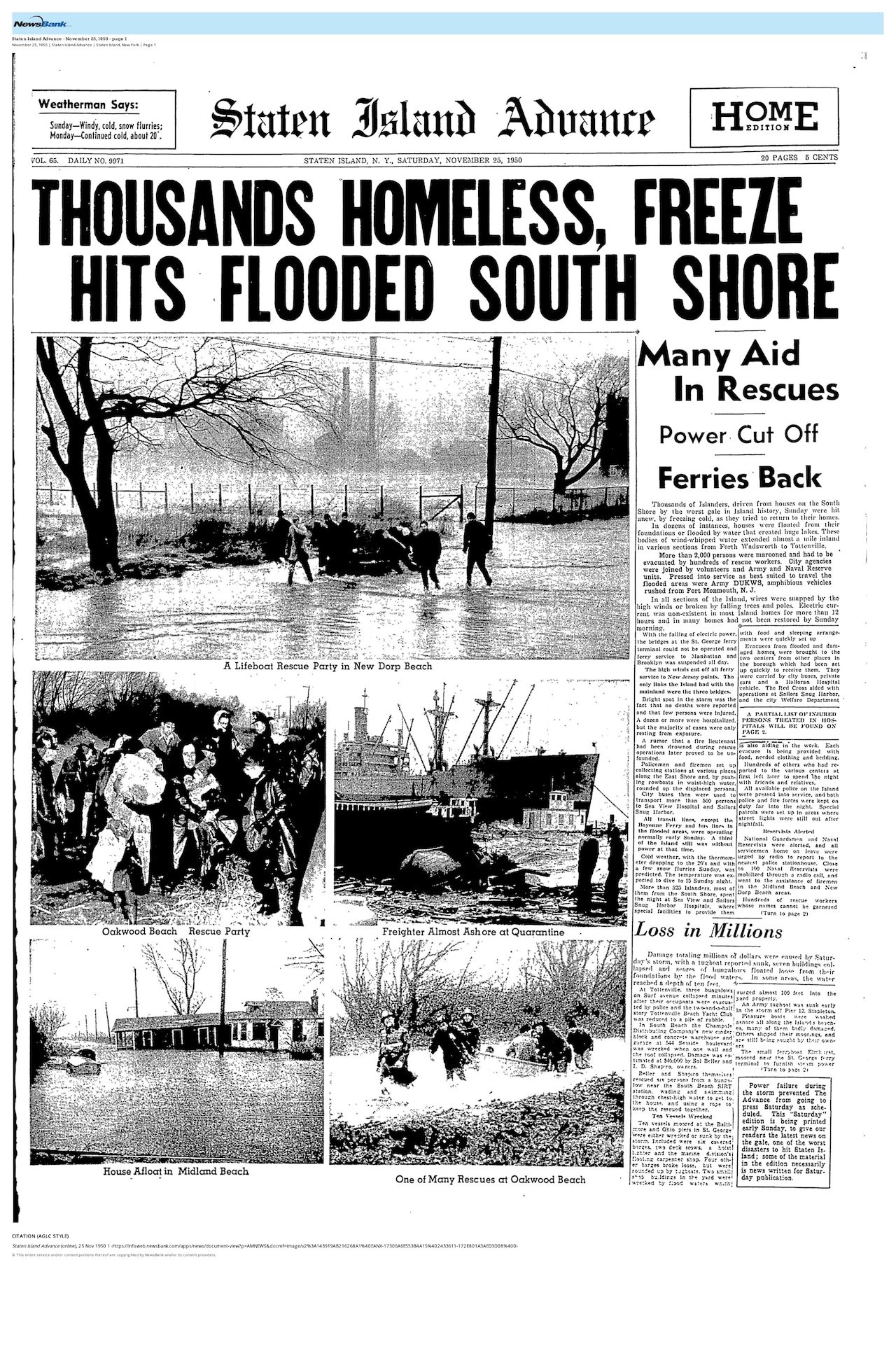 The Saturday, November 25, 1950 edition of the Staten Island Advance reporting on the flood that destroyed the South Shore.
The headline screamed . . .
“THOUSANDS HOMELESS, FREEZE
HITS FLOODED SOUTH SHORE”
Temperatures plummeted to 15 degrees over the weekend, making life even more tortured for the thousands trying to pull themselves together. Scores huddled in church rectories, while more than 500 were taken to Seaview Hospital and Sailors Snug Harbor.
 Survivors of the hurricane of 1950 at Sea View Hospital. (Staten Island Advance)
Others found shelter in St. Margaret Mary’s Church and the Midland Beach Democratic Club. Some went to Oakwood Community Church, Our Lady Help of Christians Church in Tottenville and St. Joseph by-the-Sea Church in Eltingville.
New Dorp High School, Kells Grennie American Legion Post in Oakwood Heights and PS 38, Midland Beach, sheltered others, as did Our Lady Queen of Peace Church in New Dorp, the Democratic Organization’s headquarters on Van Duzer Street in Stapleton, and St. Francis Seminary on Todt Hill Road.
Some even found shelter in city buses, which kept motors running and the heat on.
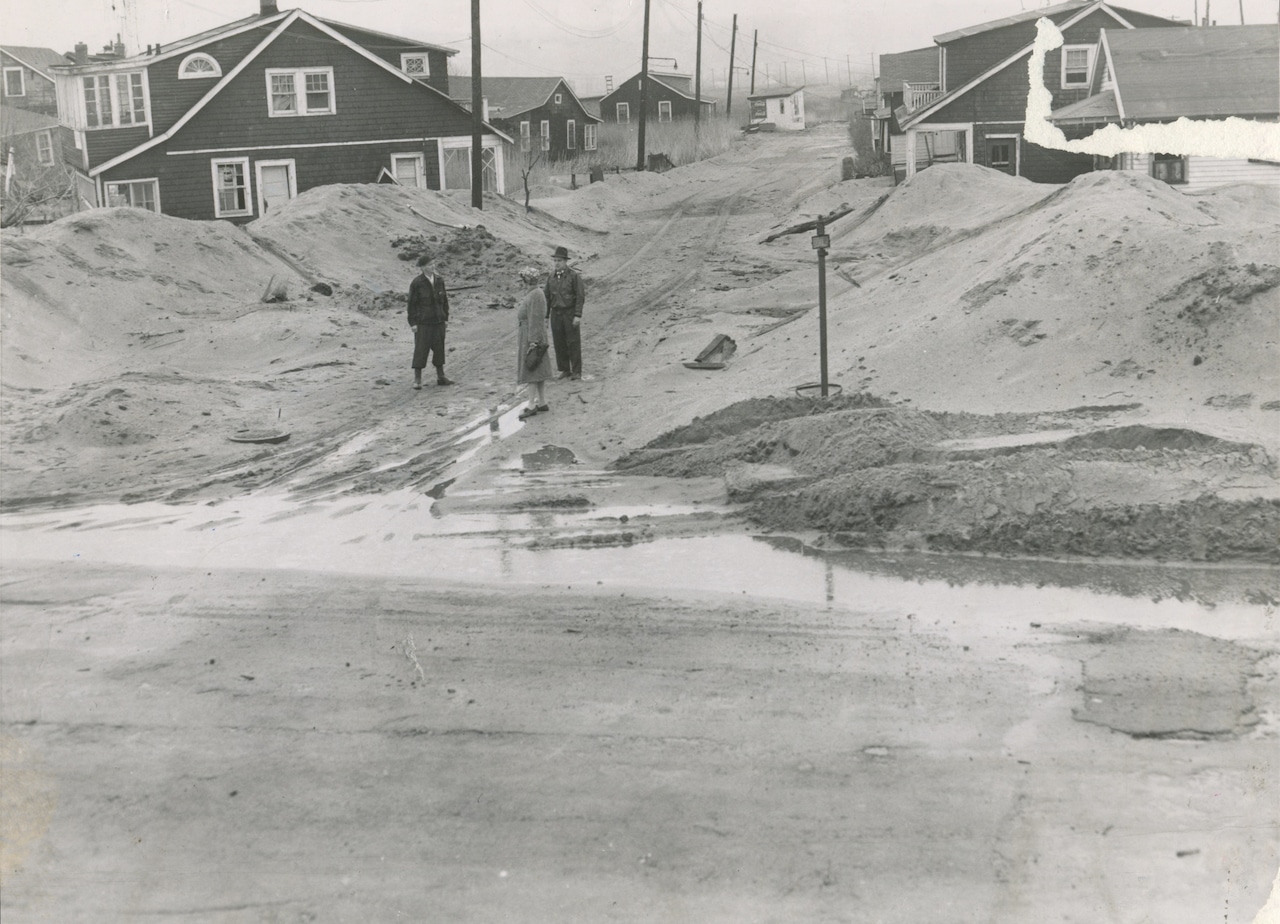 The Graham Beach neighborhood with sand alongside roadways. (Staten Island Advance) Third-Party-Submitted
Wires were snapped by high winds or broken by falling trees and poles. Electricity was non-existent in most Island homes.
Ferry service was suspended to Manhattan and Brooklyn.
We lived on Garretson Avenue in Ocean Breeze. The only thing separating us from the bay was a short beach and what was then Seaside Boulevard. An overflowing New Creek, which connected to the bay between Ocean Breeze and Midland Beach, ran through the marshlands on the other side of our home, making flooding even worse.
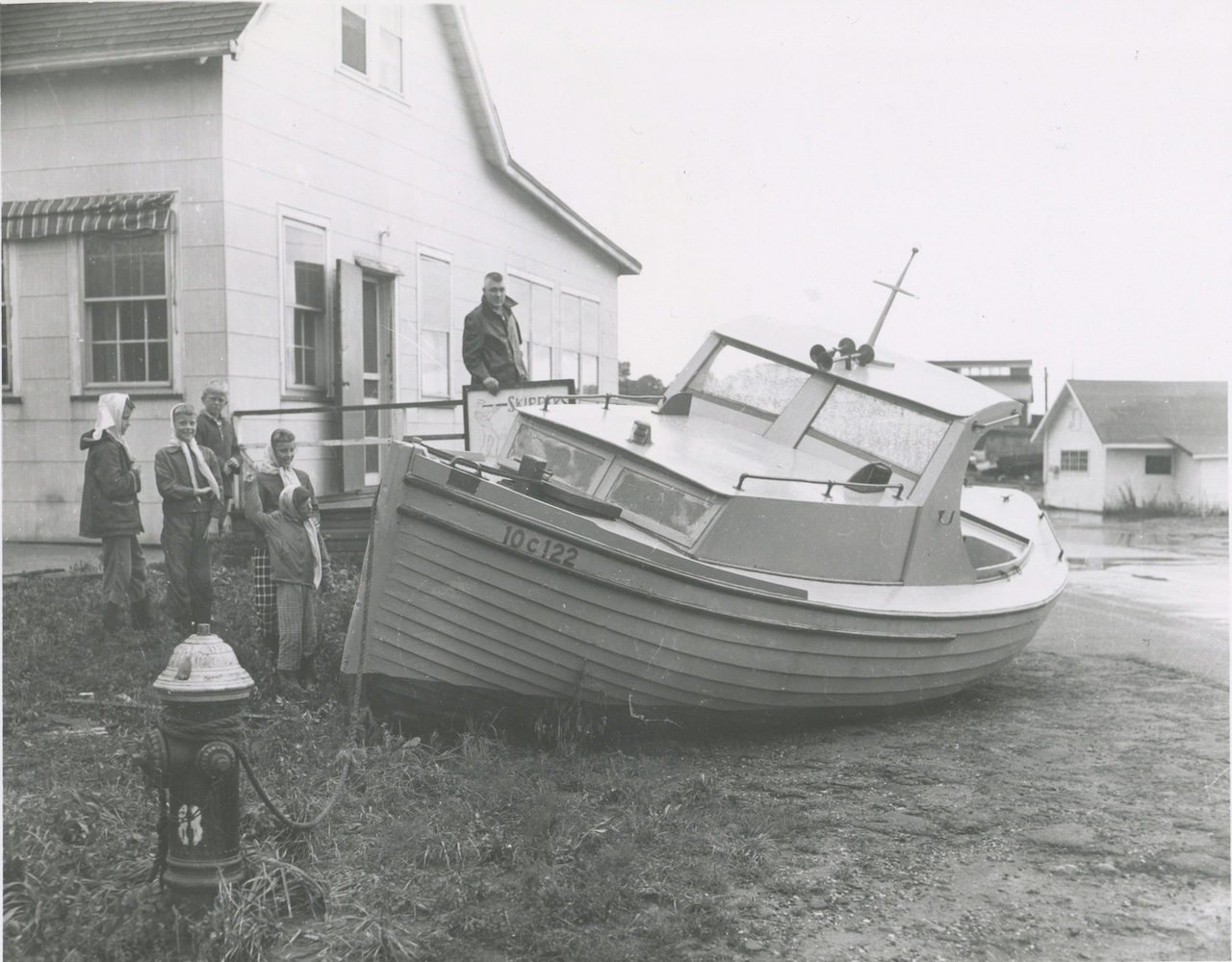 A beached boat in Great Kills. (Staten Island Advance) Third-Party-Submitted
I was just a year old so can’t attest to it, but mom and dad swore the story true. As mom held me above the rushing flood waters outside our house waiting for help, me with a baby bottle tied around my waist, the kitchen table came floating out our front door — with our leftover Thanksgiving turkey still on it.
The hurricane was nameless. The Weather Bureau didn’t start naming them until 1953. But it was violent.
We were taken to the Lincoln Hotel on Midland Avenue, where the owners regularly opened the inn’s doors to storm victims. I don’t know how we got there. Volunteers and Army, National Guard and Naval Reserve units were rescuing people. Amphibious vehicles were shipped from Fort Monmouth in New Jersey to help.
More than 2,000 were marooned in – or on the roofs – of their homes.
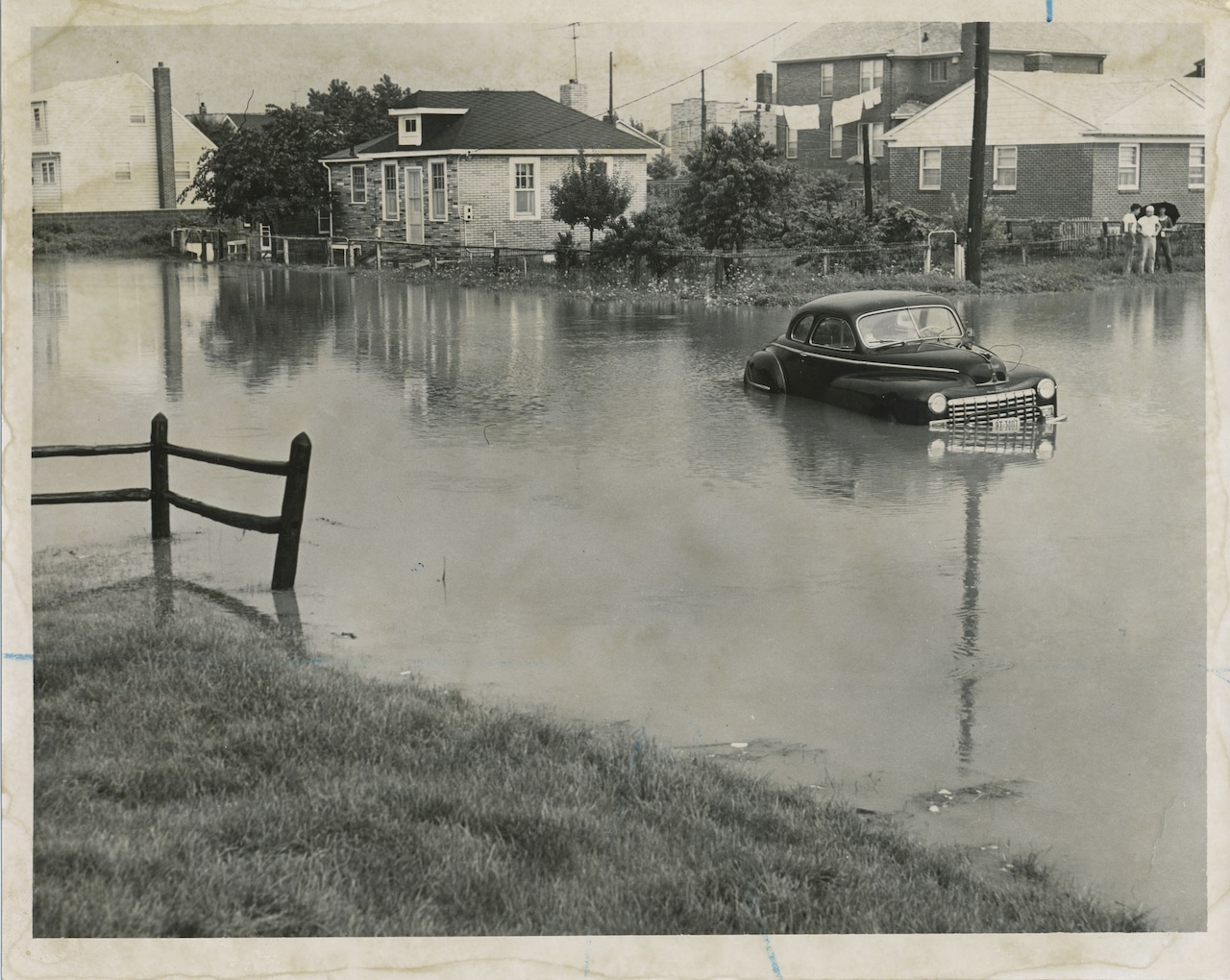 Flood at Foch Avenue and Lamport Boulevard in South Beach. (Staten Island Advance). Third-Party-Submitted
Rowboats from Clove Lakes Park and Willowbrook Pond were trucked to the flooded areas. A Rossville junk dealer had several sea-and-land vehicles — “duck boats” — he gave for service along the beachfront.
High tides tore barges loose from moorings along the East Shore. Four, one loaded with Jeeps, were slammed against bulkheads. Waterfront workers worked in the drenching rain to re-lash them. Another barge, loaded with Army tanks, broke loose. Remember, this was not long after World War II and at the beginnings of the Korean War.
The East Shore bore the brunt of the storm. But the North and West shores were hit, too.
The Kill van Kull overflowed onto Richmond Terrace. A fierce wind gust lifted a garage off its foundation in New Brighton, leaving the car inside undamaged. Another blast broke every window in the St. George office of the Internal Revenue Bureau and scattered records throughout the building.
“This storm is the worst we’ve ever had, men I talked to along the shorefront told me,” said Borough President Cornelius A. Hall after touring the East Shore from Tottenville to St. George.
“The waterfront is a wreck from Tottenville to Fort Wadsworth.”
Unlike Hurricane Sandy, miraculously, no one died.
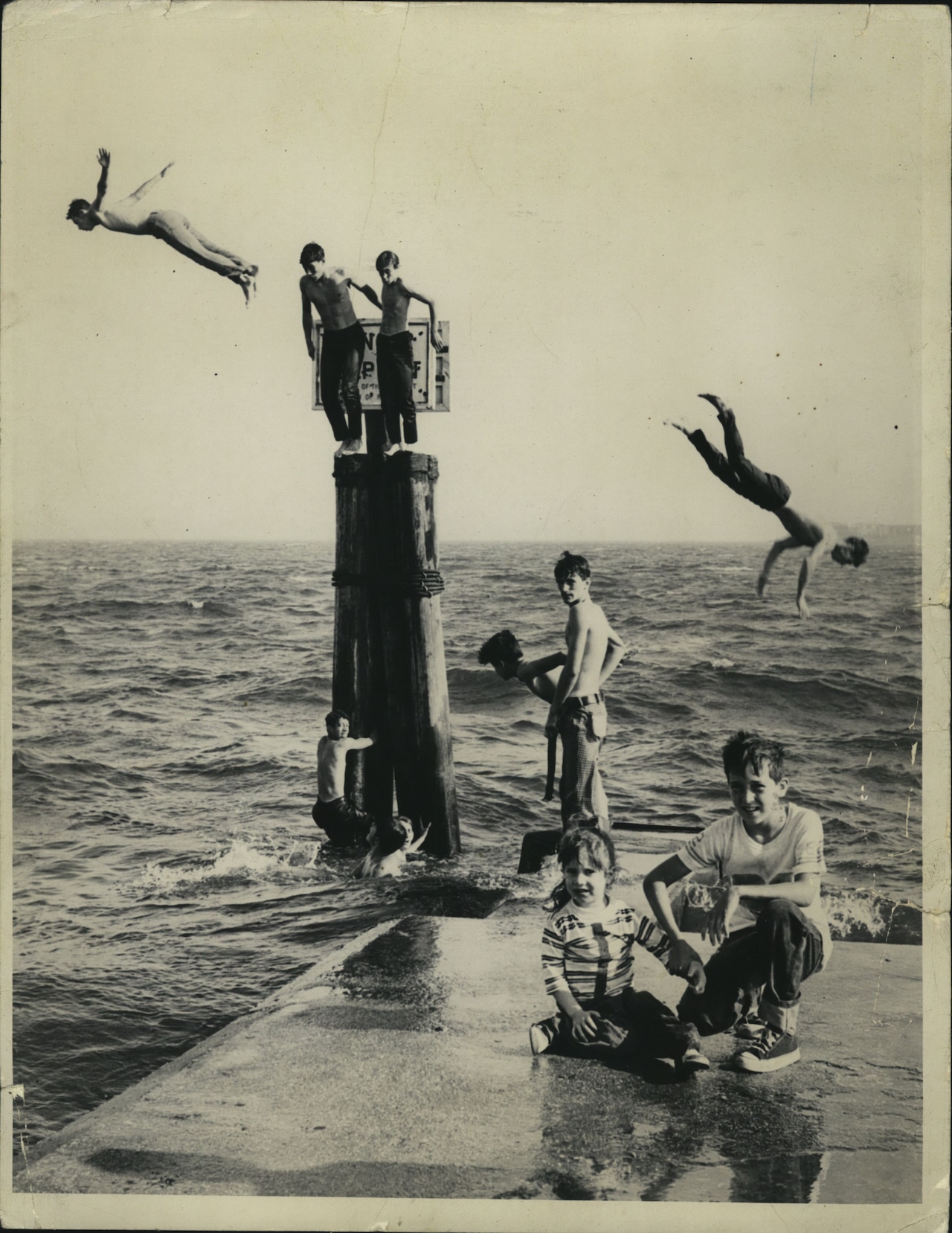 Kids loved the stormwater outfalls built after the 1950 storm to alleviate flooding in Midland and South beaches. (Staten Island Advance)
In the storm’s aftermath, city planners decided something needed to be done to stop future flooding from the creeks and bay. The beach was extended from Midland to South by dredging sand from the Raritan Bay. The channel connecting New Creek to the bay was shut off. Stormwater outfalls were built connecting New Creek to the bay so storm water could empty from the creek during violent storms.
It might have been a Happy Thanksgiving Day in 1950. But a devastatingly long weekend.
Brian
Oh by the way: And now, neighbors, we have officially entered the Christmas season, despite Black Friday sales that began in October and holiday decorations that began appearing the day after Halloween.