
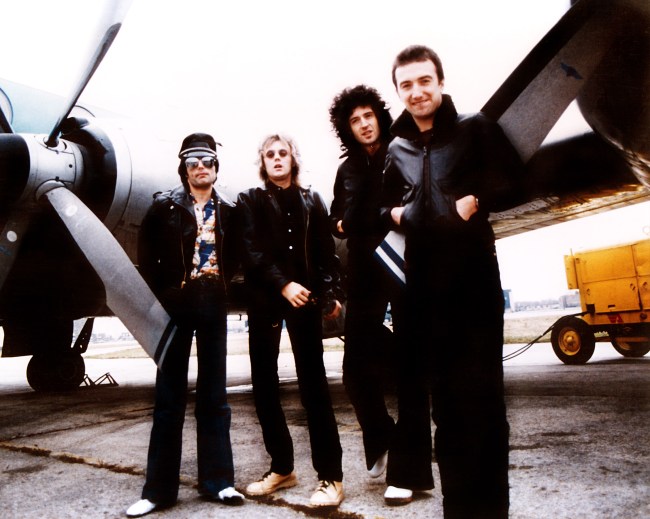
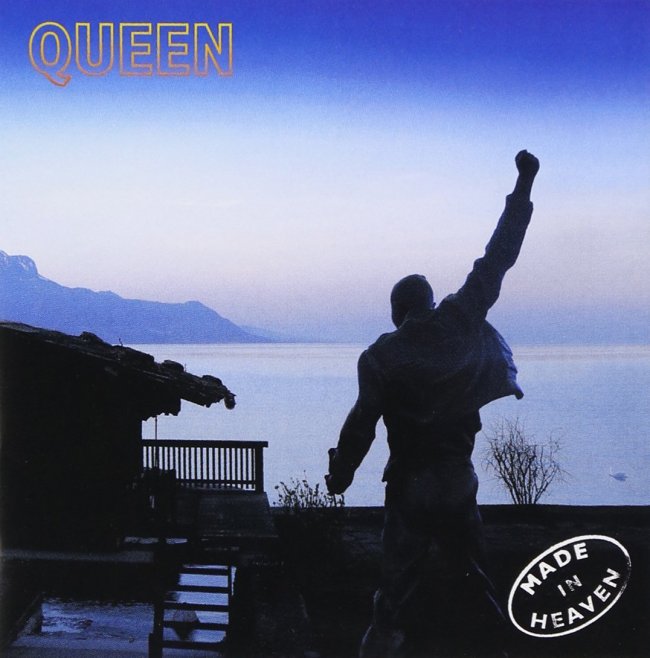
Some icons quietly fade away, while others go out soaring. Following Queen frontman Freddie Mercury’s HIV diagnosis in 1987, the band ceased touring but continued to actively make music. During his last year, the famed singer recorded vocals for three songs, launching the group’s final studio album, Made in Heaven. Released 30 years ago in 1995 — four years after Mercury’s death — it’s a grand musical finale for the revered British quartet.
“He knew what was coming,” the album’s coproducer/engineer Josh Macrae tells Gold Derby now. “He said, ‘I’m gonna leave you something to work with.’ He didn’t stop. He went off running.”

Made In Heaven began its life in early 1991 under the guidance of Dave Richards, who had produced Queen’s albums since A King Of Magic five years prior, and co-producer/engineer Justin Shirley-Smith, who had worked with the band since the mid-1980s. Mercury recorded his final songs at the band’s mountain studio in Montreux, Switzerland. (Richards died in 2013.)
“Freddie liked Montreux, because the press would leave him alone,” Shirley-Smith tells Gold Derby. “There was no paparazzi, whereas in London he got plagued by that.”
The recording sessions kicked off in January with “A Winter’s Tale,” followed by “You Don’t Fool Me,” which came out of a live jam that Richards later expanded on with guitarist Brian May, bassist John Deacon, and drummer Roger Taylor. Mercury had enthused over Chris Isaak’s “Wicked Game,” so Richards and Queen summoned a parallel vibe for him with “Mother Love,” which Shirley-Smith recalls coming together over the course of a few days in May 1991.
Mercury would plan select times to come into the studio. Shirley-Smith says that Richards was out sick when the singer recorded “A Winter’s Tale,” his final solo composition.
“Freddie turned up at the studio, and it’s just me there,” he remembers. “He said, ‘Oh, you’ll have to do it, darling.’ I just spent the afternoon with him. It was a pretty special day in my life, just me and him in the studio.” Shirley-Smith says that Mercury would take a shot of vodka before singing and then go for it.
A thoughtful and musician-focused producer, Richards recorded the band live together as if they were onstage. “We put together a loop of Wembley audience sound, so when they finished playing we’d fade up the audience so they’d hear the sound of the Wembley Stadium applauding them,” Shirley-Smith reveals. “I know it sounds silly, but they loved that. It was something they’d actually experienced; to be reminded of it was all part of the atmosphere.”
After Mercury died in November 1991, those early Made in Heaven tracks stayed in limbo as the surviving members of Queen grieved and pursued solo projects. In late 1993, Deacon and Taylor began going through the group’s archives to find unused Queen material to complete the album. Shirley-Smith was running May’s studio by that time, and Josh Macrae — originally the drummer for Taylor’s band The Cross — was running Taylor’s studio, and both were located 30 minutes away from each other in Surrey, England.
“Roger and John got copies of the tapes from Switzerland, then went into Metropolis and Abbey Road Studios with Noel Harris who was the assistant engineer on [Queen’s 14th album] Innuendo,” Shirley-Smith explains. “They started working on a Queen backing for ‘Made in Heaven’ and ‘I Was Born to Love You.’ Brian didn’t want to get involved at all until he heard that and decided, ‘Now I know how it should go.’ Brian and I worked in his studio … for what felt like a year on that [latter] song.”
Suddenly, Queen came alive again. “John was very excited and energetic,” Macrae recalls. “Roger was keen to lay [down] some real drums. Gradually, the mood lifted, especially when Roger and John were working together. Then Brian would come over, and they were playing together and making a bit of a racket, which was great for them. It was refreshing to have that going on.”
The surviving Queen members continued recording at May’s and Taylor’s studios throughout 1994. “We were working for a long time,” Macrae says. “We were like lots of sous chefs running around getting all this stuff happening.”
“Dave came in with an overview and helped everyone bring it together,” Shirley-Smith adds. “But everyone was pushing and really enthusiastic.”
Beyond the album’s three new songs, Mercury’s performances of “Made in Heaven” and “I Was Born to Love You” were extracted from his Mr. Bad Guy solo album and had Queen performances built around them. “It’s a Beautiful Day” — an outtake from Queen’s 1980 album The Game — was split into contemplative and anthemic variations to bookend the final record.
Meanwhile, “Heaven for Everyone” had originated on The Cross’ debut album Shove It, although Taylor’s vocals were on the official release. “Let Me Live” was an expanded, unfinished leftover from 1984’s The Works, originally recorded with Rod Stewart and Jeff Beck. And “My Life Has Been Saved” was a reworked B-side off of 1989’s The Miracle, the album that was originally meant to contain “Too Much Love Will Kill You.” That track was taken off the record at the last minute, and the version heard on Made in Heaven is the exact same version that had been mixed previously, save for one vocal ad lib.
An unexpected last-minute surprise on Made in Heaven is “Track 13,” originally a “hidden” bonus track on the CD and later officially titled for subsequent reissues. It’s a dreamy, nearly 23-minute ambient instrumental tune with a few floating Freddie words. The track was conjured overnight by Richards and May while the album was being mastered. It’s been interpreted in different ways, including what life might be like for Freddie in heaven.
Upon its release, Made in Heaven hit No. 1 in the U.K. and nearly a dozen other countries, reportedly selling at least 5 million units worldwide. While it didn’t break the Top 50 in the U.S., it was certified gold in early 1996. More importantly, it allowed Queen to put a period at the end of their time with Mercury.
“[Made in Heaven] was very cathartic for them,” Macrae notes. “Roger was noticeably changed by the experience. They were in the doldrums for a while after Freddie went — it left a big hole in their lives.”
“I remember Dave Richards saying that Freddie would come up with an idea, and if it was just someone coming in off the street, you’d have them thrown out because it’s so ridiculous,” Shirley-Smith adds. “But because it was Freddie, you’d try it out — and it would turn out to be amazing.”