
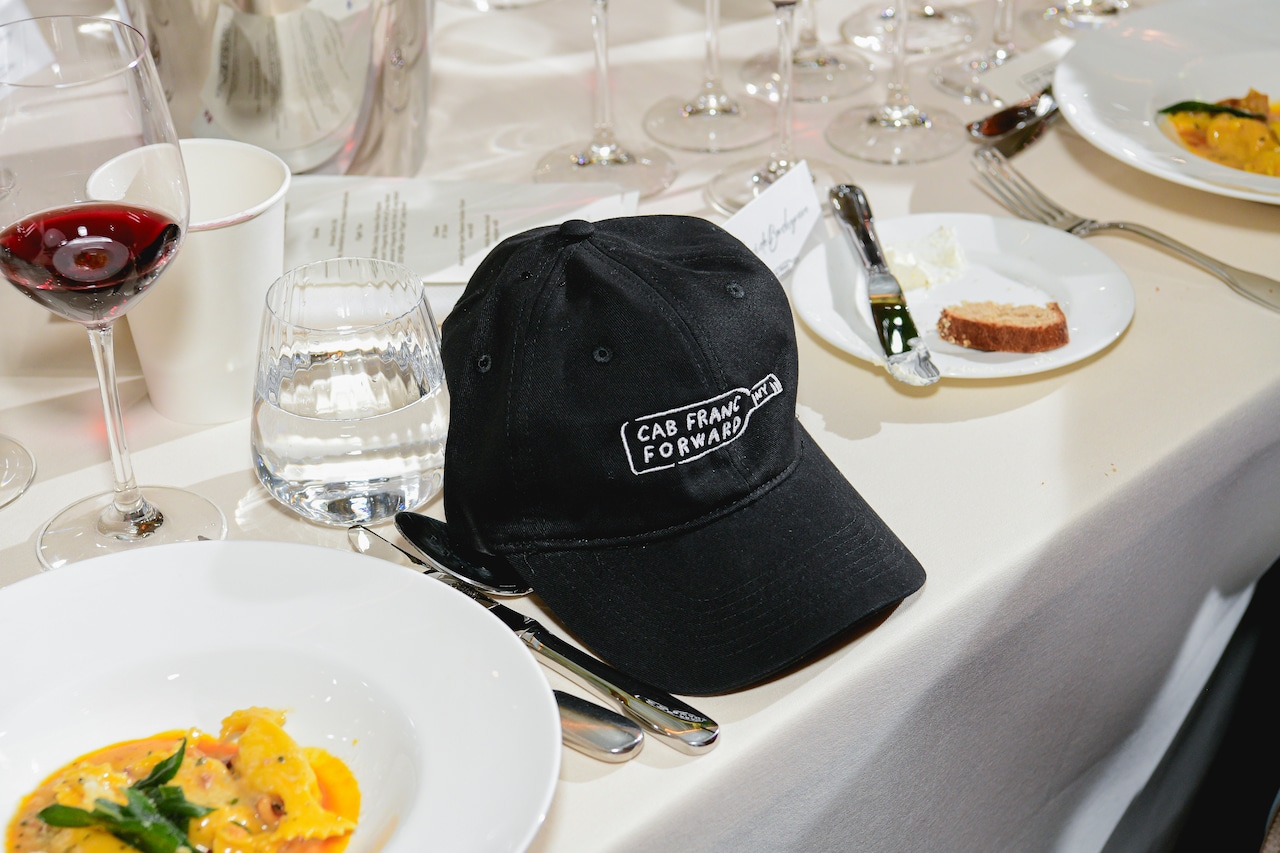
Cab Franc Forward is approaching its first anniversary, having already made significant strides in promoting the New York-based grassroots initiative.
Building a campaign around Cabernet Franc allows for the promotion of what is the state’s most widely planted red grape (638 acres under vine), which overlaps the three main wine regions — Finger Lakes, Long Island and Hudson Valley — and is recognizable, both in the tasting room and a restaurant.
It’s also a wine that has received numerous awards in state, regional, and national competitions for New York producers and, quite frankly, from a majority of states along the East Coast.
The initiative was unveiled in early February in Manhattan, where representatives from 35 New York wineries provided tastings of their Cab Franc to more than 500 wine professionals, media members and consumers.
That event showcased wines from across New York’s wine regions, featuring releases from Apollo’s Praise, Atwater, Bedell Cellars, Boundary Breaks (founding winery), Bridge Lane, Buttonwood Grove and Six Eighty Cellars, Clovis Point, Damiani Wine Cellars, Dr. Konstantin Frank, Elysabeth, Fjord (founding winery), Hermann J. Wiemer (founding winery), Horses by Macari, Keuka Spring, Lakewood, Lamoreaux Landing Wine Cellars, Living Roots, Macari (founding winery), McCall, Milea Family Estate (founding winery), Millbrook Vineyards & Winery, Old Sound (founding winery), OnaBay, Paumanok (founding winery), Raphael Wine, Ravines Wine Cellar, Red Hook, RGNY, Roanoke, Sheldrake Point, Suhru & Lieb, Trestle Thirty One, Wagner Vineyards Estate, Whitecliff, and Wölffer Estate (founding winery).
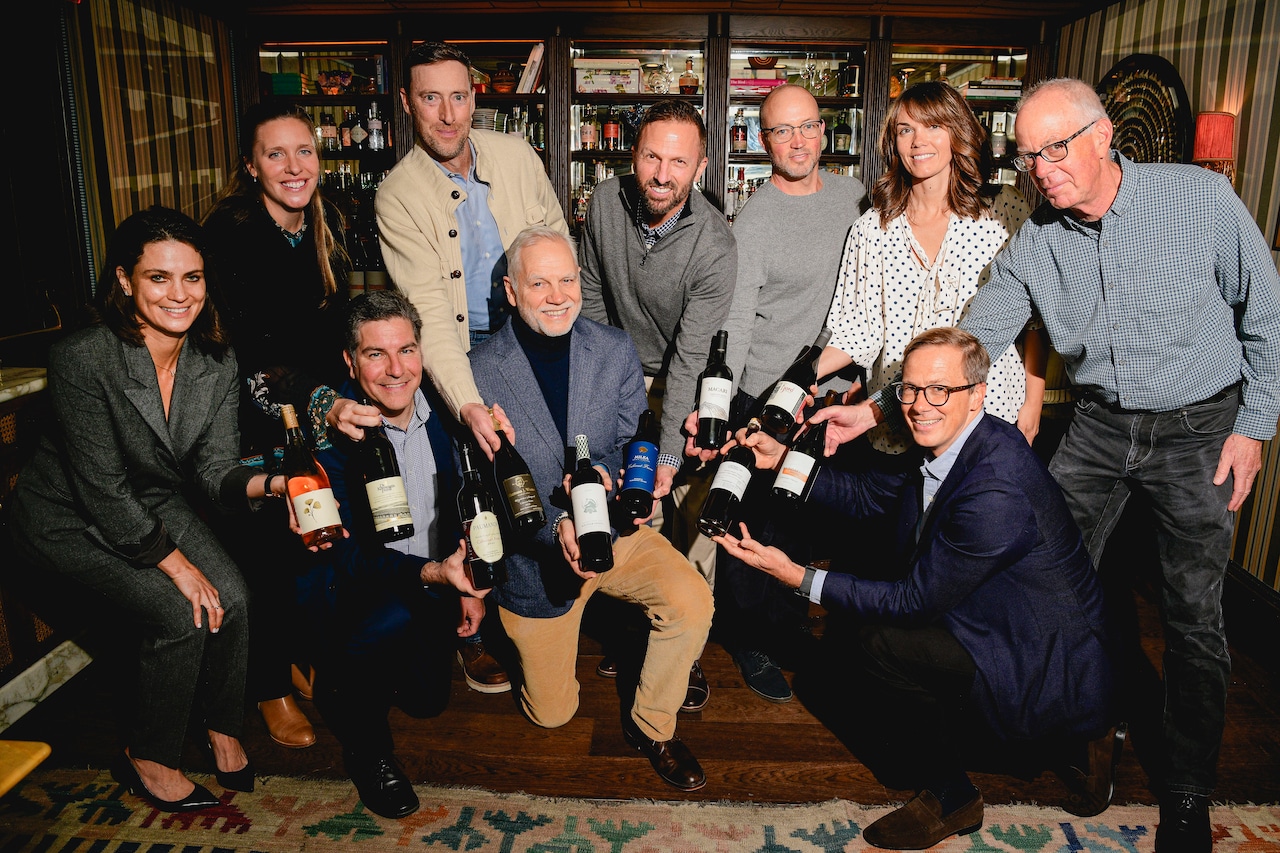 A group show of the New York wineries and their Cab Francs that were represented at a November media luncheon.Max Flatow
Discussions throughout the day highlighted the grape’s food-friendly nature, aging potential, and the deep family histories behind many of the wines.
It also drew together a panel, hosted by sommelier Yannick Benjamin, that focused on the remarkable versatility of Cabernet Franc, ranging from sparkling to fruit-driven reds and age-worthy expressions.
A winemaker dinner followed on Long Island in mid-October, and a lunch for media and others took place in early November back in New York City.
Those events have paid dividends, prompting a number of published stories, from recognized wine writers such as Eric Asimov of the New York Times (paywall), Alder Yarrow of jancisrobinson.com, Dave McIntyre on his Substack site, Robin Shreeves on her Substack site, and Lenn Thompson of The Cork Report.
The promotion’s cofounders are Max Rohn, CEO of Wölffer Estate Vineyard, and Gabriella Macari, director of operations at her family’s Macari Vineyards, who are longtime Long Island winery neighbors and directing two of the state’s top producers.
Both were sent similar questions about Cab Franc Forward, and returned these answers.
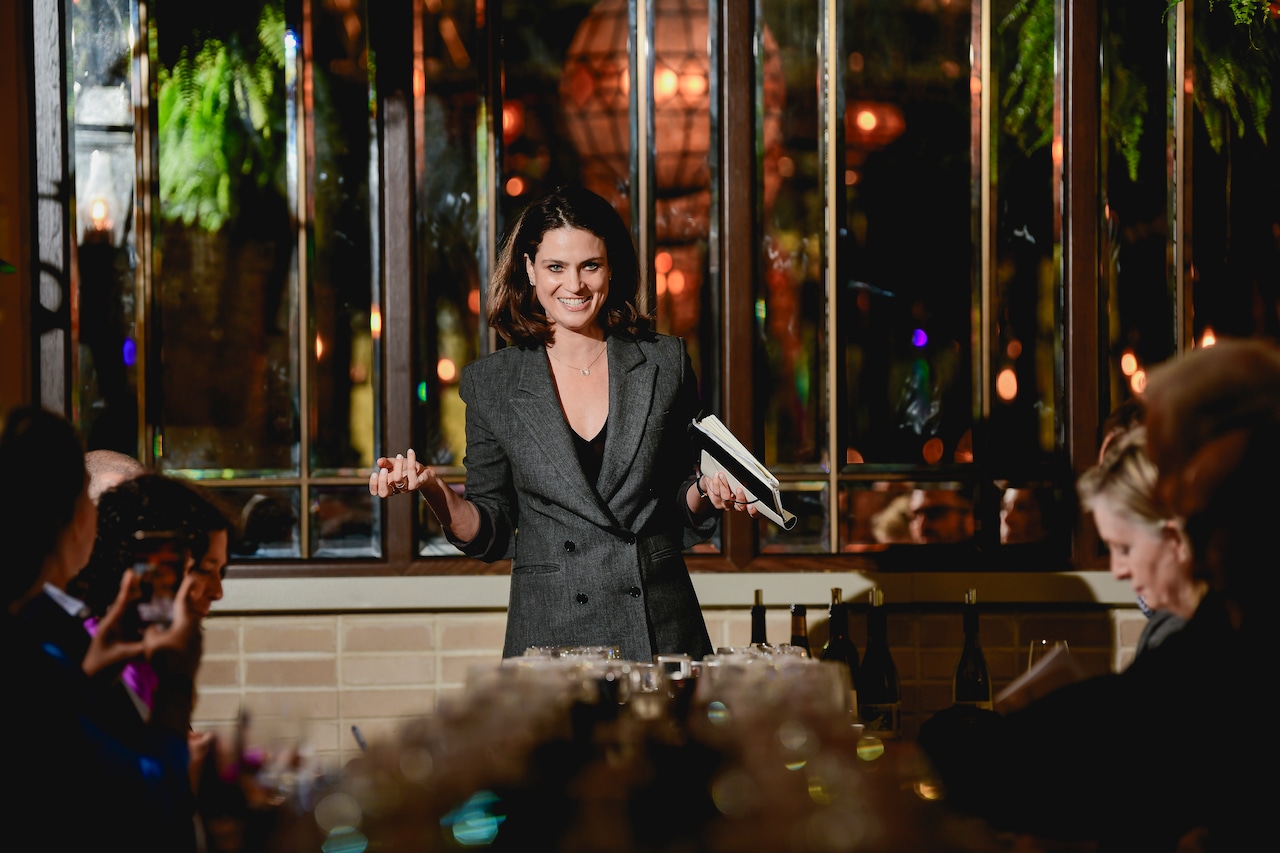 Gabriella Macari has worked with her family at Macari Vineyards since its inception in 1995.Max Flatow
From Gabriella Macari, co-founder, Cab Franc Forward NY:
Q, What prompted you to co-found this initiative to promote the grape and the wines it makes?
A, Max Rohn of Wolffer Estate contacted me in August 2024 to discuss New York wines, particularly Cabernet Franc. After our conversation, I organized a tasting with several local winemakers, featuring a wide selection of New York Cabernet Franc from across the state. The tasting clearly demonstrated that the quality of these wines is exceptional. The only remaining challenge was finding effective ways to bring these wines to a broader audience.
I had been hearing from trade for years that New York Cabernet Franc deserves more attention. After this tasting, we all agreed we needed to collaborate to spread the word.
Q, How much Cab Franc do you grow, and how old are the vines?
A, My family planted a total of 20 acres of Cabernet Franc between 1995 and 2004.
Q, Is it a wine you’ve been making in the beginning, and how has it evolved over time there?
A, The first Macari release of 100% Cabernet Franc was in 1997. I still remember my father receiving a phone call from another local grower who said, “Joe, what are you doing? Cab Franc is a blending grape!” – my father didn’t agree with that statement then, and he still doesn’t. We’ve always loved this grape for Long Island.
Over time, our Cabernet Franc winemaking has evolved considerably. In 1997, we aged in 80% new French oak (225L), but by 1997, we mostly used neutral 500L barrels. We also introduced a fruit-driven, vibrant, light-bodied Cabernet Franc fermented in a concrete egg, and recently, Winemaker Byron Elmendorf produced small batches of whole cluster Cabernet Franc and Cabernet Franc rosé under a new brand, “Meadowlark North Fork,” created to continue supporting experimentation and innovation.
In 2013, I tasted a sparkling Cabernet Franc from the Loire Valley in Brooklyn, and it made a lasting impression. That year, the idea of sparkling Cabernet Franc inspired us to create “HORSES,” a Cab Franc pet-nat, which still consistently sells out each year faster than any of our other wines.
Q, Are there plans to use it there in wines beyond the varietals and blends you are using it in currently?
A, Not at the moment.
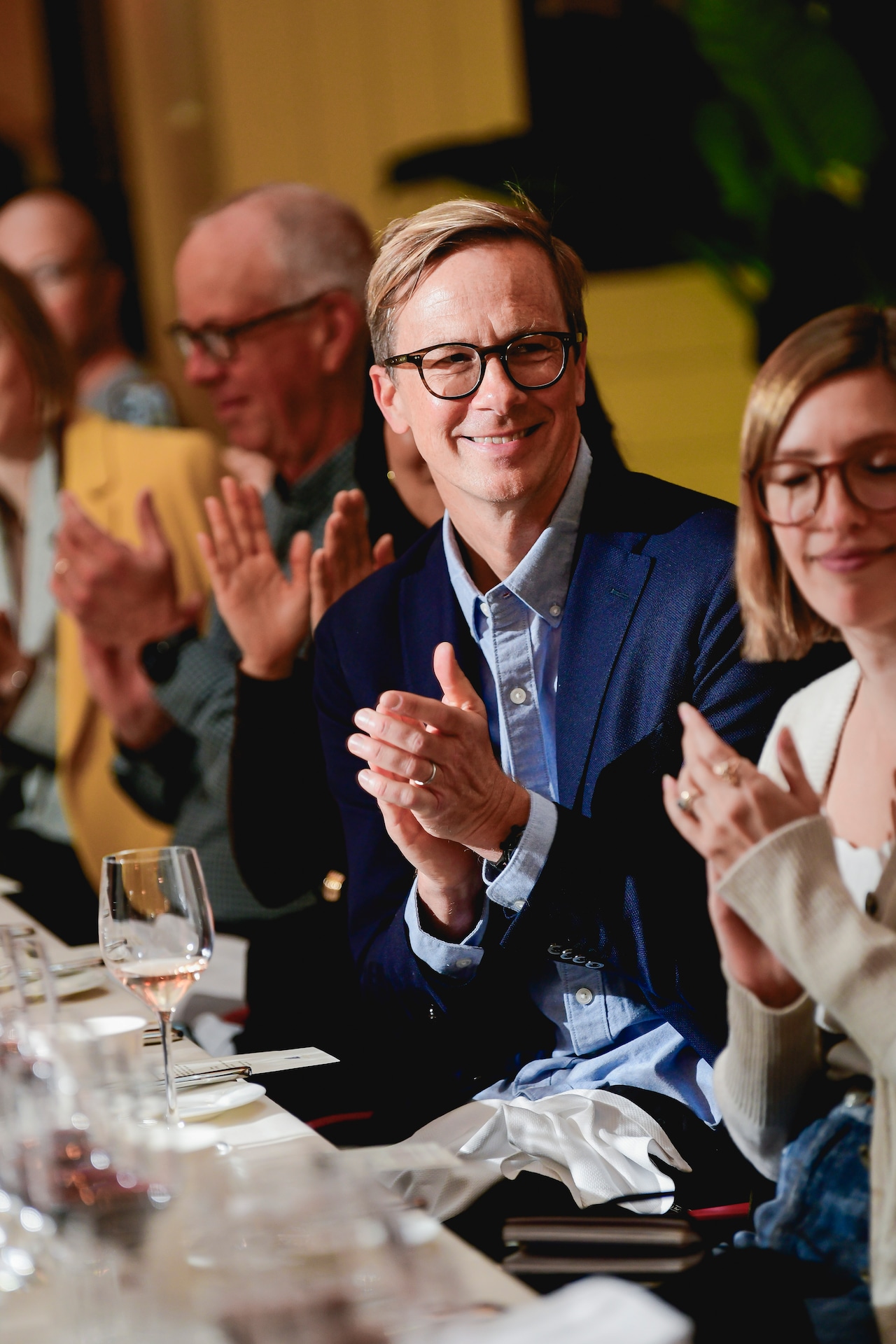 Max Rohn has been the Chief Executive Officer of Wölffer Estate Vineyard and Stables since March 2013.Max Flatow
From Max Rohn, co-founder, Cab Franc Forward NY:
Q, What prompted you to co-found this initiative to promote the grape and the wines it makes?
A, What prompted us was simple: we were all making great Cabernet Franc, but no one was telling the story. Winemakers from Long Island, the Finger Lakes, and the Hudson Valley kept having the same conversation independently: Cab Franc was consistently our most acclaimed, reliable, and exciting variety. Instead of having regions compete or have messages fragment, we decided to come together. As the most widely planted red vinifera in New York and the most celebrated grape across all our major regions, it deserved a unified voice. The goal was to build pride around it and share with the world what Mother Nature has so clearly gifted New York.
Q, How much Cab Franc do you grow, and how old are the vines?
A, After our recent replanting, approximately one-third of our 50-acre vineyard will be Cabernet Franc, with the earliest vines planted in 1998.
Q, Is it a wine you’ve been making in the beginning, and how has it evolved over time there?
A, We only began planting it 10 years after our first vines were planted in 1988. Long Island has always been compared to Bordeaux, so Cab Franc was a natural choice to plant. However, the focus for much of Long Island’s history has been on Merlot. There was an early alliance on Long Island around Merlot that, unfortunately, couldn’t break through the headwinds of Merlot’s popularity after the film “Sideways.” Despite the emphasis on Merlot, Cab Franc continued to emerge. Our distributor found it more exciting to sell, critics highlighted it, and of course, it became my personal favorite. How many times can you hear “this is your best wine” and not do something about it?
Q, Are there plans to use it there in wines beyond the varietals and blends you are using it in currently?
A, Yes. Wölffer is known for rosé, and we’re reinforcing that message by releasing our top-tier rosé, Grandioso, as a Cabernet Franc Rosé in 2026. We’re also producing a $100 Cabernet Franc called Christian’s Cuvée, crafted from our best blocks and only in the strongest vintages — beginning with the 2024 vintage.