
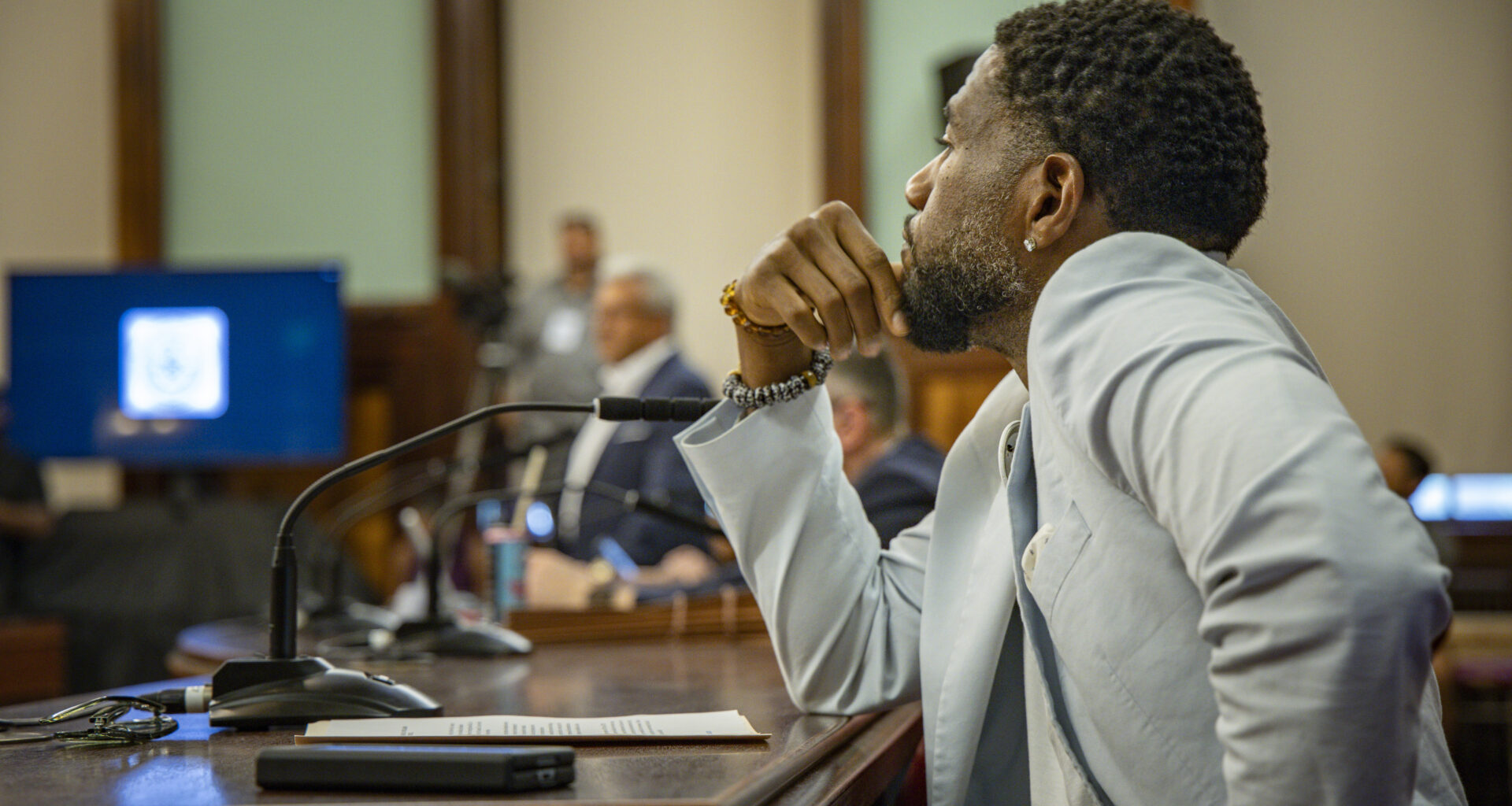
Public Advocate Jumaane D. Williams today called for passage of his legislation aimed at providing long-overdue transparency and reform to the co-op sales and management process. For too long, a complicated, nebulous, and opaque co-op process has left open the possibility for discrimination and denial of housing to qualified applicants.
The Public Advocate has long worked on the issue of co-op sales, approvals, and denials. At a hearing of the Committee on Housing and Buildings, he emphasized the importance of bringing clarity and accountability to a confusing and opaque process that leaves prospective residents without vital information.
“Cooperative developments offer an opportunity for homeownership which would otherwise be inaccessible to many New Yorkers. However, a long history of discriminatory practices in this industry, both overt and implicit, have left a gaping loophole in fair housing enforcement…” argued Public Advocate Williams. “The extent of discrimination is difficult to quantify but it is estimated to be a factor in almost a fifth of board decisions with broker agents reporting common code words like ‘NOK’ or ‘NQ’ to indicate “not our kind” or “not quite”. Because a potential buyer can wait lengthy periods only to be denied with no explanation, it can be difficult to improve a subsequent application to access co-op ownership after a denial.”
The Public Advocate’s bill, Intro 407-A would require cooperative corporations to provide prospective purchasers with a written statement of each and all of its reasons for withholding consent to a sale within five days after deciding to withhold such consent.
“This transparency would allow applicants to better understand and address any genuine application deficiencies and it would further mitigate discrimination as secrecy surrounding these decisions fosters an environment in which discrimination thrives,” the Public Advocate continued. “Furthermore, with more than 6,800 co-op buildings in New York City, more than any other municipality in the country, eliminating this closed-door system would have a tremendous impact on efforts to make homeownership more equitable and accessible, setting an important precedent.”
Public Advocate Williams is also a co-prime sponsor of Intro 438-A with Council Member Pierina Sanchez, the bill’s prime sponsor and Chair of the Committee. This bill would require any cooperative corporation to disclose its finances to a prospective purchaser whose offer to purchase an interest and right to reside in the cooperative corporation has been accepted. The financial information would have to be provided within 14 days of a request by the prospective purchaser.
Together with a bill from Council Member Amanda Farías establishing a timeline for co-op applications, these bills would combat a history of discrimination among some co-op board processes, while enabling boards acting in good faith to continue unimpeded. The length and depth of the co-op application, review, and approval process has made such discrimination both more easy to perpetrate and more difficult to identify and prevent. By providing uniform guidelines and a ‘reason requirement’ for rejected applications, the process would be clarified and the standards codified.
The Public Advocate’s full statement to the Committee as delivered is below.
STATEMENT OF PUBLIC ADVOCATE JUMAANE D. WILLIAMS
TO THE NEW YORK CITY COUNCIL COMMITTEE ON HOUSING AND BUILDINGS
DECEMBER 2, 2025
Good morning,
My name is Jumaane D. Williams, the Public Advocate for the City of New York. I thank Chair Sanchez and the members of the Committee on Housing and Buildings for holding this hearing today.
Cooperative developments offer an opportunity for homeownership which would otherwise be inaccessible to many New Yorkers. However, a long history of discriminatory practices in this industry, both overt and implicit, have left a gaping loophole in fair housing enforcement. As co-ops are considered businesses, they are bound by corporate law which requires them to act in the best interests of shareholders. The extent of discrimination is difficult to quantify but it is estimated to be a factor in almost a fifth of board decisions with broker agents reporting common code words like ‘NOK’ or ‘NQ’ to indicate ‘not our kind’ or ‘not quite.’ Because a potential buyer can wait lengthy periods only to be denied with no explanation, it can be difficult to improve a subsequent application to access co-op ownership after a denial.
To that end I submitted legislation, Intro 407, which would require cooperatives to disclose to rejected applicants the specific reasons their application was denied. If the co-op board turns down an applicant, the applicant should be told the specific reasons for that denial. This transparency would allow applicants to better understand and address any genuine application deficiencies and it would further mitigate discrimination as secrecy surrounding these decisions fosters an environment in which discrimination thrives. Furthermore, with more than 6,800 co-op buildings in New York City, more than any other municipality in the country, eliminating this closed-door system would have a tremendous impact on efforts to make homeownership more equitable and accessible, setting an important precedent. Besides the benefits to individual buyers, this transparency also makes it harder to discriminate against a candidate whose financial records are good on paper. It cannot prevent every potential instance of discrimination by genuine bad faith actors, but a written explanation requires a more legitimate or at least specific and actionable rationale for denial.
I also want to lift up Chair Sanchez’ bill, Intro 438, which would require cooperatives to provide financial information to prospective purchasers of cooperative units, and Majority Leader Farías’ bill, 1120-A which sets that timeline. Hopefully we can work on all these bills. Together, these bills would equip prospective buyers with crucial information, moving us one step closer to eliminating a longstanding asymmetry of information. Creating more transparency to the entire application process is critical as we encourage homeownership in our city.
I want to thank Chair Sanchez, Majority Leader Farías, as well as members of my own Policy team, for working together on getting these bills to this point. I also want to thank Craig Gurian, who has worked tirelessly with my team to build a coalition around this legislation. I hope to see them pass this session.
I do want to say this is not an indictment of any one specific co-op building. This is a systemic issue we’ve seen for quite some time. And I know that it is difficult to parse through everything that’s going on, and how each of these co-op boards work. It is difficult to change things if we don’t change things, so we do have to find a way to make the changes that are necessary and still allow the autonomy that co-ops need. But we can’t allow the system to continue to work the way it has been working because we – I think most folks agree there has been discriminatory practices, whether intentional or unintentional, that have barred a lot of people from home ownership.
So I’m hopeful everyone involved will really take efforts to find the best way to craft these bills, so they can pass and we can really impact the problems I think everyone knows exist. Thank you so much.