
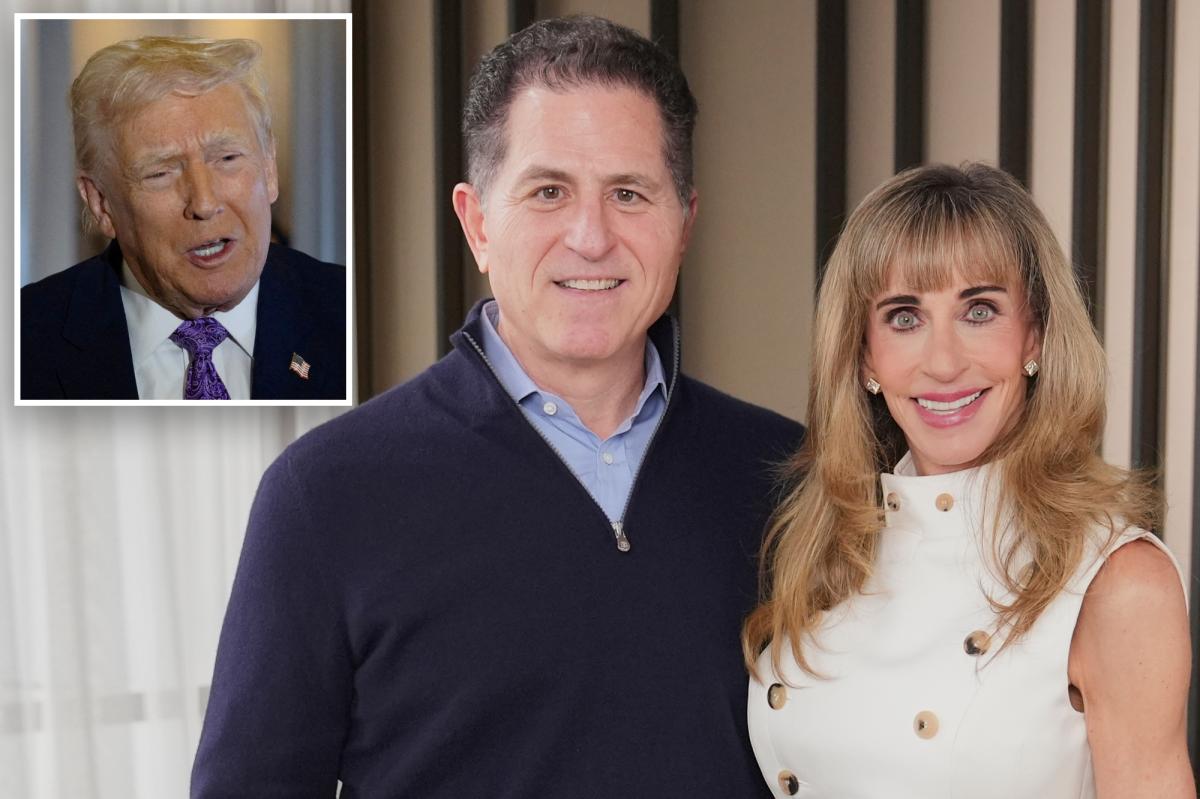
Michael and Susan Dell pledged Tuesday to donate a historic $6.25 billion toward funding so-called “Trump accounts” for 25 million American children.
The investment – which will equal $250 per account – is meant to help kids pay for an education, start a business or afford a down payment on a house after they turn 18, the Dells said in a press release.
President Trump said the accounts will act as “real trust funds for every American child” and called the Dells’ donation “one of the most generous acts in the history of our country.”
Speaking alongside the couple at the White House, he promised to chip in personally.
“A lot of friends of mine have already told me they’re going to contribute a lot of money,” too, Trump said.
Michael and Susan Dell on Tuesday pledged to donate a historic $6.25 billion toward funding so-called “Trump accounts.” AP
The Dells’ donation estimated to be the largest single one ever made to US children, according to Invest America, a nonprofit partnered with the Dells that is helping the US Treasury launch the investment accounts.
A new program approved as part of President Trump’s “big, beautiful bill” will allow parents to open tax-advantaged investment accounts for kids under 18 with Social Security numbers.
For US citizens born from Jan. 1, 2025, through Dec. 31, 2028, the US Treasury will seed these accounts with a federal grant of $1,000.
The Dells will seed additional accounts for most children aged 10 and under who were born before 2025 with grants of $250 each.
Children older than 10 may receive grants, as well, if leftover funding is available.
The donation is expected to cover 25 million American kids in ZIP codes with a median income of less than $150,000.
“What inspired us most was the chance to expand this opportunity to even more children,” the Dells said in a statement on Giving Tuesday, the annual day of charitable giving.
“If there’s one investment that never stops growing, it’s investing in children. They are our future.”
Michael Dell founded Dell Technologies as a 19-year-old freshman student at the University of Texas. He has a $148.5 billion net worth, according to Forbes.
A new program in President Trump’s “big, beautiful bill” will allow parents to open tax-advantaged investment accounts for kids under 18. REUTERS
The Trump accounts have not yet been launched. Parents will be able to open accounts and start contributing to them as of July 4, 2026.
Brad Gerstner, a venture capitalist and founder of Invest America, said the goal of the accounts is to give kids a headstart by allowing them to benefit from growth in the stock market.
Start your day with all you need to know
Morning Report delivers the latest news, videos, photos and more.
Thanks for signing up!
Trump accounts can only be used to invest in low-cost diversified funds that track a US stock index.
The Dells said they are hoping their contribution will encourage families to open accounts for their children and seed them with more money.
The Dells said they are hoping their contribution will encourage families to open accounts for their children and seed them with more money. Getty Images
Parents only have to open an account to automatically receive the $250 gift.
The GOP’s tax-and-spending bill also makes it easier for major corporations, employers and philanthropists to contribute to the investment accounts on a large scale.
Dell Technologies, for example, has pledged to match the US Treasury’s $1,000 grants for newborn children of US employees.
Trump accounts do not have the same tax advantages as 529 accounts or Roth IRAs, however.
Withdrawals from the accounts are not permitted until the child turns 18. The assets will then be rolled into an IRA, and withdrawals will be taxed.
When asked about how the accounts are taxed, Treasury Secretary Scott Bessent said Tuesday: “They can access them when they’re 18 or they can convert them to an IRA at that time. During the 18 years, parents or employers can donate with the tax deduction up to $5,000 to each account and philanthropists like Michael and Susan can add an unlimited amount to the account.”