
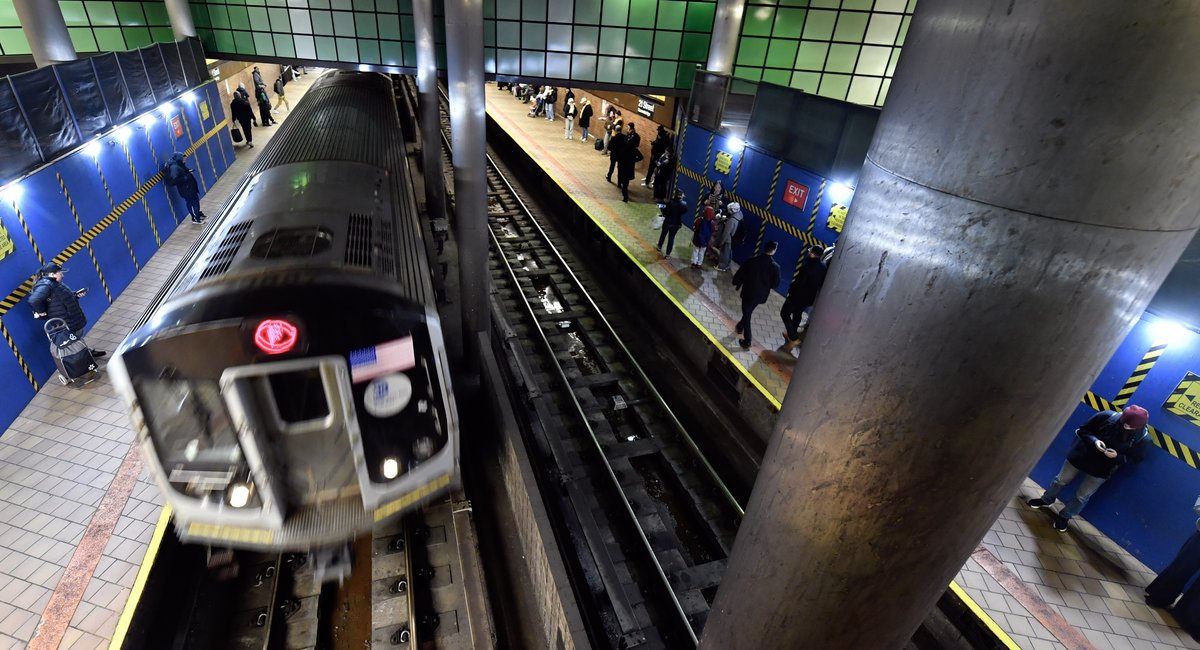
MTA officials are promising F train riders in Queens will have an easier time finding a seat during their morning commutes, thanks to a nifty trick the agency will implement Monday.
The F and M trains will permanently alter their routes and swap East River train tunnels between Long Island City and Midtown from 6:30 a.m. to 9:30 p.m. on weekdays.
F trains will continue to run express beneath Queens Boulevard west of Jackson Heights–Roosevelt Avenue. But instead of rolling beneath Queensbridge Park through the 63rd Street tunnel, they’ll stop at Queens Plaza and connect to Manhattan via the 53rd Street tube, which is currently used by the M line.
The M train will likewise begin serving 21st Street-Queensbridge and Roosevelt Island before entering Manhattan. The lines will still reconverge beneath Sixth Avenue.
The switch is part of an effort to unclog a subway bottleneck at Queens Plaza where E and M trains have to cross in front of each other, causing frequent train traffic jams. Transit officials said it will allow them to run more trains on the M line during the mornings — and make schedules on all the lines more consistent, which will reduce overcrowding.
“The F train coming from Eastern Queens is really, really crowded in the morning. So you have more chance of getting a seat,” MTA Chair Janno Lieber said during a news conference Wednesday. “ The fact that the F train is so crowded means that the dwell times are longer, they get stuck in stations and they can’t always keep that tighter schedule.”
The F and M lines will still serve their old tunnels overnight and on weekends. That might be dizzying for Roosevelt Island residents, who will take an M train home before 9:30 p.m. but must switch to an F train later in the evening.
Transit officials said they believe riders will be able to keep up with the change and appreciate the shorter wait times in stations, since trains won’t have to cross in front of each other in tunnels as frequently. The change is expected to speed up routes on the E, M, F and R lines, which take riders on a combined 1.2 million daily trips.
“They’re real benefits and I know that people will start to recognize them, although obviously everybody needs to adjust their routine,” Lieber said.