
Democratic socialist Zohran Mamdani officially won the New York City mayoral election last month, marking the end of a city government election with the highest voter turnout in decades. The election was framed as a battle between different generations of the Democratic Party: the party’s old guard, represented by former Mayor Andrew Cuomo, against young populist socialist Mayor-elect Zohran Mamdani. Mamdani’s viral social media campaigns and Republican candidate Curtis Sliwa’s eccentric debate moments caught the attention of young people throughout the nation.
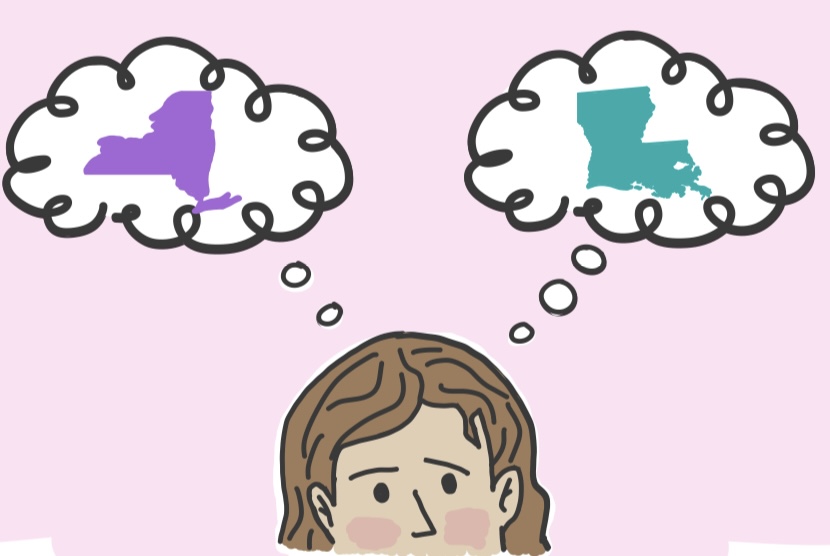
 Non-New Orleanian Tulane students are invested in elections with national significance, like in New York. (Mia Cordero Rivera)
Tulane University students, especially those from New York, were not immune to the election excitement. Yet, the New York election seemed to dominate political conversations on campus, despite New Orleans undergoing its own election season at the same time.
Mayor-elect Helena Moreno was elected as the new mayor of New Orleans in October. Despite its relevance to campus life, the election was not a matter of popular conversation on campus for those who are not native New Orleanians. Some students did not follow the election at all, due in part to the lack of national coverage compared to the New York mayoral race.
New Orleans’ local elections often struggle to capture extensive national media attention, partly due to Louisiana’s “jungle” primary system. In this structure, candidates from all parties run in the same primary. If a candidate wins over 50% of the vote, they win outright and the general election is skipped; otherwise, the top two advance to a runoff. This year, Moreno won outright, ending the election cycle earlier than states holding separate primaries and general elections.
While the New York mayoral election may have been followed more closely on Tulane’s campus due to its national coverage and the university’s large New York population, Tulane students should take notice of the governmental elections that directly impact New Orleans. The difference between the New York election’s interest on campus compared to the local elections reveals that some Tulane students’ ignorance of New Orleans politics goes beyond a simple youthful disinterest in politics.
Many out-of-state students do not care about city politics because they identify as Tulane residents, not New Orleans residents.
Given that non-New Orleanian Tulane students live in a bubble, they have no investment in the city, yet are invested in elections with national significance, like in New York. To foster local civic engagement, Tulane should emphasize that communal obligations extend beyond the parameters of campus.
If Tulane students want to claim political awareness, that awareness must begin with the city that hosts us, not the one that trends on social media. That shift starts with us registering to vote locally, learning who represents our district and voting in the elections that shape New Orleans’ future. We owe this city our attention and participation.