
Three straight New York City mayors — Mike Bloomberg, Bill de Blasio and Eric Adams — selected their own schools chancellor when they took office, but all three were operating under mayoral control, something Mayor-elect Zohran Mamdani has said he’d like to eliminate.
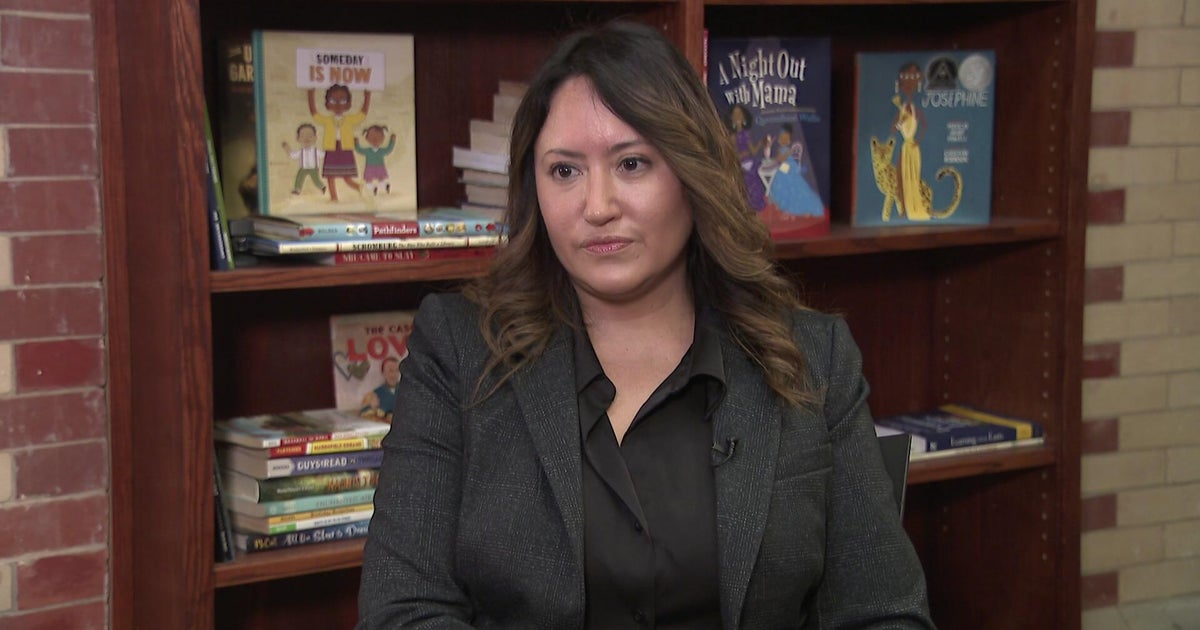
So should the current chancellor, Melissa Aviles-Ramos, keep her job? She spoke to CBS News New York education reporter Doug Williams about her future and recent issues in the schools system.
Mamdani’s plans for NYC schools chancellor
There is less than a month left before Mamdani takes office, and Aviles-Ramos said she does not yet know what the future holds for her.
“At this time, I do not know what is going to happen after Jan. 1,” she said.
She added, “Mayor-elect Mamdani did say at a presser once that he is open to considering commissioners, sitting commissioners, if they’d done good work, and my name was mentioned.”
The chancellor is referring to comments from Mamdani while campaigning back on Oct. 15.
“I think she has been doing a good job,” he said at the time.
Like the chancellor, CBS News New York hasn’t heard much from the mayor-elect since then about his plans for city school leadership. Our multiple requests for comment from Mamdani’s transition team over email and in person have gone unanswered for weeks.
Aviles-Ramos said she believes her work can continue in a Mamdani administration.
“I think about all the work that we’ve done and how we can move it forward in any administration,” she said.
Mayoral control of NYC’s school system
Regarding Mamdani’s plan to get rid of mayoral control of the school system, Aviles-Ramos said she sees pros and cons.
“There needs to be an opportunity for parents and advocates to voice their concerns before we roll something out,” she said. “And I think that you can absolutely accomplish that under mayoral control.”
While the chancellor didn’t explicitly say she disagrees with the mayor-elect, Aviles-Ramos credits mayoral control for the school system’s handling of the migrant crisis in 2022 and the implementations of new math and reading curriculums, all under the Adams administration.
“And I hope that that continues,” Aviles-Ramos said.
Immigration and enrollment
While the 2022 migrant crisis was a challenge for the school system, it also helped increase enrollment.
According to the school system’s preliminary data, however, enrollment has fallen 2% in the last year, the biggest drop since the pandemic. That data shows schools near migrant shelters have been especially impacted.
“Obviously, we’ve seen the impact of federal policies. Families are scared. We know there are cases of self-deportation and cases of deportation and detainment,” Aviles-Ramos said.
She went on to say, however, it is reassuring to live in a state “where we value our immigrant families and children.”
“While there are challenges, and I’m not trying to limit what those challenges are, we live in a state where we can work together with representation, advocates and families on how to move forward and weather the storm,” she said.
Classroom sizes
In 2022, Gov. Kathy Hochul signed a bill that will shrink classroom sizes in New York City schools.
Recently, there were discussions about pausing the reduction of class sizes, but in November, the city decided not to pause the work. It then, however, issued thousands of exceptions to schools, seemingly to meet the mandate.
“What does the pause lead to? Are we kicking the can down the road? … Is the law perfect? No. We’ve actually had opinions about the law since the very beginning here at NYCPS, so this is not new to us,” Aviles-Ramos said. “But there is a way for us to address those concerns with Albany, with lawmakers, without pausing after we’ve done some really great work.”
Aviles-Ramos said there is an opportunity for the school system to work with advocates and unions to propose changes without having to pause.
“I’ve said I’m amenable to doing that work if I were to continue,” she said, “and even if I’m not, I think the next chancellor should do that.”
School buses
After the threat of a public school bus driver strike in October, the bus companies ended up agreeing to a three-year contract, but concerns about routes and kids getting to school on time remain.
“Within all levels of the system, I have seen what parents go through with busing,” Aviles-Ramos said. “And so a three-year contract that is retroactive to the summer absolutely allows for the incoming administration to do their own needs assessment with parents and advocates and work on accountability structures for New York City Public Schools.”
She added, “We have work to do, as well as with the bus companies, so that when a longer-term contract comes up for renewal, we can have a plan to move forward.”
Special needs services court case
CBS News New York recently reported on accusations that the city Department of Education is both failing students with special needs and failing to follow court orders to fix those problems.
“Our whole team [is] really committed to having a large understanding — a broader understanding, I should say — around policy and practice and where the gap is. What are our policies — both state and local — and then what do they look like in-practice on the ground?” Aviles-Ramos said. “And if they are not working for every single child, then what resources do we need to make them work? And how are we engaging with parents and advocates so that they can inform our practices? That’s something our entire team is committed to.”
She added, “It’s important for us to face what is imperfect and ask for that help. We’ve opened our doors and said, we have work to do and we can’t do it alone.”
More from CBS News