
STATEN ISLAND, N.Y. — As we begin to enter the peak of flu season, the number of weekly cases on Staten Island has tripled, with nearly 500 borough residents being diagnosed with influenza since the beginning of October.
The New York State Department of Health conducts seasonal flu surveillance from October through May and provides weekly updates on the number of cases reported across the state.
The most recent data shows that there were 234 confirmed flu cases on Staten Island for the week ending Nov. 22, which is nearly triple the 79 local cases reported the week prior.
Since the beginning of October, when monitoring began, there have been 464 total flu cases on Staten Island, roughly 13% more than the 410 that had been reported by this time last year.
Staten Island isn’t the only borough that saw its weekly flu cases spike, which is common this time of year.
In fact, the Bronx saw an even greater week-over-week percentage increase, with the 248 cases reported in the week ending Nov. 15 more than tripling to 755 in the week ending Nov. 22.
In Brooklyn, there were 1,403 cases in the week ending Nov. 22, more than double the 679 that had been reported the week prior.
A similar increase was observed in Queens, where weekly cases increased from 649 to 1,341.
Manhattan saw the smallest increase from a percentage perspective, but the number of weekly cases still increased significantly from 235 to 423.
Across New York City, there have been a total of 9,563 flu cases reported so far this season, including 3,208 in Brooklyn, 3,112 in Queens, 1,537 in the Bronx, 1,242 in Manhattan and 464 on Staten Island.
The 9,563 citywide flu cases so far this season represent a significant 141% increase from the 3,975 that had been reported by this time last year.
At this time last year, Brooklyn had reported 1,067 cases, Queens had reported 1,039 cases, the Bronx had reported 739 cases, Manhattan had reported 720 cases and Staten Island had reported 410.
More on flu season
Seasonal flu viruses are detected year-round in the United States, but the flu is most common during a certain time of the year — during flu season.
The flu is a contagious respiratory illness caused by influenza viruses that infect the nose, throat, and sometimes the lungs, according to the Centers for Disease Control and Prevention. It can cause mild to severe illness, and sometimes lead to death.
The illness is believed to be spread mainly by tiny droplets made when people with the flu cough, sneeze, or talk.
The CDC stated that the exact timing and duration of flu seasons may vary, but activity typically begins to increase in October.
Most of the time, flu activity peaks between December and February.
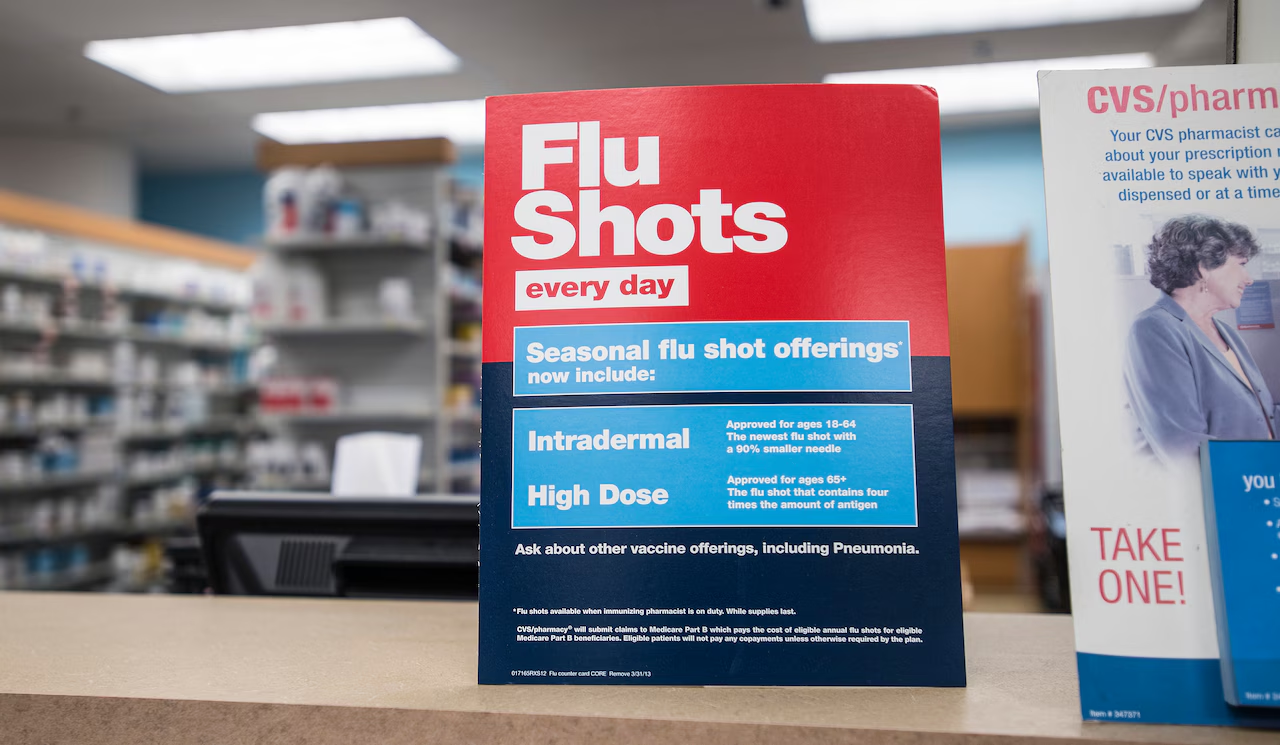
The CDC stated that the best way to prevent the flu is by getting a vaccine each year.
People who have flu often feel some or all of these symptoms:
Fever or feeling feverish/chillsCoughSore throatRunny or stuffy noseMuscle or body achesHeadachesFatigue (tiredness)Some people may have vomiting and diarrhea, though this is more common in children than adults.
It’s important to note, the CDC said, that not everyone who has the flu gets a fever.