
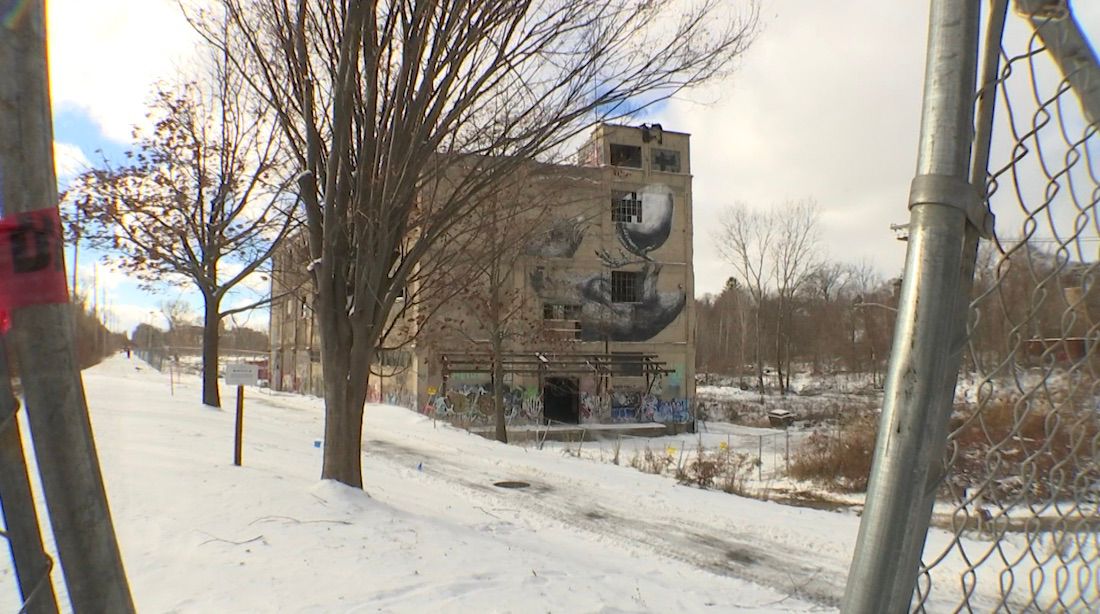
ROCHESTER, N.Y. — State environmental officials this week reached a deal with the company responsible for contamination of a piece of prime real estate in Rochester that’s finally being cleaned up. The old oil refinery is one of hundreds of brownfield sites across New York that are being transformed.
Just south of downtown Rochester, there is a second-hand store with a purpose.
“There’s a lot of stuff here,” laughed Mary DePrez, manager of Rochester Greenovation. “Our main mission is to keep usable items out of the landfill and help the community with good prices.”
Greenovation. The name speaks for itself. A store full of thousands of upcycled items. Things that people no longer wanted.
“It’s a throwaway society, and we don’t like that,” she said.
It’s a business that sits just a few hundred feet from one of the least green sites in the city. But that’s changing. The building next to the Genesee River is the most visible marker of a 33-acre site that’s full of contaminated soil and groundwater. Vacuum Oil Refinery closed in the 1930s, and the site has been vacant ever since.
“You have an area that’s polluted,” she said. “It’s been polluted for 95 years.”
After years of court battles and questions over who should pay for cleanup, Exxon Mobil will investigate just how contaminated the site is, and reimburse the state $250,000 for cleanup that’s already happened.
“And then the question was, who should pay for it?” said Evans. “And we believed all along that the folks that polluted it.”
The old refinery is one of about 670 active brownfield cleanup sites across New York. Every major city in the state, and many smaller municipalities have brownfields. Hundreds more have already been cleaned up, like the former Bethlehem Steel mill near Buffalo, which is now an industrial park, and the old Tobin’s First Prize plant near Albany, where apartments and a hotel are planned. Cleanups which can take years to complete.
“We want to make sure that we’re doing all the work we need to,” said Tim Walsh, DEC Region 8 director. “To make sure we understand the situation, make an assessment of what needs to be done and then work with our partners to find that right solution.”
In Rochester, once the refinery site is cleaned up, plans call for a park and some sort of development.
“Now, an area that was basically a wasteland for the last 95 years is now going to connect a neighborhood,” said Evans.
A neighborhood that’s losing a contaminated eyesore — and gaining something much better.
“You don’t need an abandoned building anywhere,” said DePrez. “So to have it nice looking, yeah, that just makes us look better, too.”