
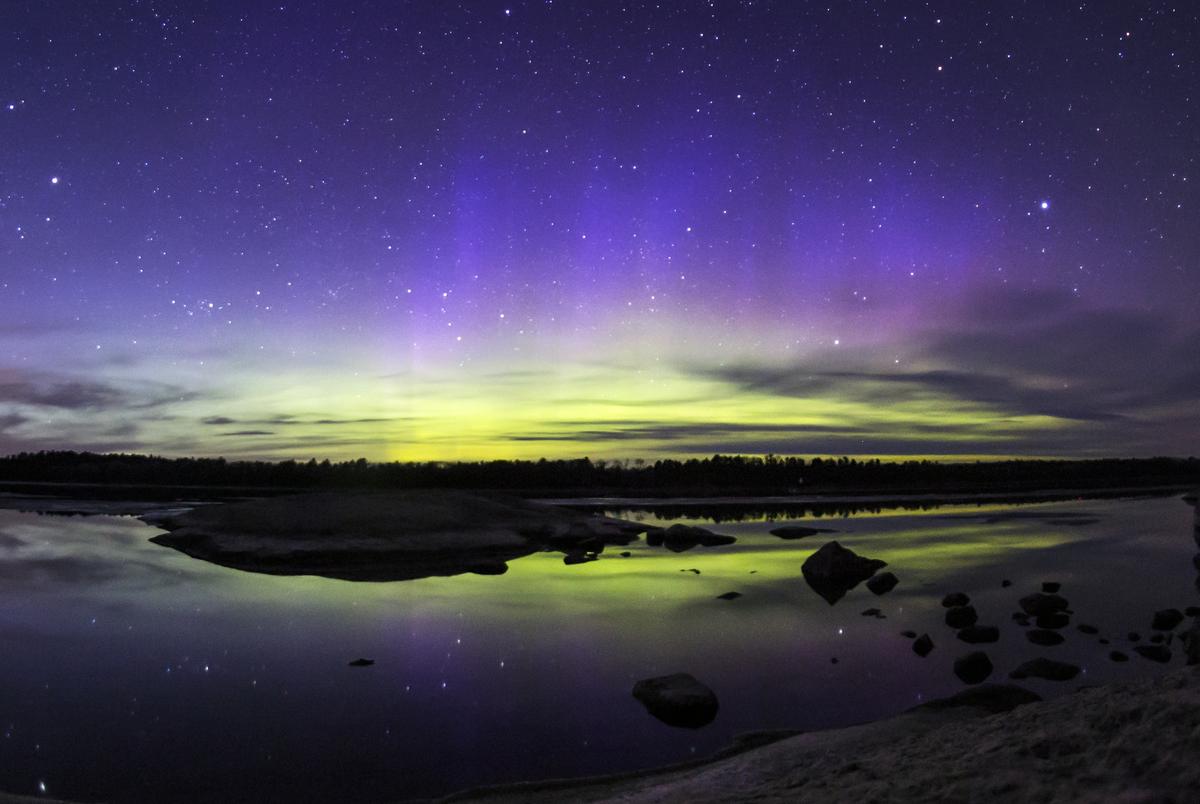
Could we see the Northern Lights, or will it be another bust? Scientists say that another solar flare has erupted from the surface of the Sun, which could bring the Aurora Borealis as far south as New York.
However, there are a number of factors that could prevent the Northern Lights from being seen; such as timing, strength of the solar storm, or cloud cover.
What Are the Northern Lights?
The Sun’s solar winds send particles through space and towards the Earth at millions of miles per hour. The Earth’s magnetic field deflects the solar wind, stretching the field until it sort of snaps these charged particles back down toward the planet.
See Also: Biggest Meteor Shower of the Year Arrives Above New York State
Once these particles collide with the gases in our atmosphere, they begin to glow in a variety of ghostly displays and colors, according to the Canadian Space Agency.
Northern Lights Could Once Again Be Seen Above New York State
NOAA’s Space Weather Prediction Center posted on Facebook that a “full-halo coronal mass ejection” is expected to impact Earth early to midday Tuesday, “potentially causing periods of G3 geomagnetic storming”.
The very active period of solar storms continues , as the Aurora Borealis has already shown as far south as New York over the past year. The reason for the increased displays is that our Sun is at its peak in its 11-year annual cycle for solar activity.
15 New York State Observatories To View Space Like The James Webb
NASA and the James Webb Space Telescope have gotten the world excited about space once again. With breathtaking photos from space, it’s safe to assume that we’ve all got a little bit of “Space Fever.” Where can you look at stars across New York State? Where are the top observatories and places to view space?
If you’re looking to look at the stars, these are some of the top places to sit back and relax from Earth to see them. We did the research for you, and we know these are open to the public. Here’s a list of 15 observatories to check out:
Gallery Credit: Dave Wheeler
Biggest Meteor Shower of the Year Arrives Above New York State
Space.com reports that the Geminid meteor shower will run through December 24, and peaks overnight on December 13 and 14. The Geminid meteor shower is the debris left from the rock comet 3200 Phaethon. The shower averages around 150 meteors per hour.
The meteor shower gets its name because it can be seen as white or yellowish streaks in the night sky, coming from the direction of the constellation Gemini.
What also makes this event unique is that the Geminids are the product of an asteroid, instead of a comet, according to Space.com