
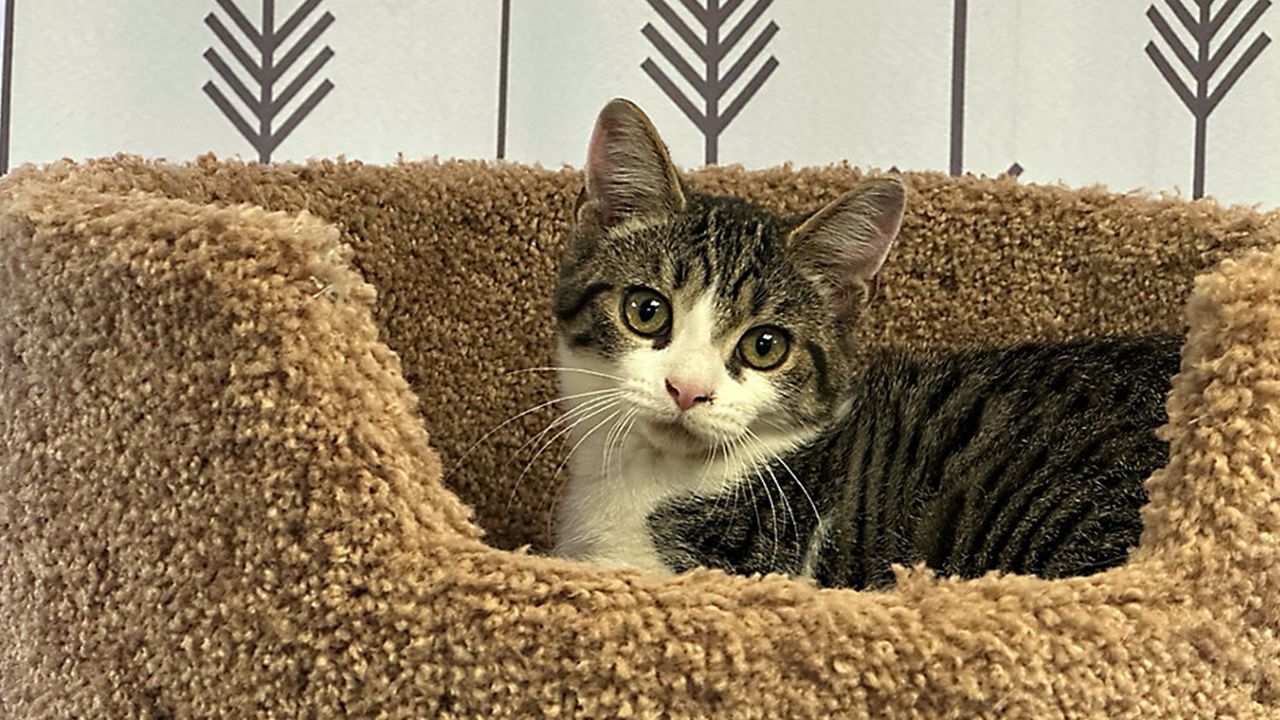
A new law is going into effect that will impact every animal shelter in the state, creating care standards for rescues and penalizing organizations that don’t comply. The Companion Animal Care Standards Act was unanimously passed by the state legislature in 2022.
While the standards could have a positive impact on pets, it’s causing concern among people who are responsible for adoptable animals.
Several smaller rescues, mostly foster-based, are worried about the new law. Some of them say organizations like theirs weren’t considered in the writing of these new rules.
“I fear for what’s going to happen,” said Tanya Semchenko, president of the Oswego County SPCA.
What You Need To Know
A new state law going into effect on Dec. 15 will enforce standards for animal rescues in New York
The Companion Animal Care Standards Act was unanimously passed by the state legislature in 2022
Small foster-based rescues are concerned that these standards are too diffcult and costly to meet, and will result in organizations closing
Semchenko, like everyone at the Oswego County SPCA, is a volunteer. So far this year, the SPCA has rescued almost 300 cats.
“But unfortunately, these new laws are going to be making things more difficult for us, and therefore it’s going to limit the number of animals we’re going to be able to help,” said Semchenko.
They say they’ve been slowing their animal intake, knowing the upcoming expenses associated with following the new rules. Some of the requirements for facilities in the new law would include requiring nonporous floors, maintaining temperatures between 60-80 degrees, proper drainage, and keeping food in rodent-proof containers. Rescues would also need to document socialization, feeding and cleaning for each animal. Staff and volunteers will have to do several trainings annually.
“Most volunteers work full-time jobs. To ask them to go through 8 or 10 hours of training on top of what they’re already giving to us, people aren’t going to volunteer; they’re not going to foster. And then my question for the state is, what do we do with the animals?” said Semchenko.
Semchenko is concerned about the financial aspect of complying with the law. She rents space in a church basement, which houses a cat room and their thrift store, which funds the rescue. The Oswego SPCA estimates it could take between $22,000 and $35,000 to meet the new requirements. But officials say satisfying the new law might require them to find a new permanent space. That’s funding Semchenko says she would rather spend on the animals the SPCA is caring for. Officials say, despite the existence of a state grant available to help shelters, the Oswego SPCA wouldn’t qualify for grant money because it’s technically not a shelter.
A Syracuse-based rescue, Recycle-A-Bull Bully Breed Rescue, is facing a similar hurdle.
“The residentially owned fosters, we can’t even apply for a grant to pay for shelter programs to streamline all this new paperwork that we have to do. That is something we’re going to have to eat at cost,” said Stephanie Wise, founder of Recycle-A-Bull Bully Breed Rescue.
Wise says she gets as many as 50 emails a day for owner surrenders, and she doesn’t have enough fosters to meet the demand.
“We’re all burnt out after COVID. Rescue has just been hard, and now it’s going to get harder,” said Wise.
“There’s going to be places that aren’t going to be able to sustain this, and they are either going to not be able to obtain a license, which would, in essence, shut them down. Or they’re going to [decide] it’s just too many hurdles and it would be better to step back and hope somebody else steps up to take the place,” said Wise.
Dr. Bridgette Kennedy, the companion animal program manager with New York State Agriculture and Markets, said there have been 15 orientations across the state to inform rescues about the new law. During those sessions, owners can meet the inspectors who will be coming to their facilities. Foster organizations without a facility will receive paperwork inspections.
“We want them to feel supported, and we know that these are really, really hefty standards, and we want to make sure that we’re all on the same page going into this, because these are really hard standards for anyone to meet, really,” said Kennedy.
Both Semchenko and Wise believe this new law needs amendments to account for smaller foster-based rescues like theirs.
“The standards themselves are very good. The implementation is where we run into concerns and the idea of one size fits all, which is why we’re not saying get rid of 26c, we’re saying fix 26,” said Semchenko.
“Not saying that we shouldn’t have better standards, but it needs to be realistic, and it needs to be able to still let us do what we’re trying to do, which is save animals on our own dime out of the goodness of our own heart,” said Wise.
Preparing for the new law, going into effect on Dec. 15. The law will be purely educational for the first year, and penalties won’t be issued until Dec. 2026 at the earliest. Inspectors will do informational inspections this year to let people know what they need to adjust before the law is enforced.
For any New York state rescue applying for grant money through the Companion Animal Capital Projects Fund, the deadline to apply is Jan. 30.