
Shams Alyemen in Albany wins you over with traditional Yemeni cuisine built on clay pots, bread and a sense of easy abundance. Open since September after being under development for the better part of a year, the restaurant’s dining room makes the priorities clear: tables are big enough to accommodate a decadent spread, and tea arrives steaming to close out the meal. The food proves that some classic dishes need only dedication to tradition to establish their lasting power. The appeal is instant — not in opulence, but in deep, immediate satisfaction.
Arriving bubbling hot in a clay pot, the fahsah acts as the center of gravity for your meal. Stewed lamb pulls apart while still tasting robustly like itself, sitting in a concentrated, savory sauce. You keep chasing the flavor, sweeping every last bit of broth with rashoosh bread that has a wingspan as wide as the table. A slow-cooked preparation traditional in Yemeni menus, fahsah builds a complex profile around cumin, turmeric, coriander and allspice. The result is a depth of flavor that leaves a profound impression.
Before the table fills up with food, the meal opens with a gesture of hospitality: a cup of maraq, a golden turmeric broth, and an Arabic salad. The soup holds spice without heaviness, while the fresh lettuce and tomatoes in homemade dressing offer contrast and crunch. Neither demands attention, but both make sense as starters for a meal.
Article continues below this ad
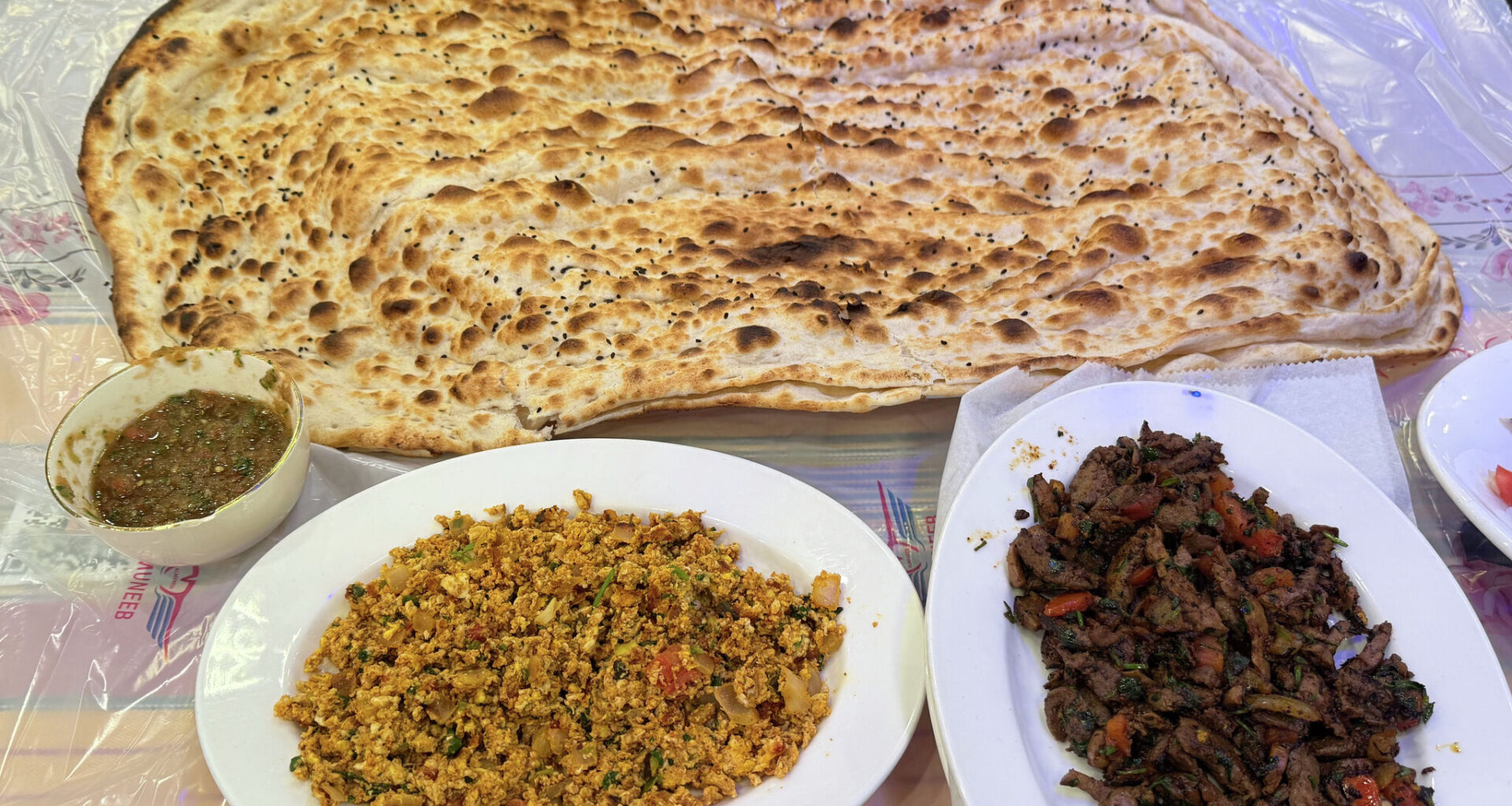
A large Yemeni flatbread called rashoosh or malooh can be used as a conveyance and/or envelope for dishes at Shams Alyemen restaurant in Albany, including Yemeni-style shakshuka, center, and liver with onion and pepper, right. At left is a spicy condiment called sahawiq.
Stephanie Gravalese/For the Times Union
Along with the starters, we got a heaping teacup of red sahawiq. Made with tomato, cilantro, garlic and a hot pepper in the jalapeno family, the condiment adds sharp heat and acid to anything on the table. It plays well against the richness of liver and stewed lamb, but the bread was the key to building each bite; reaching for it became a reflex. Service was warm and attentive; our server noticed we had ordered several dishes that came with bread and offered to bring out a variety. It was an eye for detail that let us experience more than we might have known to ask for.
Dishes continued to arrive. With its eggs loose and lightly scrambled, the Yemeni-style shakshuka is made with a hearty mix of tomatoes, onions and spices. With enough structure to scoop easily onto bread, we added sahawiq, which gave the dish a lasting heat without overpowering it. Of everything on the table, however, the lamb liver posed the biggest question mark — and wound up delivering one of the most compelling bites. Cooked down with tomato and onion until coated in its own spiced oil, the cubes of liver offered a dense yielding texture.
In the Yemeni version of shakshuka, eggs are scrambled with tomatoes and vegetables rather than poached in a tomato-based stew.
Stephanie Gravalese/For the Times Union
Simmered with vegetables into a thicker stew, chicken agda, also called loubia, is made with chicken stewed in aromatics until the meat softens completely. Bread does most of the work here, too, tearing easily to scoop up the mix of poultry and vegetables.
Article continues below this ad
Shams Alyemen is on North Allen Street next to the fast-food spot Pepper Jack’s, which has been open for 25 years.
Stephanie Gravalese/For the Times Union
Locals will recognize the address as the former home of the soul-food spot Madame Chef and, before that, Rita’s Lebanese Cafe. Shams Alyemen was opened by two friends for whom staff would not provide surnames: Abdul Jabbar and Khaled. Inside, black textured walls lined with gold sconces and overhead ring lights give the space a modern sheen, but the spirit remains functional. The tables are noticeably wide and often covered in plastic, built with the intention to handle the splash and share of communal eating. Once the breads and clay pots start arriving, you find yourself happily making room for one more plate. These details tell you something before the food even comes out: This is a restaurant designed for meals that unfold across the table, not ones that stay fixed to a single plate.
The space on North Allen Street that has been home to Shams Alyemen since September previously was the site of the soul-food restaurant Madame Chef and, before that, Rita’s Lebanese Cafe.
Stephanie Gravalese/For the Times Union
Serving breakfast, lunch and dinner, the halal menu invites exploration. Beyond the clay pots, the kitchen offers large-format dishes like haneeth — slow-roasted lamb or chicken served over rice — and grilled fish. The beverage list keeps things simple but fresh. Alongside standard sodas, the kitchen blends its own juices, including lemon, strawberry and mango, that offer a bright, sweet counterpoint to the bold spices of the meal. It is a place where a feast of roasted meats, stews and bread can be had for a price that feels surprisingly fair, given the portion sizes.
Article continues below this ad
For dessert, basbousa and cashew baklava rolls provide a wonderful contrast in textures. The basbousa, a semolina cake lightly soaked in syrup, revealed a light rosewater essence. We took small forkfuls, the sort of attentive bites when you want something to last. The cashew baklava rolls were tighter in structure and easy to pick up by hand, with a cashew filling that gives a denser, earthier bite than the usual walnut version. Against the basbousa’s delicate crumb, it offered a beautifully balanced study in textures.
Among the desserts are babousa, left, a semolina cake lightly soaked in syrup, and baklava rolls made with cashews instead of the more common walnuts.
Stephanie Gravalese/For the Times Union
While we worked through the sweets, we sipped Adeni tea. Listed on the menu alongside standard Yemeni hot tea, the Adeni version is the one to order. A staple of Yemeni hospitality, it is an aromatic, deeply flavorful emulsion of black tea and milk, fragrant with spices. The aroma — cardamom first, then cinnamon and clove — met me before I took my first sip. The milk gave the drink a mellow edge and a weight that encourages you to drink slowly. While it felt like a grand finale, it functioned more like a pause, letting you gather yourself after a meal. The final, spiced warmth was the perfect, comforting punctuation mark.
Article continues below this ad
Shams Alyemen
Address: 188 N. Allen St., Albany
Hours: 11 a.m. to 11 p.m. Monday to Thursday, 11 a.m. to midnight Friday to Sunday
Price: Appetizers, $5 to $16; main dishes, $16 to $30; desserts, $3 to $14
Info: 518-275-0407 and shamsalyemen.com
Etc.: Small lot and street parking. ADA-accessible.
A good meal relies on tradition carried out with care. Every component, from the hearty fahsah to the final cup of Adeni tea, feels deliberate. Shams Alyemen doesn’t need to shout to get your attention. It offers a dinner where you don’t have to look for the quality because it is right there on the plate.
End the meal with dessert and Adeni tea. Aromatic with spices and deeply flavorful, the tea is named after the port city of Aden on the Gulf of Aden, which connects the Red Sea and Arabian Sea.
Stephanie Gravalese/For the Times Union