
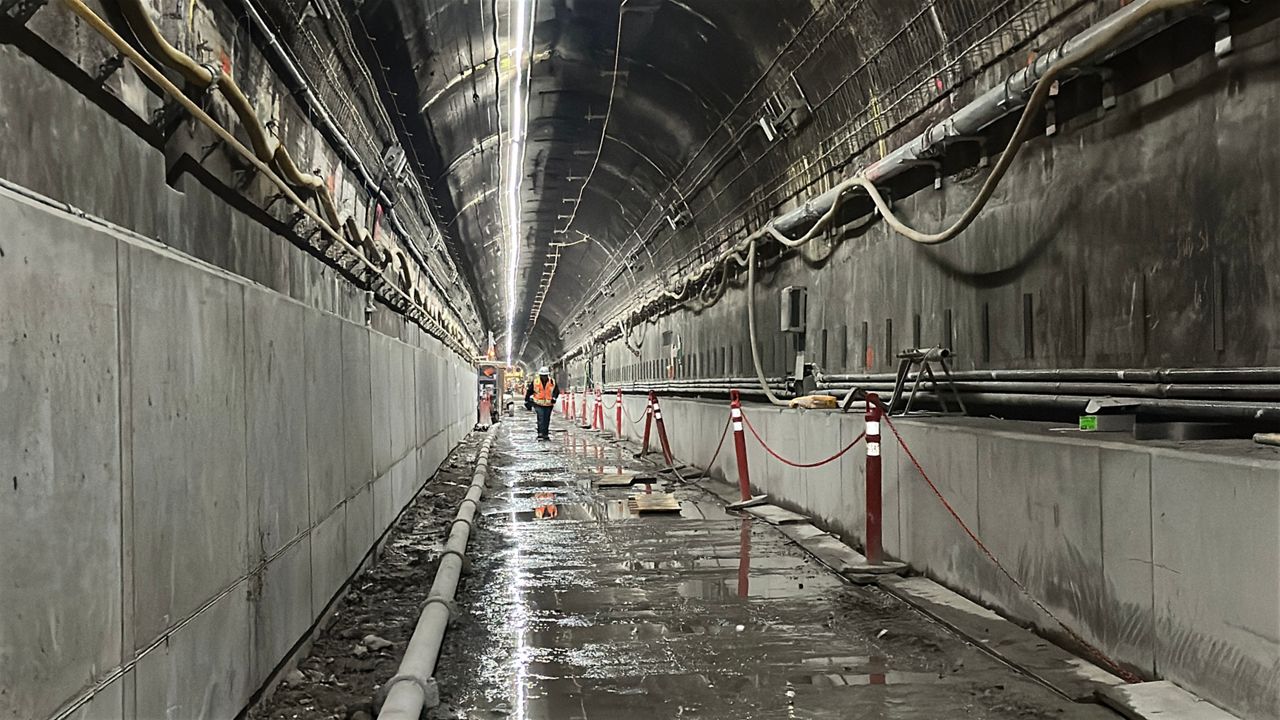
In one of four East River tunnels, 350 workers a day labor 24/7 as the 115-year-old tunnel crumbles from 14 million gallons of water that inundated it during Hurricane Sandy.
“We had structural problems with the bench walls themselves, and the utility systems that were running through them had been damaged by the hurricane, the Superstorm Sandy,” Warren Lebeau, Amtrak’s vice president for infrastructure delivery, said.
What You Need To Know
Two of four East River tunnels are 115 years old and falling apart from millions of gallons of water inundation from Hurricane Sandy
The 13-month project is not only critical to Amtrak’s operations, but also the LIRR and NJ Transit
Despite early concerns, MTA officials are pleased with Amtrak’s progress and response to situations that have arisen from having one less track in service
Now, brand-new bench walls are going in, and new wiring will be strung inside. Even the ballast stones the tracks were on will be replaced by concrete.
Also, improved safety: a bench wall will be lower to allow for easier evacuations, and the tunnel will now be up to modern fire code. Amtrak says all this work could not be done on nights and weekends.
“Every Monday you’re running service, you’re having to put a bunch of temporary work back together, stringing temporary cables along the walls, trying to keep the trains moving,” Laura Mason, Amtrak’s executive vice president of capital delivery, said. “And then Friday night you would spend most of that day, if not Saturday as well, tearing out those temporary works to get maybe a few hours’ worth of work done.”
The MTA was concerned about only having three tunnels in use — that it would affect service if something happened in the other tunnels. The agency says it deserves some credit for Amtrak sticking to schedule and mitigating any issues from losing one tunnel.
“I think we’ve done a good job of mitigating them,” LIRR President Rob Free said. “And still we’ll look. We’re at 96.3% on-time performance for the Long Island Railroad, and that goes to show what we did to try and make sure that our system is still reliable. The governor as well recognized that and helped us, you know, advocate for the riders.”
“I think teamwork is what matters, right,” Mason said in reaction to Free.
When the tunnel is complete in July, it will carry about 150 trains a day more reliably for the next 100 years. Then, after a three-month transition period, work will begin on the other tunnel damaged by Sandy for another 13 months.