
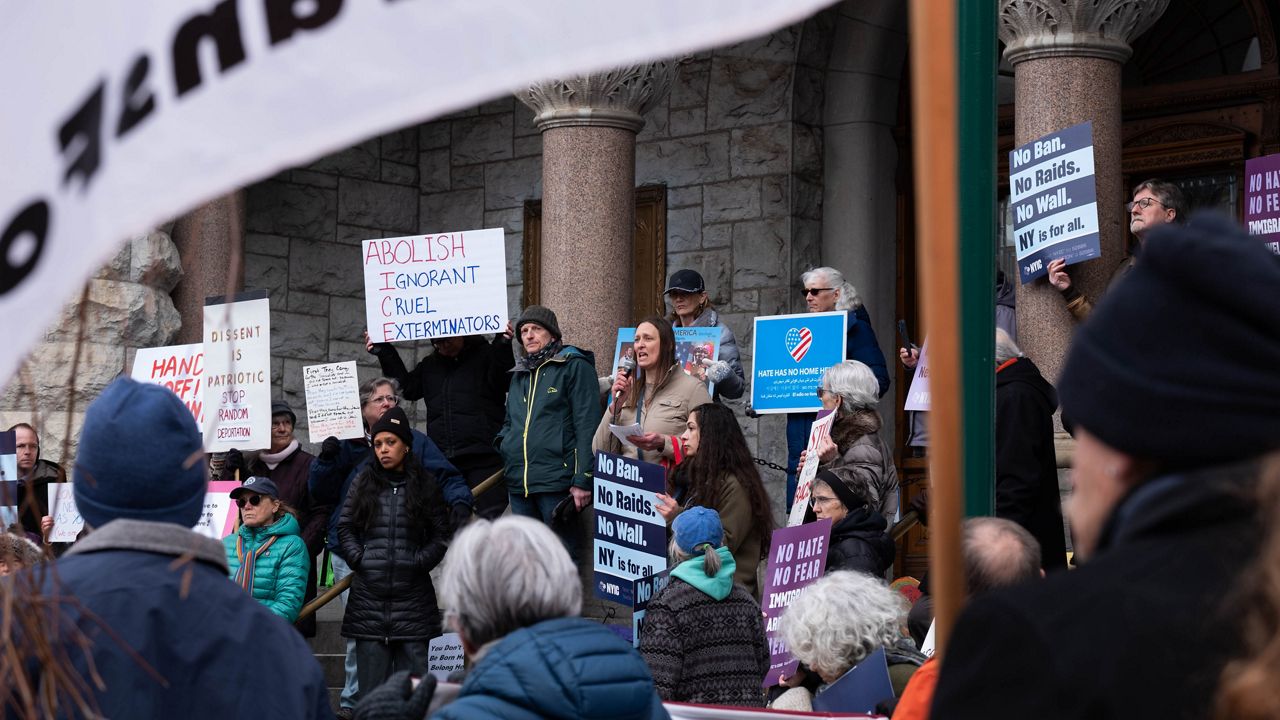
Newly available data detail the sharp rise in immigration enforcement activity and who has been impacted in New York, leaving immigration advocates concerned about what it means for the next three years of the Trump administration.
The New York Immigration Coalition analyzed data from the Deportation Data Project, which compiled detention information from Immigration and Customs Enforcement obtained through Freedom of Information Law requests. The data contains details about ICE detentions from September 2023 through July of this year.
“We document using data from ICE themselves, that Latinos are being disproportionately impacted by ICE activity in the first six months of the Trump administration. The second important takeaway is that we show that the methods of arrests that ICE has been using since Trump’s second inauguration have changed quite a bit and are ending up impacting more people without any criminal record than people with criminal records,” Chloe East, an immigration expert from the University of Colorado Boulder, said Wednesday during a press conference.
According to the data, people from Central and South America make up 25% of the immigration population in New York but account for 74% of ICE arrests.
“For example, Ecuadorians are 4% of non-citizens in New York state but they are 24.9% of ICE arrests,” said Mario Bruzzone, vice president of policy for NYIC. “Mexicans are 5.6% of non-citizens but they’re 9.9% of ICE arrests. “Guatemalans are 1.6% of non-citizens but 8.4% of ICE arrests and Hondurans, 1.3% of non-citizens but 6% of ICE arrests.”
The data shows that men accounted for 89% of those arrested but make up 50% of the immigrant population in the state.
NYIC broke down ICE arrests based on two categories: law enforcement arrests where the person detained had previous interaction with law enforcement; and community arrests that occurred at apartment complexes, workplaces, street corners or other community settings.
“Prior to the Trump inauguration, about 50% of arrests had a criminal conviction, and that has continuously fallen as ICE has ramped up its activity,” East said.
Now, approximately 70% of arrests by ICE have no criminal conviction or previous record, the data show. East said when the agency ramps up its community arrests, it deters its own ability to prioritize those with criminal records. The data reflect that ICE arrests of people with no criminal records have grown three times faster than arrests of those with criminal convictions.
The report does not include newly published data from July to October of this year, but after comparing the new data with their previously available data, East said the trends remain the same.
“We see that Latinos continue to be disproportionately targeted, and the targeting of people with criminal convictions continues to be quite low,” East said.
The NYIC report also said that the increase in immigration activity makes it harder for businesses to hire workers, limiting potential growth and leading to lower hiring of other workers.
“With immigrants comprising of 44% of the workforce in New York, mass deportations have hurt and will continue to hurt New York,” the report reads.