
Amanda Ross-Ho’s Grand Gestures
(Inventory Press, 2025)
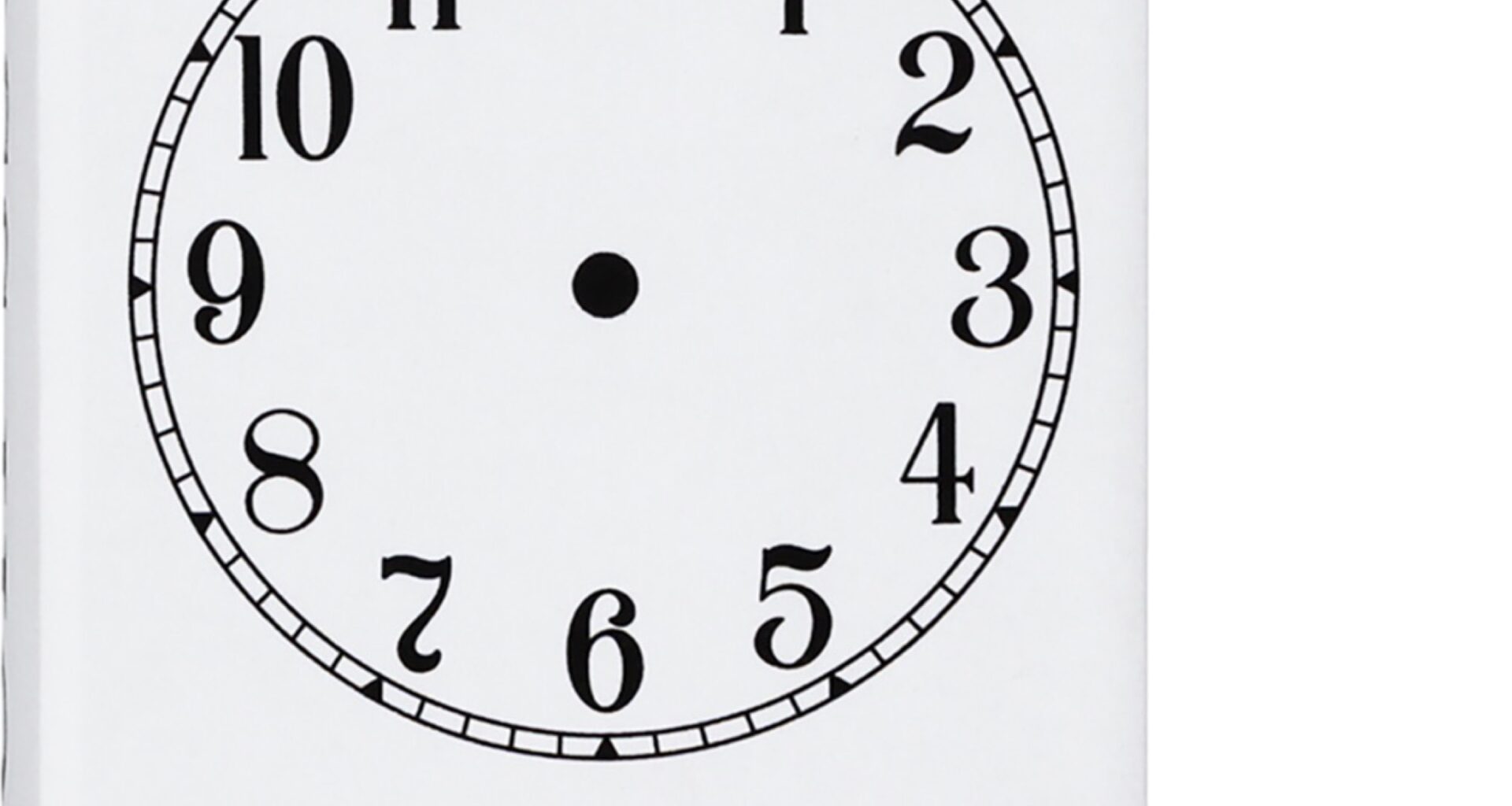
Los Angeles artist Amanda Ross-Ho creates curious environments and objects, enlarging and altering everyday items in a humorous, sometimes haunting fashion. Ensconced in a puffy white cover featuring an armless clock face, this absorbing overview of Ross-Ho’s past decade of artmaking includes Catherine Taft’s insightful essay, Roos Gortzak’s succinct interview with the artist, and a photographic catalogue of her work divided by year. In line with Ross-Ho’s interest in scale and theatricality, the text is oversized and the photographs vacillate in size on the page, flicking from small, neatly bordered rectangles to full-bleed images that flow across double-page spreads. Ross-Ho said that she wanted the book to resemble a prop, “an exaggerated, hyperbolic object that is both a thing and the absence of that thing,” and its self-conscious design amplifies the themes of her work to off-kilter perfection.
Barbara T. Smith’s I Am Abandoned
(Primary Information, 2025)
Recently, a friend told me about the burgeoning of adolescent girls who develop parasocial romantic relationships with their AI chatbots. AI, they reasoned, lent a much more sympathetic ear to their problems than the oblivious boys who roamed the halls of their high schools. Having never used ChatGPT in my life, I was perplexed, but not necessarily repulsed: I remember girls of my own generation turning toward slightly different online platforms (Tumblr, AO3) for very similar reasons.
Like a digital-era Cassandra, artist Barbara T. Smith portended this phenomenon by almost fifty years. In her 1976 performance I Am Abandoned, which was featured in the California Institute of Technology (Caltech) exhibition The Many Arts and Sciences, Smith staged a dialogue between two early chatbots: DOCTOR, a surrogate therapist, and PARRY, a paranoid schizophrenic. Viewers were invited to interact with them as well. They approached the chatbots with cautious flirtation—one wrote, “I love the style and verve of your conversation.” This sexual tension escalated when Smith and her team deliberately attempted to “seduce” the doctor. Pivoting toward the philosophical, they asked, “Do people really fuck another or do they fuck the image of another in their minds?”
In Primary Information’s eponymous book, these transcripts are brought together with other performance ephemera. Most notable is an aggrieved letter that Barbara T. Smith wrote to David Smith, Director of Caltech’s Baxter Art Gallery, who abruptly cut the performance short by terminating power to the computer terminal. David Smith felt that Barbara T. Smith and her engineers were too “noisy” and disrupted viewers’ engagement with the more traditional works on view. Barbara T. Smith pushed back: not only was she “pissed,” but she felt like she was not heard. I can’t help but hear in her letter echoes of those girls who, decades later, would trade in heteropessimism for techno-ambivalence by shirking men for machines.
Alice Coltrane, Monument Eternal
Edited by Erin Christovale
(DelMonico Books, 2025)
Published on occasion of the eponymous exhibition at the Hammer Museum in 2025, Monument Eternal follows the life and legacy of Alice Coltrane. Part catalogue, part archive, part memorial, the book takes its title from the Detroit-born musician’s 1977 autobiography—written five years after her move from Long Island, New York, to Southern California. This journey was a physical and a spiritual one: following the untimely death of her husband, John Coltrane, in 1967, Alice delved deeper into a spiritual practice, moving to LA and founding an ashram, a transition that can be heard in her polyphonic jazz hymnals from this era and beyond.
The Hammer’s exhibition and this catalogue connect these threads, bringing together materials from Coltrane’s archive alongside responsive works by nineteen contemporary artists including Ephraim Asili, Leslie Hewitt, Rashid Johnson, Jennie C. Jones, Shala Miller, Cauleen Smith, and Martine Syms.
Stamped with gold lettering, the book is bound in a woven, deep orange cover, a color, in accordance with Hindu tradition, that Coltrane associated with “the highest realization or cosmic consciousness while living on this Earth.” Devotional texts from the autobiography are scattered throughout the catalogue, which opens with an introduction by exhibition curator Erin Christovale, followed by a conversation between Ashley Kahn and the musicians’ children Michelle and Ravi Coltrane, profiles on the exhibiting artists by Mira Dayal and Nyah Ginwright, a roundtable with members of Coltrane’s ashram, an annotated discography, and lushly colored photographs of the Coltranes, handwritten notes, sheet music, and other archival matter.
The book, as with Coltrane’s music, illustrates a spiritual reckoning within a Black cultural tradition. What endures in this affectionate portrait—which recapitulates the musician’s movements through grief, healing, sonic and self-transformation—is the intimacy she found in transcendence, a means of self-actualization through self-possession.
Tina Girouard: SIGN-IN
Edited by Andrea Andersson and Jordan Amirkhani
(Dancing Foxes Press and Rivers Institute for Contemporary Art & Thought, 2025)
Tina Girouard: SIGN-IN opens with a “Glossary of Terms” related to the places, themes, and materials that formed the artist’s work. These include locations she lived and performed, including 10 Chatham Square and 112 Greene Street, as well as more theoretical concepts such as “camouflage,” which “linked her dual commitments to natural landscapes and patterns and revealed her fascination with disguise, masks, and veils.” The glossary doubles as a chronology of sorts, taking us through the artist’s multimedia practice spanning her time in the downtown New York arts scene, her home state of Louisiana, and studio location in Port-au-Prince, Haiti. This hefty first monograph (nearly four-hundred pages) on the experimental artist, who passed away in 2020, utilizes this collage aesthetic throughout, splicing together pages from her notebooks and performance notes (without source captions until you find the loose insert stuck between the pages), contact sheets documenting her performances, and scholarly essays by Andrea Andersson, Pamela M. Lee, and Aruna D’Souza, among others. Consuming the book offers a much-needed deep dive into Tina Girouard that rewards opening at random, quick flipping, and slow reading. PS—open the dust jacket to discover another wonderful facsimile reproduction!