
Photo-Illustration: Joe Darrow; Source Photos: Getty Images
In 2021, the Hollywood producer Brian Grazer was on a bike trip in South America with some friends, including media mogul Barry Diller, former Allen & Company president Herbert Allen Jr., and former Activision chief Bobby Kotick. A registered Democrat at the time, Grazer was expressing his frustration with the woke fever gripping the country and was considering holding a salon at his Santa Barbara home to discuss the issue. Allen suggested Grazer get in touch with his son Herb Allen III, who now runs the family’s boutique investment bank, which is known for its billionaire-heavy media-tech confab, held each year in Sun Valley, Idaho. When Grazer spoke to the younger Allen, he said, “You should talk to Bari Weiss.”
Weiss had recently arrived in Los Angeles from New York, a city she’d left behind in 2020 along with her job editing and writing for the New York Times’ “Opinion” section. Although Weiss technically left of her own volition — blasting the paper for its “illiberal environment” in her publicly posted resignation letter — it felt as though she had been hounded out in the wake of the Tom Cotton op-ed fiasco, during which her boss, James Bennet, had been forced to step down amid a newsroom revolt. Grazer invited Weiss and her partner, the then–Times journalist Nellie Bowles, to his home, as well as some friends including Kotick, New England Patriots owner Robert Kraft, and Warner Bros. Discovery CEO and president David Zaslav. Weiss knew Kraft only vaguely through Columbia Hillel and didn’t recognize Zaslav at all. She had never met Kotick, who would become a key investor in the Free Press, the news and opinion site she and Bowles would launch on Substack in 2022. But her naïveté was part of her charm — as was her evident talent. “She struck me as someone with moneymaking DNA,” said Kotick.
In the years since, Weiss, now 41, has gone from meeting moguls to becoming one. She turned her anti-woke, anti-elite, and often MAGA-tolerant newsletter into a full-fledged media company, then sold it in October for $150 million to David Ellison, the 42-year-old chairman of newly consolidated Paramount Skydance. As part of the deal, Weiss became the editor-in-chief of CBS News — the kind of legacy outlet she burnished her name railing against. Only a few years earlier, as a mid-level editor at the Times, Weiss had expressed anxiety to colleagues about asking for a $10,000 raise. Now she has returned to New York as one of the most powerful and well-remunerated people in all of media. “Coming out west to get your fortune is kind of a timeworn tradition,” a friend of Weiss’s said. But as Broadway producer and media strategist Alex Levy, another friend, put it, “Bari did not set out to get rich. She set out to make an impact. And the rich is just incidental to that.”
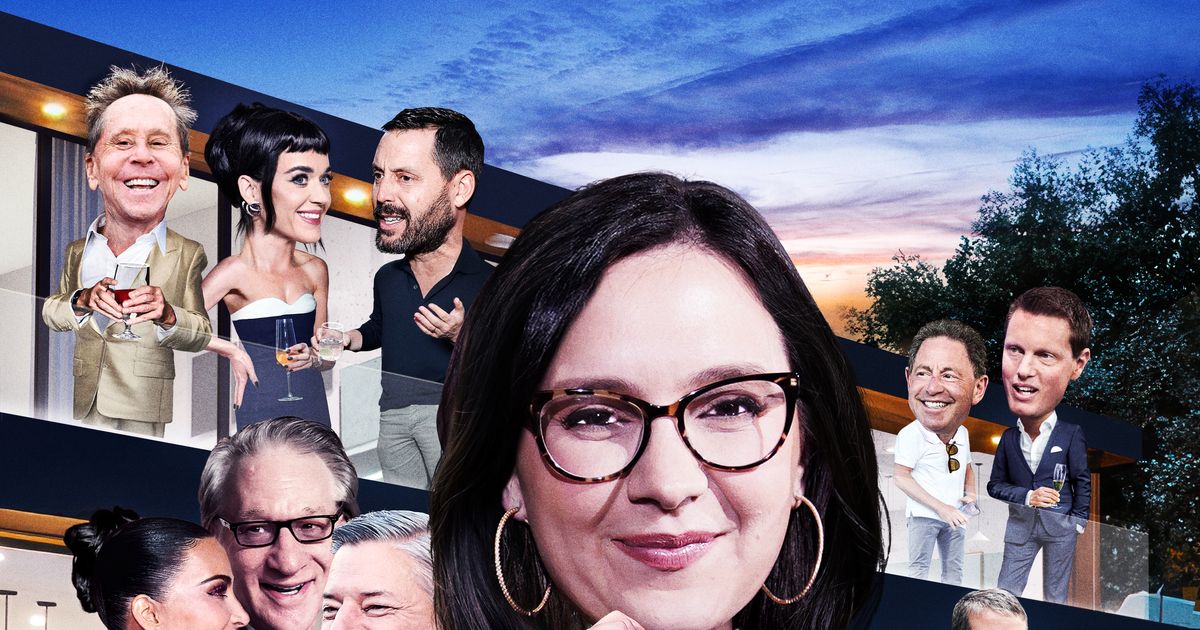
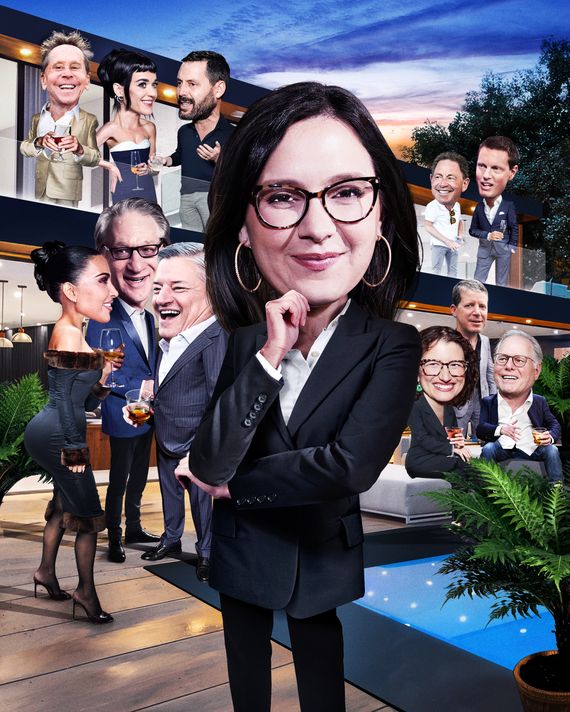
The move to L.A. was essential to Weiss’s reinvention. If New Yorkers had cast her out under a hail of jeers, Angelenos embraced Weiss for a variety of reasons, not least because, in this industry town, journalists are exotic animals. “You go to a dinner, and you’re automatically the most interesting thing in the room because you don’t do the thing that they do,” said one L.A.-based writer. But her main appeal was politics. While the kings of Hollywood were struggling to understand the activist energy and eat-the-rich mentality infiltrating their studio lots and workplaces, Weiss — a Columbia-educated, Times-credentialed gay woman who cried when Donald Trump was first elected — validated their concerns that this had all gone too far. People wanted her at their dinners and events. “She kind of became this party trick for wealthy Westside executives who wanted to have a certain kind of conversation that they thought they couldn’t have in public,” said one media executive.
Pledging to support the Free Press, whether or not they actually read it, became a statement in and of itself for erstwhile liberals in California dismayed by what they saw emanating from the woke centers of New York and Washington, D.C. The allegiance to Weiss only deepened after October 7, 2023, when pro-Israel contingents grew even more exasperated with the mainstream media for failing to cover the subsequent war to their liking. Weiss, a proud Zionist who quite literally wrote the book on antisemitism a few years earlier, was perfectly positioned to fill the void. “As always in life, you need a little luck,” said an entertainment executive. “What happened with her is the Zeitgeist aligned with what she’s good at. Bari, to her credit, didn’t have an institution behind her; she created a vehicle.”
Ellison is a vocal supporter of Israel who has increasingly relied on his allies in Trumpworld to muscle through his deals, and his decision to tap someone with zero experience running a television network has unnerved staffers at CBS, who fear Weiss will remake the venerable news division in the Free Press’s image. She has already orchestrated a 60 Minutes interview with Trump, months after the president successfully sued the show’s parent company on flimsy claims of deception, and held a town hall with Erika Kirk, the widow of slain conservative activist Charlie Kirk. Weiss conducted the town hall herself, suggesting she will be an on-air persona as well as an executive. She has already overseen widespread layoffs at the company and the departure of several longtime anchors and elevated Tony Dokoupil, a morning-show host best known for a tense exchange with Ta-Nehisi Coates about Israel, as the next anchor of CBS Evening News.
But as many in CBS privately acknowledge, the success of the network as television products die off is almost beside the point. Weiss represents the triumph of an avenging anti-woke class, and her comeback reveals where its most influential power base is located — not in Dimes Square, MAGA-fied Washington, or even the American heartland, but the hills of Hollywood.
Weiss’s initial entry to Hollywood came years earlier, not long after Bennet hired her from The Wall Street Journal in 2017 to help expand the “Opinion” section’s intellectual diversity. A much-discussed essay defending the comedian Aziz Ansari, who had been accused of inappropriate behavior with women, got the attention of Bill Maher. “I read that column and said, I’m going to make her famous. And I did,” he said later. Maher had her on his HBO talk show three times that year and brought her to an exclusive pre-awards-show party at the house of CAA head Bryan Lourd. When Weiss released her book, How to Fight Anti-Semitism, in 2019, she celebrated with a party hosted by former HBO CEO Richard Plepler in a back room at the Lambs Club. Weiss’s aunt was there; so was Shari Redstone.
Weiss was known as a deft and hungry operator in New York, but her move to L.A. introduced her to people different from the A. G. Sulzbergers of this world. In 2021, at Bowles’s urging, she began a Substack called Common Sense and a podcast called Honestly, whose early guests included Mark Cuban, Eric Schmidt, and Kim Kardashian. She had chatted with Kardashian at one of Grazer’s salons — Kardashian described it as a “cancel-culture dinner” — events where Weiss, a fish out of water in her platform Tevas, hobnobbed with the likes of Leonardo DiCaprio, Naomi Campbell, and Sacha Baron Cohen as they discussed the stifling of debate.
“She was much more cerebral, intellectually curious, and well read than most people in L.A.,” said the entertainment executive. It also helped that the town’s politics, while famously progressive, were not rigidly defined. “People are a little more politically open, maybe because they’re less politically dug in or connected,” said a longtime associate of Weiss’s. “There’s a geographic distance; we don’t live on that Washington–New York time zone.”
People saw her and Bowles as a dynamic duo and liked having them around. In person, Weiss is self-deprecating and warm, remembering details about people she hasn’t seen in months or years. “What you hear on the podcast is how she talks at a dinner party: She’s very knowledgeable, she can disagree, she can express a unique point of view without insulting someone, and everyone can feel good afterward,” said the longtime associate. “She’s the opposite of socially awkward; she’s really socially gifted.” Bowles has a similar verve and sense of humor, but “she doesn’t want the power or the fame,” a friend said. “Nellie is Bari’s biggest hype woman,” said another friend. Jaded insiders were taken with her Alice in Wonderland–like sense of awe at her changing life as she found herself at a screening at Gwyneth Paltrow’s house alongside Universal studio boss Donna Langley and top producers.
These disillusioned bigwigs saw her as the rare young person with the guts to push back against what they perceived as the excesses of the left. “It was a breath of fresh air for someone to say, ‘Hey, it’s not crazy if you don’t use pronouns in your email’ and ‘It’s not crazy if you don’t call everything white supremacy,’ ” said Matthew Rosenberg, a friend and former Times colleague. And it was crucial that she was not associated with Fox News or the fringe right. “She was the only person doing it who wasn’t out of their fucking mind,” as an L.A.-based journalist put it. “No one wanted to invite Candace Owens to dinner at Ted Sarandos’s house.” Weiss was so ubiquitous that she became a punch line on Curb Your Enthusiasm. “Come for Shabbos dinner one of these weekends,” a Hulu exec tells Larry David. “We had Bari Weiss last Friday night. She’s fantastic.”
By 2022, Common Sense had amassed more than 100,000 subscribers. Herb Allen III, an avid Common Sense reader who had been texting friends with Weiss since 2020 and had invited her to lunch with his wife, asked her to come to Sun Valley that year. The retreat, known as summercamp for billionaires, has been around since 1983. Corporate executives, media and tech elites, and political leaders descend on the Idaho resort town for four days of panel discussions, schmoozing, and deal-making. No press allowed except for a shortlist of journalists invited as guests or panel moderators, such as Andrew Ross Sorkin, Anderson Cooper, and, in 2022, Bari Weiss.
She was onstage with writers Coleman Hughes and Douglas Murray moderating a discussion on the state of the West. At one point, Axel Springer CEO Mathias Döpfner stood up and declared himself a fan of hers. She deepened relationships with tycoons she had already met and formed new ties, including with Bob Mylod, a midwestern venture capitalist who would become one of the largest personal investors in the Free Press, the chair of its board, and Weiss’s business sensei.
Weiss started thinking bigger. She spoke of the potential for a centrist media company not unlike what Ben Shapiro had created for the new right. She talked about publishing books and distributing films that others were too cowardly to get behind. She raised a few million dollars in a family-and-friends funding round that allowed her to hire a handful of full-time staffers. Early investors included venture capitalists Marc Andreessen and David Sacks, hedge-fund investor Sir Paul Marshall, Kotick, Mylod, and Allen III.
In December 2022, Weiss got a text from Elon Musk. The new owner of Twitter asked if she was interested in viewing internal documents that later came to be known as the “Twitter files.” The much-hyped reports did not quite succeed in showing how the social-media company had been captured by woke interests, but Weiss correctly anticipated that they would get a lot of attention and moved up the launch of the Free Press to coincide with the reporting. The outlet introduced itself as committed to liberal principles of free speech and open inquiry that had been abandoned by the mainstream press: “You won’t agree with everything you read or hear from the Free Press. And we think that’s exactly the point.”
It immediately became apparent that readers were eager for what Weiss was selling, even if the content often strayed into defenses of illiberal causes and positions. “She commissioned pieces and wrote pieces herself that clearly resonated,” said former NBC News president Noah Oppenheim, an early adviser. “If that point of view was readily available elsewhere, nobody would have paid any attention. She obviously identified a real space in the market.”
The Free Press also generated a positive-feedback loop among Weiss’s network of wealthy supporters, magnifying her reach and influence. “The unifying ideology of the Free Press is that it’s all things a rich person would agree with,” said a New York–based media operator. Netflix CEO Ted Sarandos, who met Weiss at a dinner party held by former agent and super-connector Michael Kives, told her he liked her podcast series The Witch Trials of J. K. Rowling. At an event at Grazer’s house, Katy Perry told Weiss she was a reader. “Her intended appeal was to not just be a mouthpiece for the elites of the East and West Coast but, at the end of the day, the Masters of the Universe — that’s whose support actually spreads things,” said a former adviser to the company.
“They were like, ‘I want to know who is behind this,’ ” said Jesse Jacobs, an adviser to Weiss and co-founder and partner of the Chernin Group, which has invested in emerging media companies like Barstool Sports and Hello Sunshine. “Then they meet that person, and not only is it a message they agree with when they consume it, but it’s a person that they believe in and are excited to get behind.” He added, “We’ve all had conversations where we’re like, I want this meeting to end; this is really fucking boring. You sit down with her and it’s like, I could sit here for as long as you want.”
Weiss and Bowles, who got married in 2021 and have since had two children, now spent most Friday nights hosting Shabbat dinners at their Larchmont bungalow with a rotating cast of guests. Their close social circle became a coterie of L.A.-based journalists, screenwriters, and other industry folks, including Euphoria creator Sam Levinson, Kives, and WME partner Roger Green.
By September 2023, the Free Press had more than 330,000 subscribers, about 50,000 of whom were paying, generating $5.2 million in revenue. Then October 7 happened. Weiss immediately leaned into charges that media coverage of the war was tainted by antisemitism. “You are about to withstand a barrage of lies about the war that broke out today in Israel,” she wrote in her first column after the attack. “Turn on cable news and you can hear some of them right now.”
A few days after the attack, hedge-fund billionaire Dan Loeb held a private event at his home in Bel Air to discuss antisemitism, where attendees, including Bob Iger and MRC studio co-head Modi Wiczyk, listened to Weiss in conversation with Tablet magazine founder Alana Newhouse. Guests dined on salmon and asparagus. “Chris Pine is there, and Bob Iger is there, and all of these A-list writers who’ve won Oscars. And all anyone wants to do is talk to Bari Weiss,” said one attendee. “It felt like a tide had shifted and she’d leveled up.” L.A. is home to the second-biggest Jewish community in the U.S. “The war has been the most divisive issue tearing apart Hollywood,” said a media executive. “No event turned certain pockets of Hollywood more right-leaning than that.”
The Free Press was publishing articles like “Why My Generation Hates Jews,” citing polling that showed young people siding with Hamas, and “The American Multimillionaire Marxists Funding Pro-Palestinian Rage.” It resonated: The site’s traffic and subscriptions surged in October and November, as did downloads of the Honestly podcast. “It gave people cover — you could send her stuff around even if you wouldn’t be comfortable saying those things yourself,” said the media executive. In two years, Weiss would have more than 136,000 paying subscribers — at least $10 million in annual subscription fees alone.
In 2024, Weiss gave a lecture at 92NY, where one of her friends in attendance, Jerry Seinfeld, was heckled by anti-Israel protesters, an experience they later chuckled about on her podcast. She interviewed Jonathan Haidt about his new book in Grazer’s living room alongside Tom Hanks, Lauren Sánchez, and Kardashian and in the same month bonded with Sheryl Sandberg over their belief that the American left had downplayed and even fomented antisemitism. A few months later, she was introduced to Jeff Bezos on a text chain with Kives.
That fall, the Free Press raised about $15 million in its first formal funding round, valuing it at more than $100 million. New investors included Caryn Seidman Becker, the co-founder and CEO of Clear; former Goldman Sachs CEO Lloyd Blankfein; and former Starbucks CEO Howard Schultz. The business was taking off, and now it was time to return east. Six weeks after Bowles gave birth to their second child, the couple moved into a fully furnished sublet uptown.
In December 2024, David Ellison sent Weiss an email. She had not encountered Ellison during her time in L.A., but he had clearly absorbed what Weiss stood for and why her brand was so popular with his California peers, and he expressed admiration for her work. As the year came to a close, Ellison and Weiss met at a restaurant in New York. His movie studio, Skydance, was seeking to merge with Paramount, the parent company of CBS. And he wanted to talk about the possibility of recruiting Weiss to work with the news network in some capacity.
By early 2025, interest was coming from other places as well. Among them was Murdochworld. Weiss had been to Lachlan Murdoch’s house a couple of times when she lived in L.A., and his wife, Sarah, is a Free Press superfan. Axel Springer’s Döpfner was also poking around.
In June, Weiss and Bowles headed to Italy to attend Bezos and Sánchez’s wedding. At this point, Ellison’s offer was the only real opportunity she was entertaining. A few weeks later, Weiss returned to Sun Valley, where she hammered out the sale with Ellison. She would report directly to Ellison, not to CBS News CEO George Cheeks, CBS News president Tom Cibrowski, or Paramount president Jeff Shell. In exchange, Ellison would signal with a single stroke that the new CBS News was pro-Israel, anti-woke, and MAGA-amenable — all attributes Weiss spent years cultivating in L.A. and that could come in handy in Ellison’s dealings with the Trump administration. In his attempt to acquire Warner Bros. Discovery, which owns CNN, Ellison reportedly told Trump he would overhaul the cable news network — a process that is already underway at CBS.
The deal — for around $150 million in cash and Paramount stock — closed in October. Weiss signed the paperwork on a Sunday, celebrating over Zabar’s at home alongside Bowles, her sister Suzy, some close colleagues, and a few bankers and lawyers. The next day, Weiss met with her staff at the Free Press office. Then she got in a black Cadillac and headed to the CBS Broadcast Center, at the top of an industry that, since the heady days of 2020, has been forced to kneel in ways big and small to the victors of the culture wars.
Thank you for subscribing and supporting our journalism.
If you prefer to read in print, you can also find this article in the December 15, 2025, issue of
New York Magazine.
Want more stories like this one? Subscribe now
to support our journalism and get unlimited access to our coverage.
If you prefer to read in print, you can also find this article in the December 15, 2025, issue of
New York Magazine.