
Lost Stories
Westwood Gallery
November 6–December 27, 2025
New York
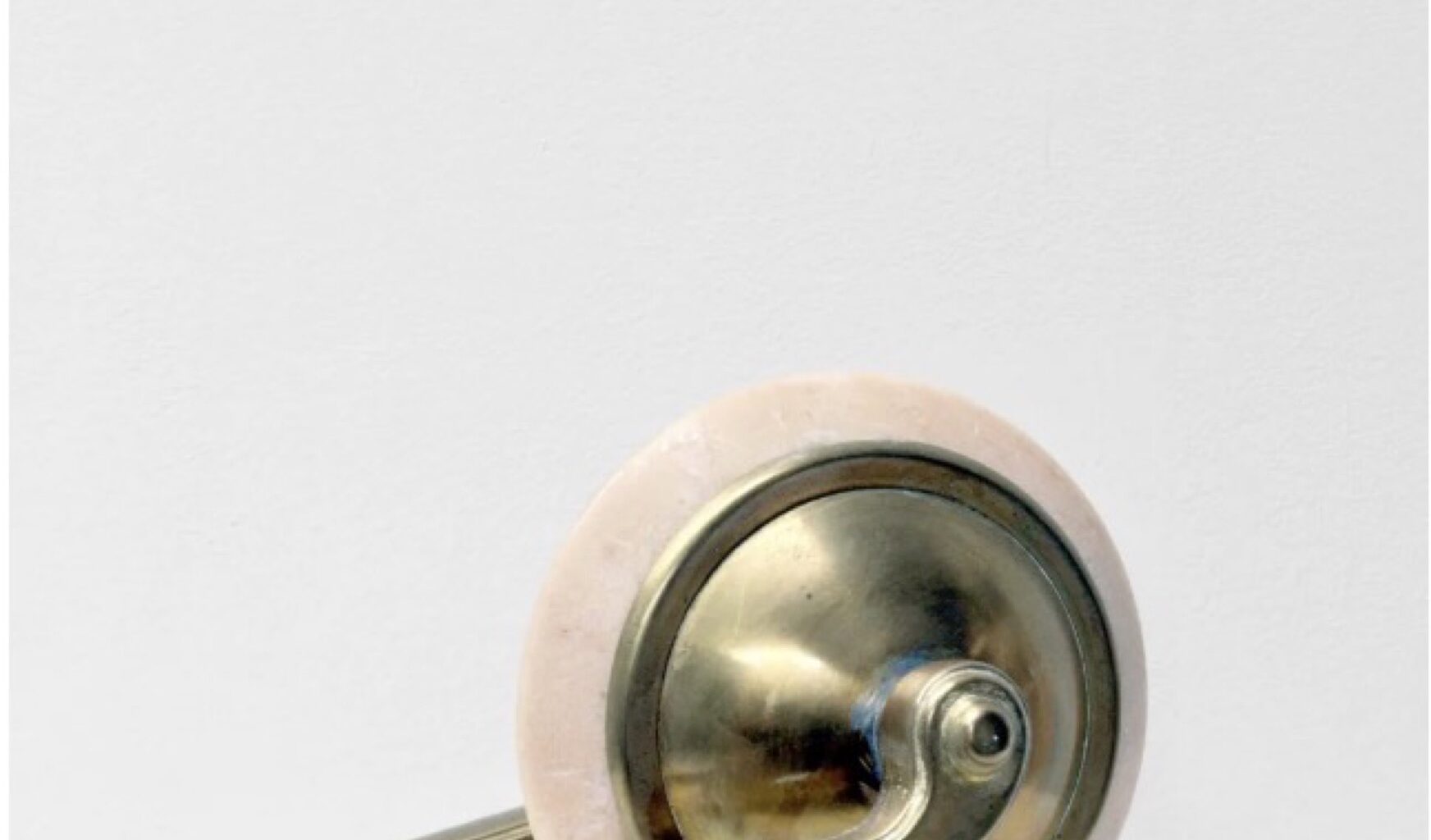
Don Porcaro has focused on the trope of the disarticulated column in his current exhibition. It’s easy to automatically equate obelisks and trophy columns, like Trajan’s Column in Rome, or the two columns attached to the Karlskirche in Vienna, with unbridled phallic energy. It’s there, for sure. But the architectonic reading of the column—as a support, and as a valuable and practical commodity which was often stolen by one group and repurposed in their own buildings—is also viable. Porcaro playfully dances between both: his columns are symbol and portrait simultaneously. In Lost Stories 1 (2024), an almost 8-foot tall white marble piece, the artist refuses to give us a column that acts as a single thrust. Instead, the work is broken down into countless component slices and even supports-within-supports with numerous ridges and bulbous forms that provide an erotic sub-narrative. A quote on the wall from the artist mentions the columns of ancient Egyptian temples resembling bundled reeds, papyrus stalks as inspiration. Indeed, Lost Stories 1 includes this motif too—a ring of mini-columns at the base of the piece, which also mimic cartoon-like legs. The undulating silhouettes of most of the works, as well as delightful little feet inserted in many of their bases, as in Lost Stories 5 (2025) and Tempest (2022), add a degree of anthropomorphism.
So Porcaro’s columns are in fact anti-columns in the classical sense. They don’t seek to hold up anything other than themselves, and they don’t attempt to overwhelm us with straight-up-and-down lines of force. Porcaro’s technique is about lamination and solidity through neatly fitting component parts together. This almost marquetry-like technique is heightened by alternating veining in the marble and the addition of occasionally different colors of marble or metal inserts, further shifting the scale down to a level of mostly flat layers of stone, and small repetitive pieces rather than grand expanses of material. Lost Stories 8 (2025) is a squat little affair incorporating travertine as well as black and white segments. It has a bundle of five somewhat severe volutes as a nod to Egypt, and a slightly twee little red cap as well as four travertine footings. It is sweet, and anything but oppressive and toxically masculine! Porcaro’s columns thus are closer to the communally created archaic hermai of the ancient world, in which boundaries were marked by piles of stones—a form still carried out on mountain tops where hikers leave a stone to represent their passing by.