
Inside the Hope Center, healing happens on purpose.
What You Need To Know
The Hope Center in Harlem has provided New Yorkers with free therapy sessions for nearly a decade
The center is now expanding its reach
A new grant for the Hope Center will bring care to New Yorkers in need where they are
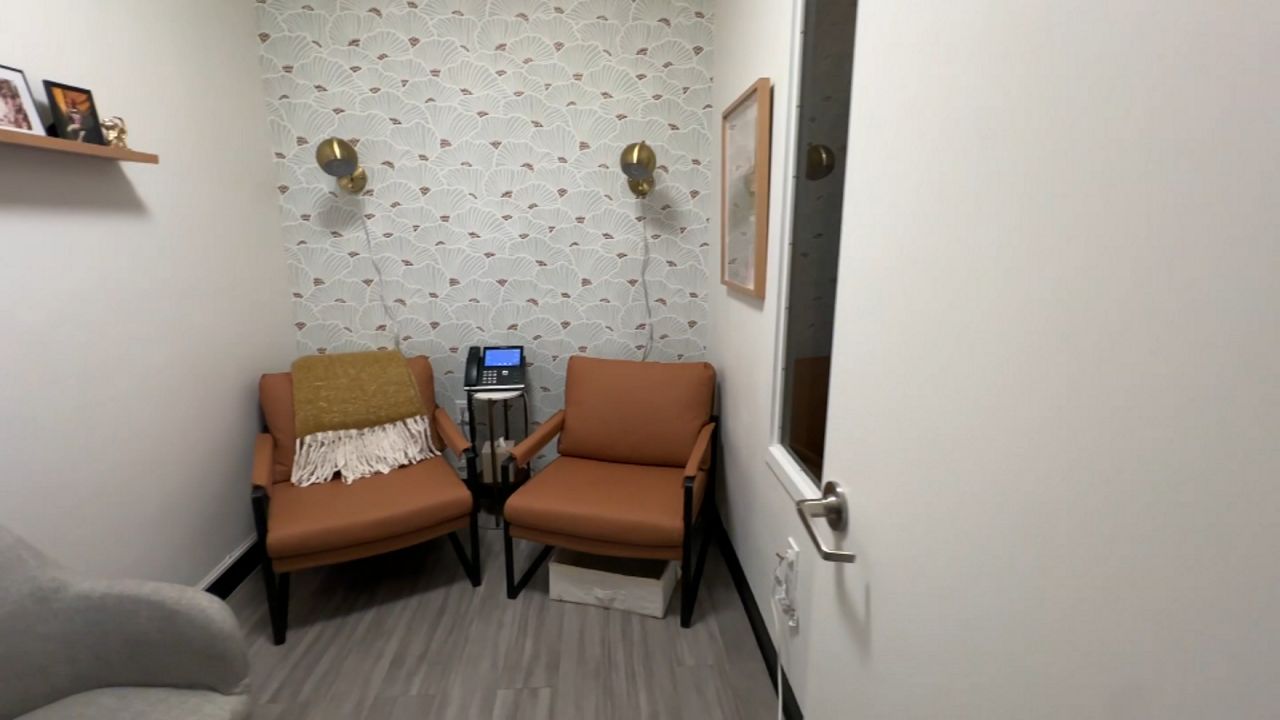
For nine years, the center, which is located on West 116th Street, has been focused on meeting urgent mental health needs in Harlem — providing private, one-on-one therapy sessions for anyone who walks through the door.
Dr. Lena Green, executive director, has been working to lift both the barriers and the stigma often associated with going to therapy.
“It has been my personal goal to get the word out that you don’t have to suffer in silence,” she said.
The Hope Center was the vision of Michael Walrond, who is a senior pastor at First Corinthian Baptist Church.
Now, the center’s reach stretches beyond free therapy sessions to include community outreach, and that outreach is evolving.
NY1 was there Monday afternoon as the Hope Center received a $540,000 grant from the Manhattan borough president’s office to build a new mobile mental health services unit.
“I think what they’ve quickly learned is, while there’s some people who will come in to you and proactively seek out help, there are many, many more people out there who are suffering and aren’t quite ready to come into an official professional facility,” Borough President Mark Levine said in an interview.
“For many people, the thought of seeking mental health care is wrought with feelings of shame, of guilt and secrecy,” Dr. Sidney Hankerson, medical director for Hope Center, explained.
Plans for the mobile mental health services unit include a waiting area and three offices.
Each day the unit is out in the neighborhood, the Hope Center will publicly share the van’s location, taking free mental health care to the streets.
“My hope is that this mobile clinic will be replicated and expanded across all five boroughs,” Dr. Hankerson said. “Especially the boroughs that we know are most beset with mental health disparities in particular.”