
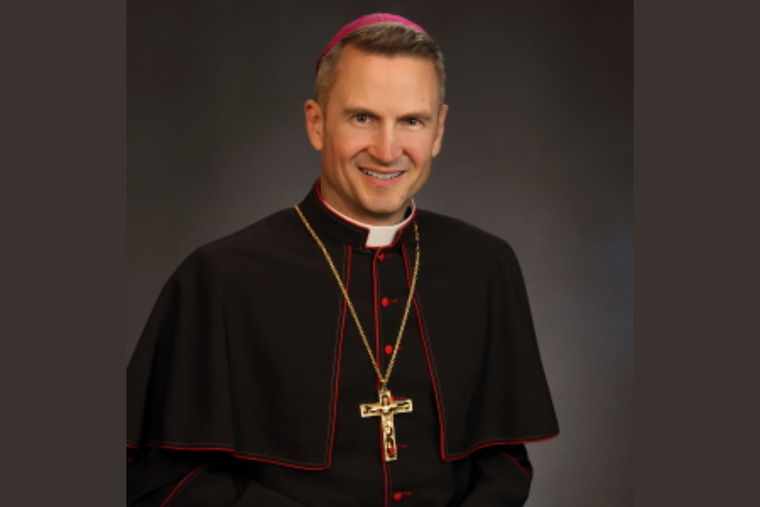
In his most significant U.S. episcopal appointment to date, Pope Leo XIV is going back to his Chicago roots, tapping a young prelate with a remarkably similar background to his own as the next archbishop of New York.
The Pope’s pick for the Big Apple is Bishop Ronald Hicks, 58, the current ordinary of the Diocese of Joliet, Illinois, and a fellow native of Chicago’s south suburbs. Bishop Hicks’ impending appointment was first reported by Spanish outlet Religión Digital on Dec. 15, and EWTN News has confirmed it with two independent sources with direct knowledge. An official announcement from the Vatican is expected tomorrow.
Born in 1967, just 12 years after Pope Leo, Bishop Hicks grew up in South Holland, Illinois, adjacent to the Pope’s hometown of Dolton.
“I recognize a lot of similarities between him and me,” Bishop Hicks told Chicago media about Pope Leo in the wake of the American’s May 8 election to the papacy. “So we grew up literally in the same radius, in the same neighborhood together. We played in the same parks, went swimming in the same pools, liked the same pizza places. … I mean, it’s that real.”
Bishop Hicks also attended high school at Quigley Preparatory Seminary South, which eventually became St. Rita of Cascia High School, where Pope Leo XIV taught in the 1980s. Perhaps the most glaring difference between the two is that Bishop Hicks is a fan of the Chicago Cubs baseball team, not the Chicago White Sox.
The two have met at least once before, when then-Cardinal Robert Prevost spoke at a Diocese of Joliet parish on Aug. 7, 2024, during a trip back to the Chicago area. Afterward, Bishop Hicks said they spoke for more than 15 minutes, with the future Pope showing an interest in the young bishop’s ministry and giving him his card.
Just over one year later, Leo has picked Bishop Hicks for one of the most prominent posts in the Pope’s home country. Bishop Hicks will succeed Cardinal Timothy Dolan, a larger-than-life personality who has led the New York archdiocese since 2009.
The appointment ends speculation over who would succeed Cardinal Dolan, since the prelate turned 75 this past February, and sends a signal over the qualities Pope Leo will likely look for in top episcopal appointments moving forward.
Latin American Experience
In addition to their common Chicago roots, Bishop Hicks shares ministerial experience in Latin America with Pope Leo. Eleven years after his 1994 ordination as a priest for the Archdiocese of Chicago, the archbishop-elect spent five years in El Salvador as the regional director of Nuestros Pequeños Hermanos, a charity that serves orphans in Latin America. The archbishop-elect is fluent in Spanish.
Bishop Hicks graduated from Loyola University Chicago in 1989 with a philosophy degree. He earned a Master of Divinity from the University of Saint Mary of the Lake/Mundelein Seminary in 1994 and a Doctor of Ministry degree from the same institution in 2003.
Sister Sara Butler, who taught Bishop Hicks when he was a student at Mundelein Seminary and then worked alongside him when he joined the seminary’s formation staff, recalled that he “showed a remarkable missionary spirit.”
Others have been similarly impressed by his pastoral heart and orthodox faith.
Jonathan Blevins, a former Chicago parish lay leader who worked with Bishop Hicks on several occasions, said the archbishop-elect is “traditional, and loves the lost and the poor,” with a “huge heart for Hispanics.”
“Whenever he spoke, you could tell his heart was with the poor, especially from his time working at the orphanage,” said Father Kevin Gregus, a priest of the Archdiocese of Chicago who crossed paths with Bishop Hicks as a seminarian. “I think he would’ve moved there permanently if [former Chicago archbishop] Cardinal Francis George had let him.”
Administration and Evangelization
Instead, Father Hicks rose through the ranks of Chicago’s clergy, holding posts like dean of formation at Mundelein and archdiocesan vicar general. The Chicago cleric was made an auxiliary bishop by Pope Francis in 2018 and ordinary of Joliet just two years later.
When he arrived in Joliet, a diocese of about 500,000 Catholics that includes the south and west of the Chicago metro area, Bishop Hicks emphasized his desire to put “Christ at the center of our lives.”
“The reason I’m a priest, the reason I’m a bishop, the reason I’m Catholic is because I love Jesus,” Bishop Hicks told diocesan media. “I’ve been baptized, and as a baptized Catholic I want to continue to evangelize and to make sure the faith is growing and that it is not only growing for a certain segment but for everyone — for young people, for the elderly, for those of us who may be in the middle.”
Bishop Hicks has also tackled administrative challenges in Joliet. In 2022, he initiated a diocesan restructuring plan that has resulted in several parish closures and mergers. He also spoke out in May 2023 after Illinois’ attorney general released a historical report on clergy sex abuse, stating that the diocese will “continue to dedicate significant resources to protecting children, preventing abuse, and promoting healing.”
“No sin of such great magnitude as sexual abuse of minors should ever be forgotten,” Bishop Hicks said in his statement. “Remembering the harm done forces us to remain vigilant in our efforts to ensure it never happens again.”
During his time in Joliet, Bishop Hicks has made missionary discipleship a top priority. In September 2025, he released “MAKE,” a pastoral letter that calls Joliet Catholics to follow Christ’s command to “make other disciples” via “conversion, confession, communion, and commission.”
“Boldly, I want our diocese to be the most evangelizing diocese in the country, not out of competition, but because I love Jesus, and I want you to love Him and be saved through Him, too,” wrote Bishop Hicks in an accompanying column.
The Cupich Connection
In addition to Pope Leo XIV, Bishop Hicks is also connected to another Chicago Churchman: Cardinal Blase Cupich.
The archbishop-elect is the third former auxiliary of Cardinal Cupich’s to be named to a U.S. archdiocese in the past year and a half, joining Archbishop Jeffrey Grob of Milwaukee and Archbishop Robert Casey of Cincinnati.
Cardinal Cupich, 76, has long exerted considerable influence upon major episcopal appointments in the U.S. and remains a member of the Vatican’s Dicastery for Bishops.
Bishop Hicks has hailed the Chicago cardinal as a mentor and appeared in a tribute video marking the cardinal’s 50th anniversary of ordination to the priesthood.
“Cardinal Cupich, thank you for your extraordinary leadership to the Church,” Bishop Hicks said during his 2020 installation Mass as Joliet’s bishop. “Thank you for your trust and confidence in me. And I want you to know how much I have learned directly from you.”
Pro-Life, TLM-Friendly
At the same time, several sources in Chicago and Joliet emphasized that Bishop Hicks is decidedly his own man — and has views and priorities that clearly depart from Cardinal Cupich’s.
For instance, while Cardinal Cupich is known as one of the American episcopacy’s most forceful opponents of the traditional Latin Mass, TLM attendees in the Diocese of Joliet say Bishop Hicks has been anything but hostile.
“I have and continue to have a great sense of gratitude to Bishop Hicks for his pastoral wisdom in shielding his flock from the draconian measures issued in Traditionis Custodes,” said Trevor Alcorn, who attends the TLM at St. John Paul II in Kankakee, Illinois. “He knew that the TLM communities had and would continue to bear fruit in his diocese, and he went out of his way to preserve them.”
Alcorn, who is the co-owner of Tridentine Brewing, described Bishop Hicks’ protection of the TLM in Joliet as “silently effective” because it avoided unnecessary fanfare. He also said it was an instance of synodal leadership because it involved Bishop Hicks “listening to the faithful and taking their needs into consideration.”
Bishop Hicks’ liturgical style appears to exhibit simple reverence and love for the Eucharist. For instance, a video accompanying his pastoral letter features the bishop distributing Communion on the tongue, a posture many associate with Eucharistic piety. Bishop Hicks also promoted the National Eucharistic Revival heavily in Joliet, including serving as the first diocese to welcome this past year’s procession from Indianapolis to Los Angeles.
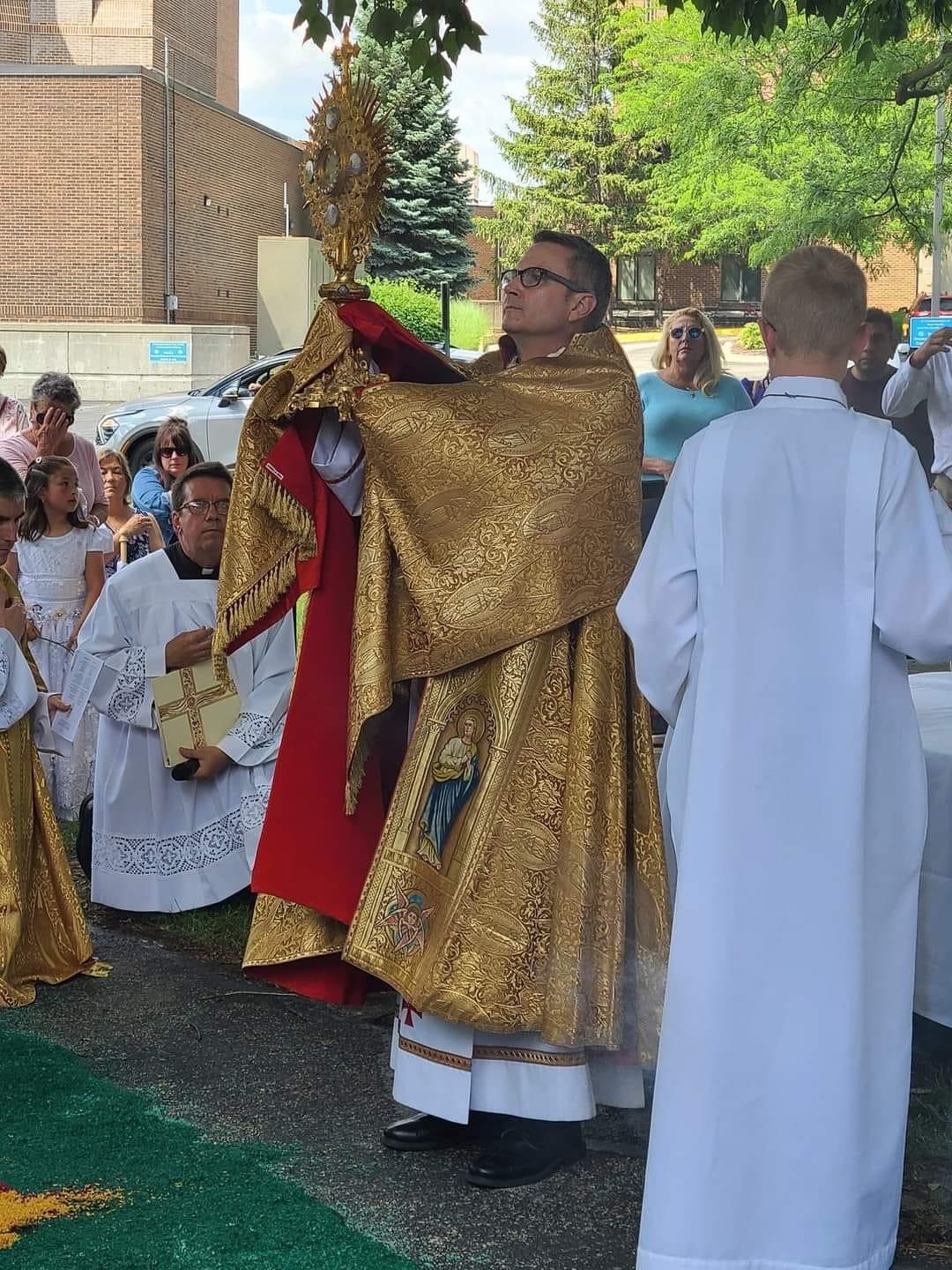 Bishop Ronald Hicks leads a May 2025 procession in the Diocese of Joliet as part of the National Eucharistic Pilgrimage.” (Photo: Trevor Alcorn)
Sources also described Bishop Hicks as a theologically sound prelate who embraces the entirety of the Church’s social teaching. He considers St. Óscar Romero, the El Salvadoran martyr and defender of the poor, to be a personal hero, and has written about the need for Catholics to be “countercultural” on abortion.
John Breen, a Loyola University Chicago law professor who was openly critical of Cardinal Cupich’s intention to honor pro-abortion senator Dick Durbin this past fall, described Bishop Hicks as “strongly supportive of the pro-life cause.”
“Although that message is largely countercultural in New York, I have every confidence that he will witness to the cause of the unborn and all the gospel of life in season and out of season,” said Breen, who is the Diocese of Joliet’s lay representative on the Catholic Conference of Illinois board of directors.
However, the archbishop-elect may favor a less confrontational approach, as he was one of 47 diocesan bishops to sign a 2021 letter opposing a USCCB document on “Eucharistic coherence,” which was expected to address barring pro-abortion-rights Catholic politicians from Communion.
Bishop Hicks also appears to have the esteem of his brother bishops. In November 2024, he was elected as the chairman of the U.S. Conference of Catholic Bishops’ Committee on Clergy, Consecrated Life, and Vocations, securing more than 63% of the vote.
New York Skillset?
Bishop Hicks has a diverse and impressive skillset. But how will his Midwestern sensibilities fare in the Big Apple?
Home to 2.5 million Catholics, the Archdiocese of New York is the second-largest diocese in the U.S. after Los Angeles. Gotham’s archbishop also acts as one of the most visible Catholic figures in the nation, given New York’s status as America’s media capital.
Following both Cardinal Dolan, a native of St. Louis, and Chicago-native Cardinal Edward Egan, Bishop Hicks will be the third straight Midwesterner to serve as New York’s archbishop. In contrast to the gregarious, back-slapping Cardinal Dolan, however, Bishop Hicks has said that he’s more of “a gentle spirit.” At the same time, he believes he is “able to also be strong and to try to set vision and agendas and make sure they move forward.”
Bishop Hicks will share the New York City spotlight with mayor-elect Zohran Mandami, the city’s first Muslim mayor and a socialist. And the news of his impending move to the Empire State also comes amidst a Dec. 17 announcement that Gov. Kathy Hochul, a Catholic, will sign assisted-suicide legislation into law.
Meanwhile, Bishop Hicks’ arrival could help boost vocation numbers in New York, where there are currently only 23 seminarians in formation for the archdiocese. In addition to his past posts at the Archdiocese of Chicago’s seminaries and current USCCB work on vocations, he is a bishop adviser to the Institute for Priestly Formation, a popular ministry that forms seminarians in Ignatian spirituality.
Bishop Hicks’ Spanish-language skills and experience in Latin America will be a boon in an archdiocese with more than 1 million Hispanic Catholics. Likewise, his administrative chops will assuredly come into play as the archdiocese attempts to navigate the fallout from clergy-sexual-abuse lawsuits. Budgets have been cut, staff have been laid off, and the archdiocese sold off $490 million in real estate holdings last week in order to pay victims.
What’s clear is that Pope Leo has his man for New York City. And the appointment of a prelate like Bishop Hicks — pastorally-minded, evangelistically orientated, and concerned with reverent worship and clear teaching — may serve as the mold for U.S. episcopal moves under Leo going forward, whether his selections come from Chicago or not.