
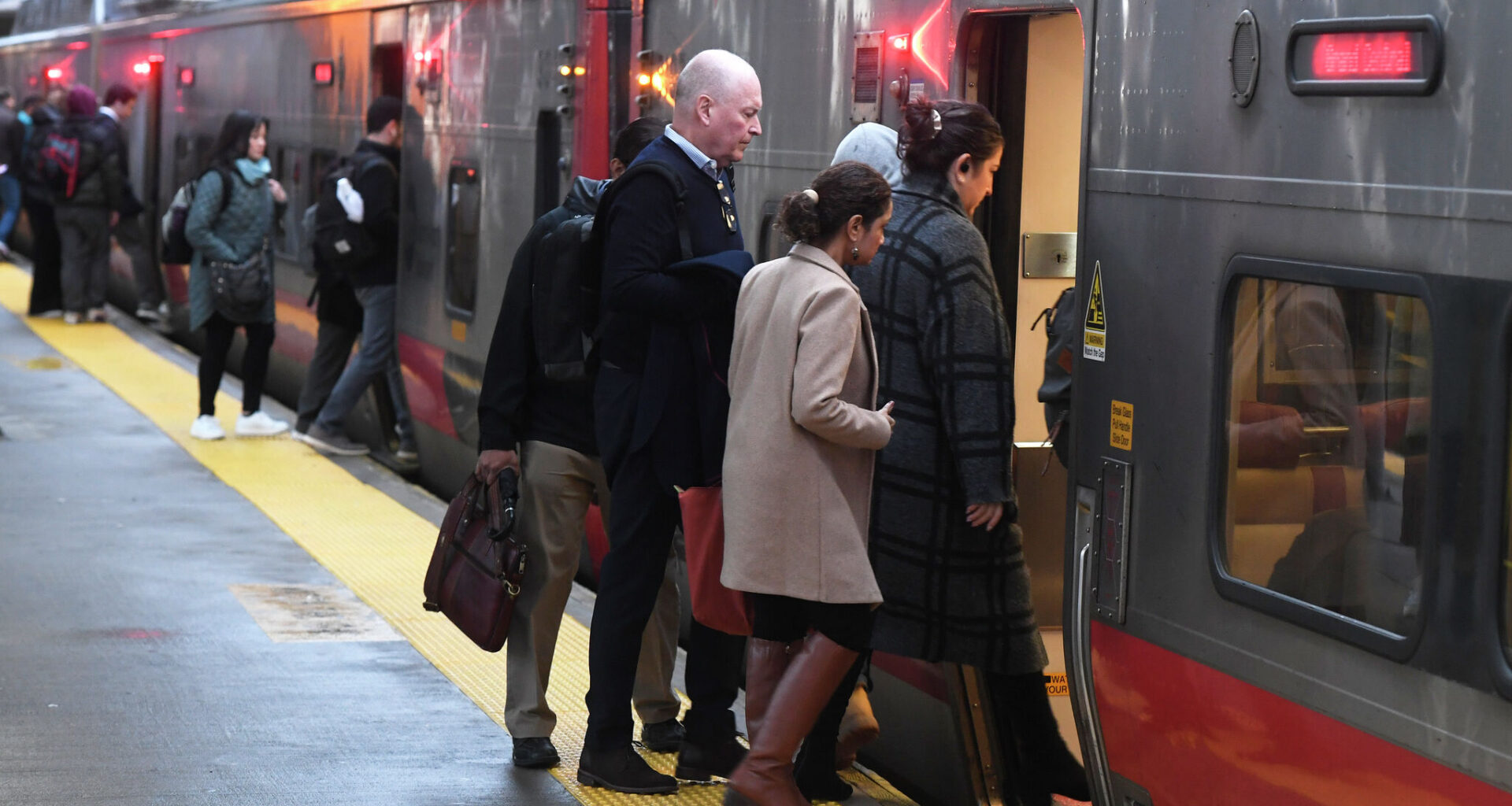
Commuters board a Metro-North train to New York City, in March 2025 at the Stamford Transportation Center in Stamford, Connecticut. Commuters should prepare for several changes to fares and tickets going into effect on Jan. 4, 2026.
H John Voorhees III/Hearst Connecticut Media
Commuters to New York City should prepare for a series of ticket fare, toll, and ticketing changes along the Metro-North rail line going into effect just after the new year.

The Metropolitan Transportation Authority Board of Directors approved the changes to fares, tolls and, ticketing policies on Sept. 30, with the changes going into effect on Jan. 4.
Article continues below this ad
Fares and tolls give the MTA resources to operate a safe and reliable transportation system, according to MTA officials.
The MTA’s operating budget assumed a fare and toll increase in March, but the increases were delayed until January to align with the launch of a full tap-and-go system on subways and buses.
Changes to LIRR and Metro-North fares
Monthly and weekly tickets will increase up to 4.5% across both the Long Island Railroad and Metro-North.
Article continues below this ad
Even with the increase, monthly ticket prices will remain lower than they were before the COVID-19 pandemic and will not exceed $500, according to MTA officials.
All other ticket types will increase 8%.
Article continues below this ad
CityTicket, during peak hours, will increase from $7 to $7.25 and off-peak tickets will increase from $5 to $5.25.
No customer will pay more than $7.25 in peak hours or $5.25 in off-peak hours when traveling within New York City, according to MTA officials.
There will be no increase to fares on any west of Hudson lines, and the surcharge for tickets purchased onboard from a conductor will increase by $2.
Changes to New York City transit fares
The base fare for subways, local buses, and Access-A-Ride will increase 10 cents, from $2.90 to $3, and the reduced fare will increase from $1.45 to $1.50.
Article continues below this ad
The automatic rolling seven-day fare cap for unlimited rides will become permanent. Commuters can pay for 12 rides in a seven-day period and any additional rides are free.
At the base fare, no rider will pay more than $35 in a week, and reduced-fare commuters will pay no more than $17.50 in a week, according to MTA officials.
The express bus base fare will increase from $7 to $7.25, and the reduced fare will increase from $3.50 to $3.60.
Another automatic rolling fare cap for unlimited rides will be added for those who use the express bus network. Riders will not pay more than $67 for unlimited express bus, local bus, and subway rides in a seven-day period, according to MTA officials.
Article continues below this ad
The single ride ticket will increase from $3.25 to $3.50, and the fee for a new tap-to-pay OMNY card will increase to $2 when the MetroCard is no longer accepted for fare payment later in 2026.
There will be no changes to discount policies for seniors, people with disabilities, students, and the paratransit zero fare.
Tap and ride
With tap and ride, commuters ride free after paying for 12 trips in a seven-day period.
Article continues below this ad
This guarantees they have access to unlimited rides on subways and buses without have to pre-pay, according to MTA officials.
With fare capping, the seven-day, 30-day, and express bus plus unlimited ride MetroCards will no longer be sold, but riders can still pre-load $35 for unlimited seven-day travel onto an OMNY card.
Any unused funds will rollover, rather than being lost if not spent, according to MTA officials.
Tap and ride will be required for all subway, local bus, and express bus rides.
Article continues below this ad
Cash and coins will still be accepted at card vending machines in subway stations and at roughly 2,700 local businesses that sell OMNY cards.
Ticketing policies
All one-way paper and mobile tickets will expire at 4 a.m. the day after they are purchased.
For example, if a rider purchases a one-way ticket on Monday at 10 a.m., it will be valid until 4 a.m. on Tuesday. Riders still need to activate tickets before boarding.
Article continues below this ad
Additionally, a new day pass for unlimited travel will replace the round trip ticket.
The day pass will be valid on the day of the purchase until 4 a.m. the following day.
On weekends, the day pass will cost 10% less than two one-way peak hour tickets and the same as two one-way peak hour tickets.
Unlimited day passes are also available for CityTicket and Far Rockaway ticket holders at a cost of $14.50 in the peak and $10.50 in the off-peak.
Article continues below this ad
A new pay-as-you-go discount will be available for those using tickets on their mobile devices. After 10 peak or off-peak trips in 14 days, mobile customers will get an 11th peak or off-peak one-way trip for free in the same 14-day period.
A reduced fare product will be available all day, every day for seniors, people with disabilities, and Medicare recipients, even in the morning peak period, according to MTA officials.
Family trips
Children between the ages of five and 17 will be able to ride LIRR and Metro-North trains for $1 each when accompanied by a fare-paying adult, even in the morning peak.
Article continues below this ad
MTA officials tout the child discount as a way for families to travel on the commuter railroads together at more affordable prices.
Tolls
All toll rates will increase 7.5% at all facilities, including E-ZPass and tolls by mail.
Article continues below this ad